
Rhizomes and Lights: The Artistic Journey of Régis Sénèque
.
.

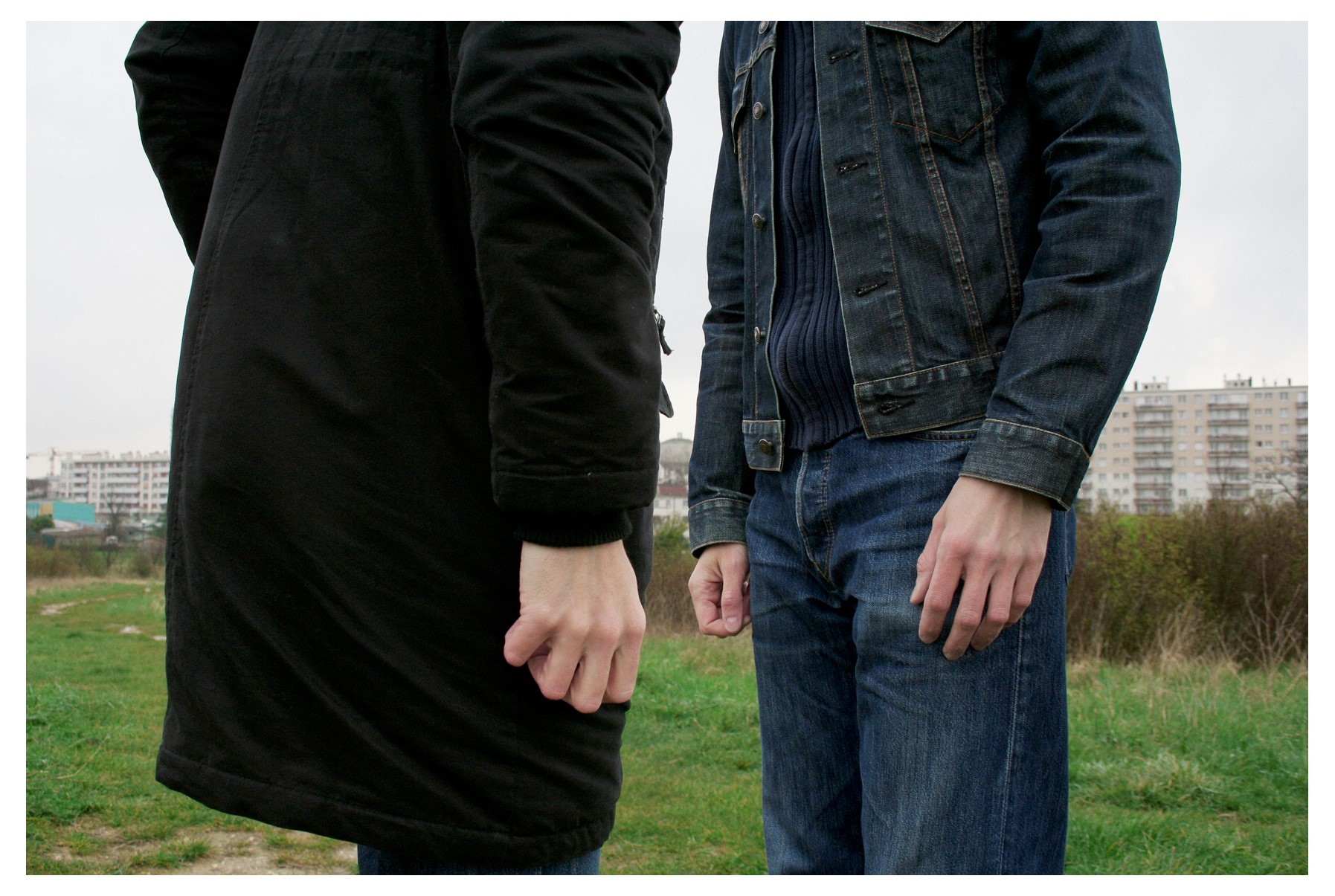
2008 / double portrait
.
In the fertile silence of materials and forms, Régis Sénèque traces a path that escapes linearity. Like a rhizome — a concept dear to Deleuze and Guattari — his work unfolds without hierarchy, without beginning or end, in a proliferation of echoes, connections, and ruptures. This artistic journey is as much an inner cartography as it is a dialogue with the world, a sensory crossing where light becomes language, memory, and revelation. Sénèque explores the interweaving of the visible and the invisible, blending organic materials with modern technologies, painting with installation, video with sculpture. His approach is rooted in a search for resonance between being and space, between shadow and clarity. The “rhizomes” in his work evoke underground networks of thought, nature, and culture, while the “lights” — both physical and metaphorical — pierce the darkness to offer a form of poetic elevation.
.
A multidisciplinary artist, he inscribes his practice within a journey that is both intimate and political, where personal history merges with collective memory, and where matter — charcoal, gold, archival images, performance — becomes a language. In this conversation, he reflects on the profound turning point that was his project L’Or des Fous, accompanied by a poem from Matthieu Gounelle, astrophysicist and professor at the National Museum of Natural History in Paris. He discusses the long process of evolution in his artistic approach and how he now weaves a rhizome-like work, attuned to the echoes of the world, to wounds, and to shared hopes.
.
Through his works, his urban interventions, and his artistic gestures, Régis Sénèque invites us to slow down, to feel, to see differently. It is not only about contemplation: it is about opening oneself to a human vibration, embracing silences as well as fractures, relearning how to connect. Whether in a gallery, in the streets, or within the invisible thread that links times together, his work seeks less to impose than to awaken. And perhaps it is there — in this desire for humble and luminous transmission — that the true strength of his artistic commitment lies.
.
.
Régis, can you tell us about your artistic journey and the major milestones — human, aesthetic, or existential — that have shaped your work up to today?
.
My artistic journey has been built over time through experiences, experimentation, and encounters that, today, take on their full meaning. I have gone through several artistic “lives,” each of which helped shape me step by step. Since 2021, I’ve come to understand just how deeply those phases now resonate within my work.
.
It all began with a decade devoted to painting, from the 1990s to the early 2000s. That period, whose works have since disappeared, now resurfaces unexpectedly in some of my recent drawings. At the time, I was fortunate to meet Corine and Damien Morel d’Arleux, founders of the Distilled Art gallery in Paris. That was a key moment, where I had the opportunity to present my work to a gallery-going audience.
.
In the early 2000s, feeling I had reached a dead end with painting, I explored other mediums: drawing, synthetic materials, photocopies, Polaroids, and digital photography. It was a time of exploration approached with great freedom. It was also during this period that I met Christine Phal, with whom I collaborated for a time, further deepening my visual work, which was gradually moving toward photography.
.


.
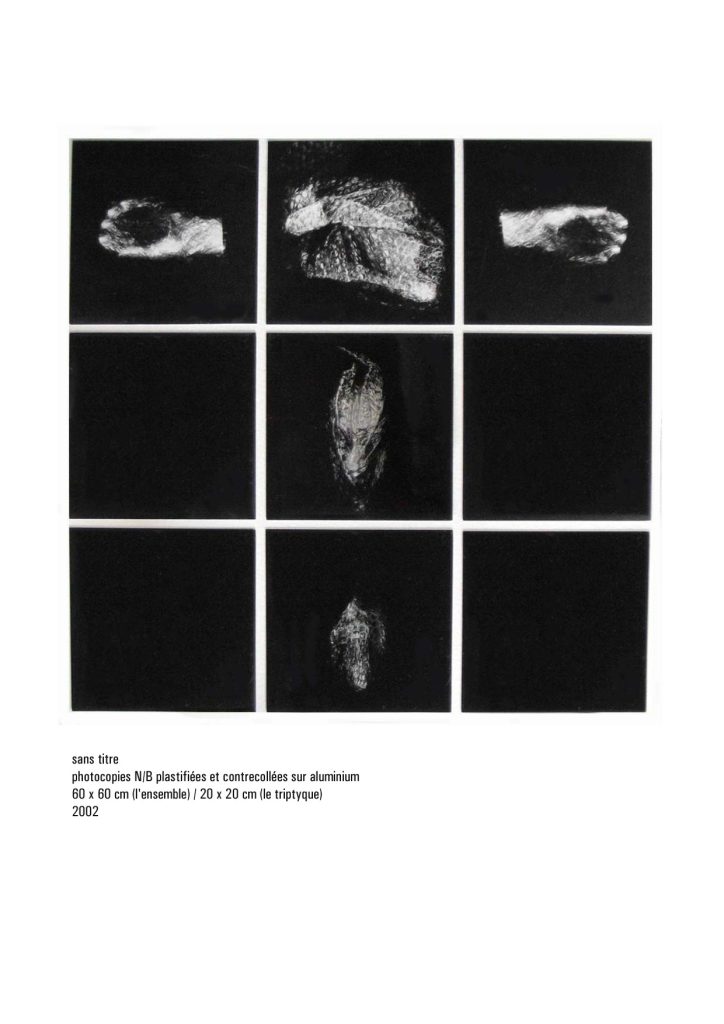
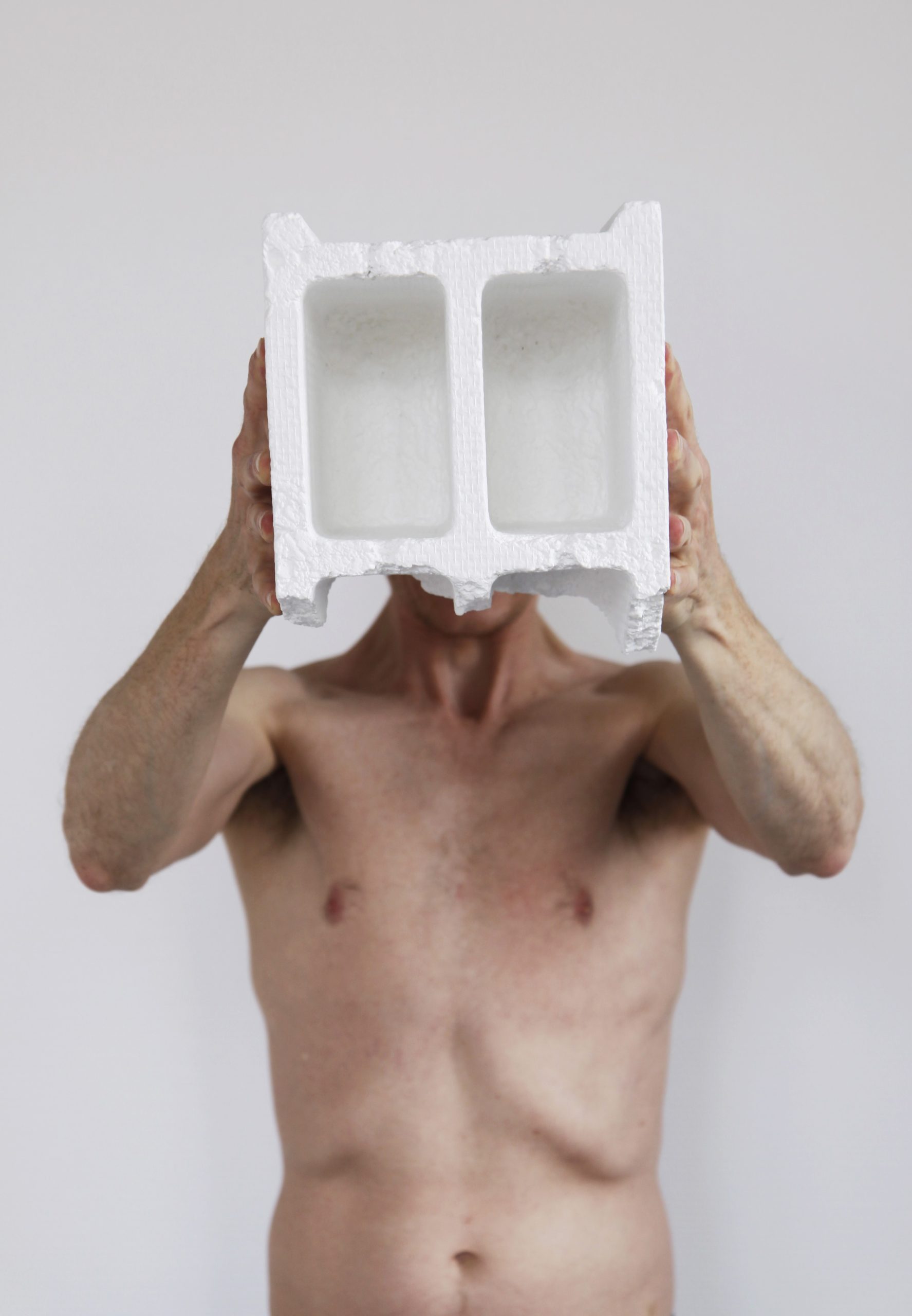
By 2007, photography had taken center stage. To support myself, I was working as a life model in various Parisian art studios — an experience that fed into a conceptual photographic practice in which I often staged myself, and which eventually opened the door to performance art. This photographic work was exhibited in 2009 in Châteauneuf-sur-Loire (La Borne, P.O.C.T.B.), and in 2010 at Galerie du Haut-Pavé in Paris as part of the exhibition “mon intérieur, cet espace commun”. In 2011, an invitation to the contemporary sculpture festival Escaut, Rives, Dérives allowed me to experiment with performance for the first time, notably with “Matière à toucher” at Galerie L’H du Siège in Valenciennes — a powerful first experience. This performance was later reactivated in 2012 at Galerie Scrawitch in Paris and in 2014 at the Scène Nationale in Orléans (P.O.C.T.B.).
.


2007 / untitled / Exhibition Water and Dreams
.
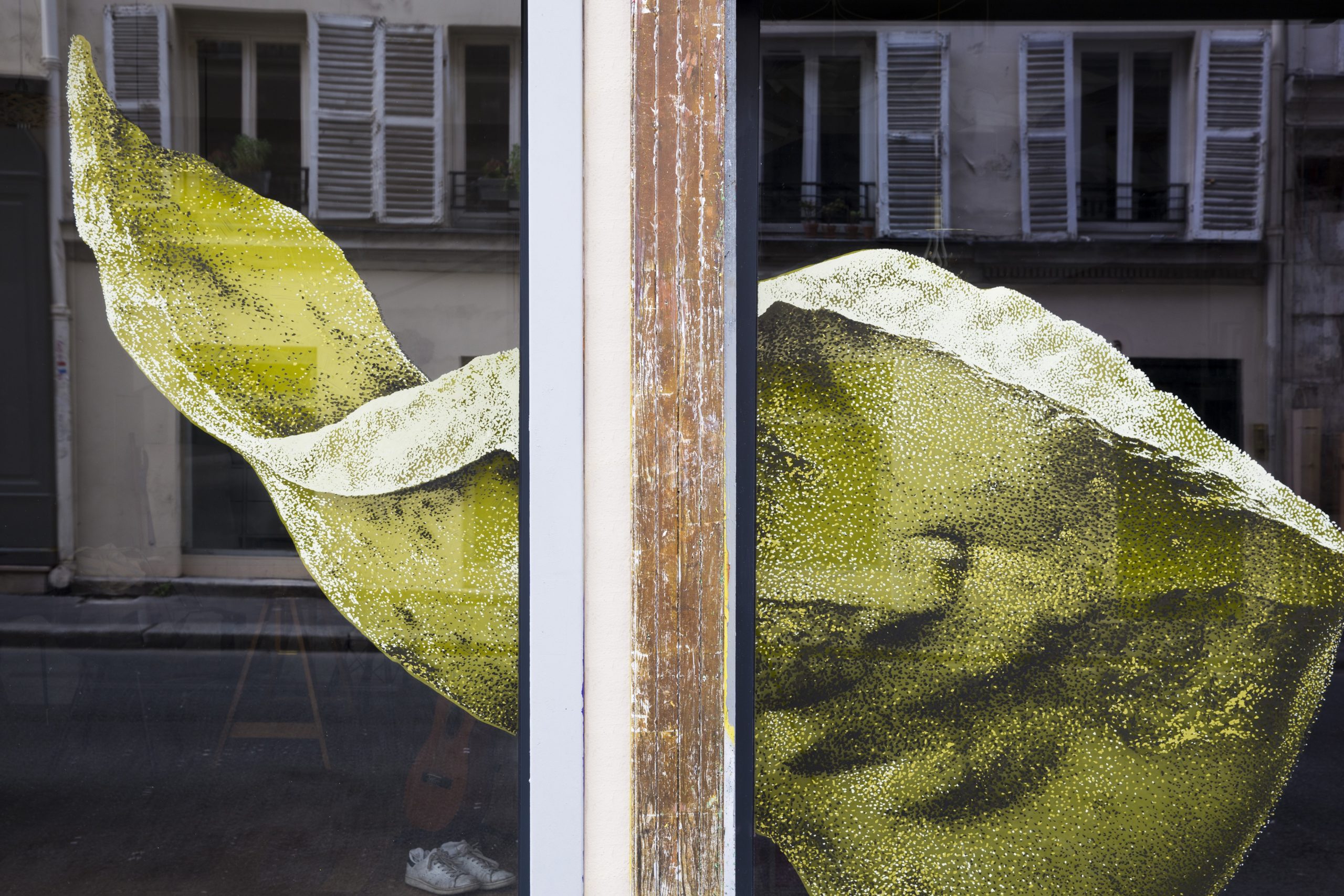
This was also a period when I began gently intervening in urban spaces — drawing wall fragments in chalk on the ground, then creating murals on shop windows. These interventions invited passersby to engage and interact. My last drawing from that period dates to January 7, 2015 — just before the Charlie Hebdo attack.
.
Between 2016 and 2020, a period during which I put my personal work into a sort of “half-sleep,” I now realize how important it truly was. It was during this time that I discovered the plastic and symbolic potential of the color gold — without imagining that it would later become so central to my work.
.
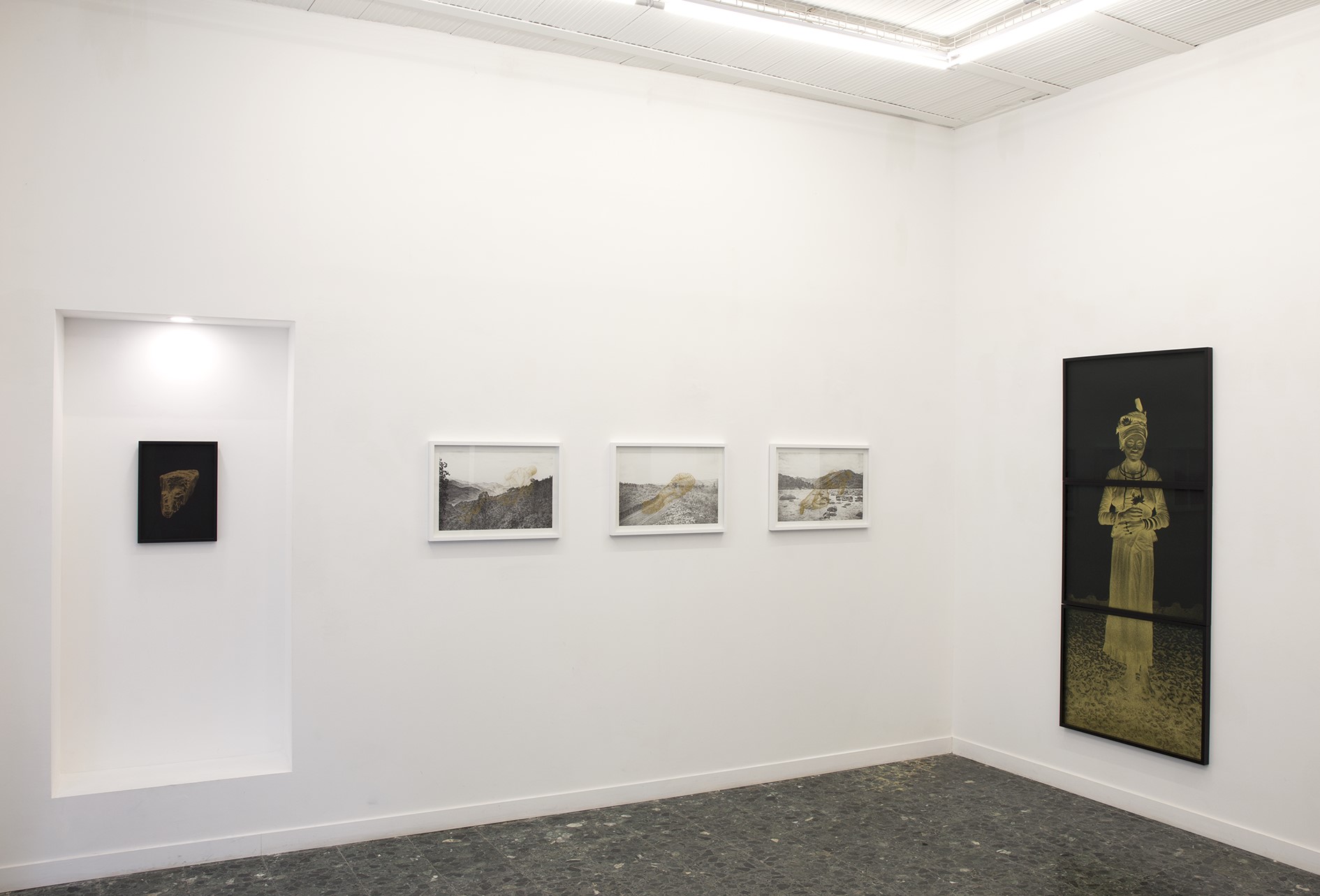
In 2021, a personal and professional upheaval reactivated my artistic path: the rediscovery of my family history linked to colonialism in Indochina. This awakening took shape in a series of drawings titled “Fantômes”, which was exhibited in 2022 under the name “Passé vivant” at Atelier Martel, located on Rue d’Annam in Paris. Following that, in 2023, I had the joy of being welcomed by Galerie Marguerite Milin, where I presented the exhibition “Pour tout l’or du monde”, marking another significant milestone.
.
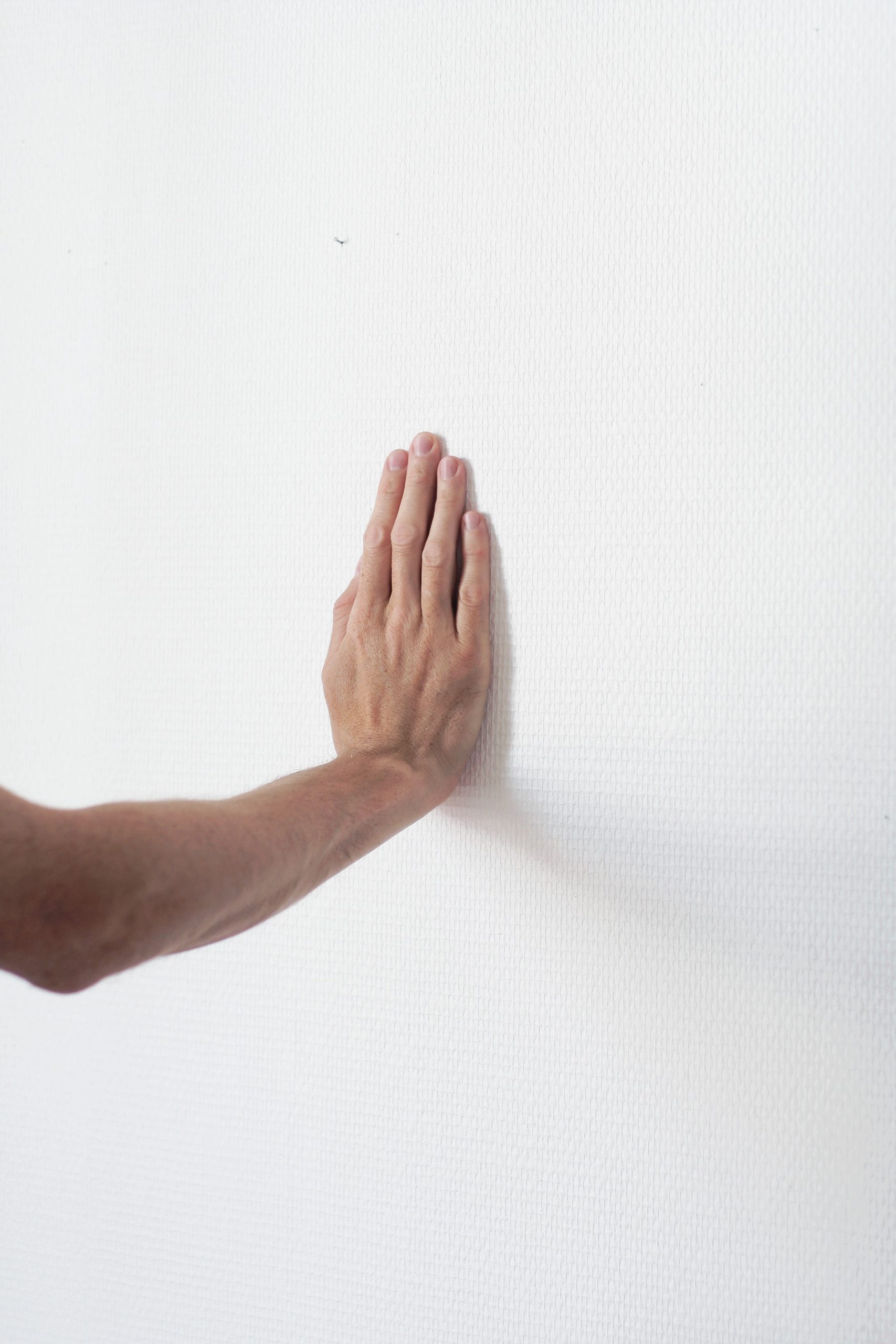
At the beginning of 2025, two major events followed: my most recent exhibition “L’or des fous” at Galerie Marguerite Milin, and the showing of “Le temps d’un déplacement pour révéler du réel” at MAC VAL — a work from 2014, now part of the exhibition “Le genre idéal”, presenting the museum’s 2025–2026 collection.
.
Your work incorporates various techniques such as drawing, mural painting, photography, and performance. How do these different disciplines come together in your creative process?
.
As I mentioned earlier, I used to work with these different techniques more or less separately, depending on the period and the creative phase I was in. Today, although drawing remains very present compared to other media, I no longer feel any hierarchy between them or any need to treat them separately — quite the opposite. Since 2020–2021, I’ve been working much more intuitively, more freely than ever before. It’s not the discipline itself that interests me, but what it can bring to light, what it can reveal, and how it can translate my thinking into images.
.
For example, creating a drawing in the studio can suddenly spark the desire to go out and work in the street, making a fleeting, performative drawing — using golden oil pastel — that directly engages with the public, like the one I did at Temple metro station in 2021. And it is through photography that such an action continues to exist.
.
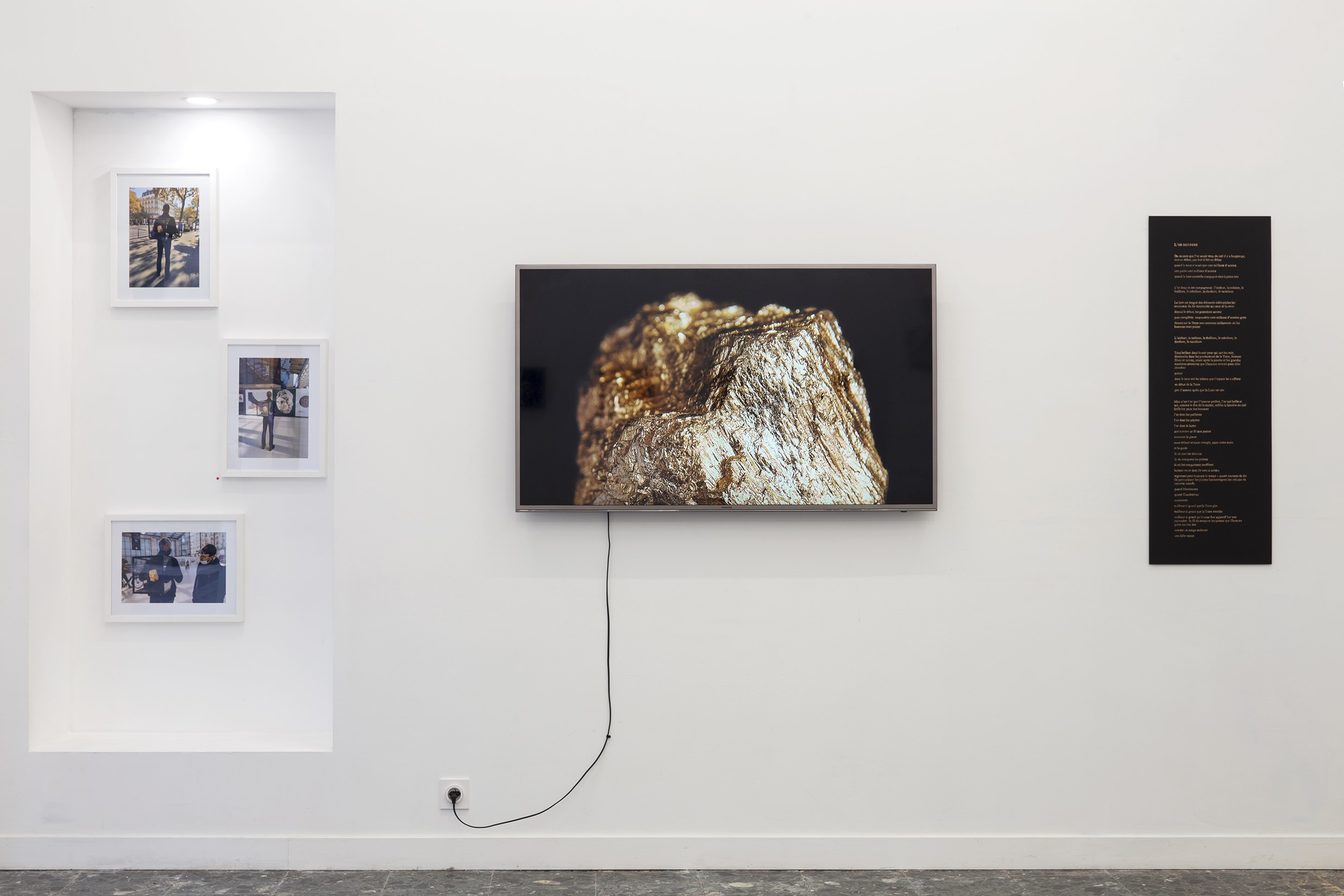
Most recently, my exhibition L’or des fous at Galerie Marguerite Milin, curated with the support of Marie Deparis-Yafil, was a wonderful opportunity to pay tribute to the poem that Matthieu Gounelle wrote for me in 2022, during my residency at Les Chambres in Aubervilliers. This poem originally echoed works I created during the residency, but today, given how my work has evolved, it resonates in a much deeper and more relevant way.
.
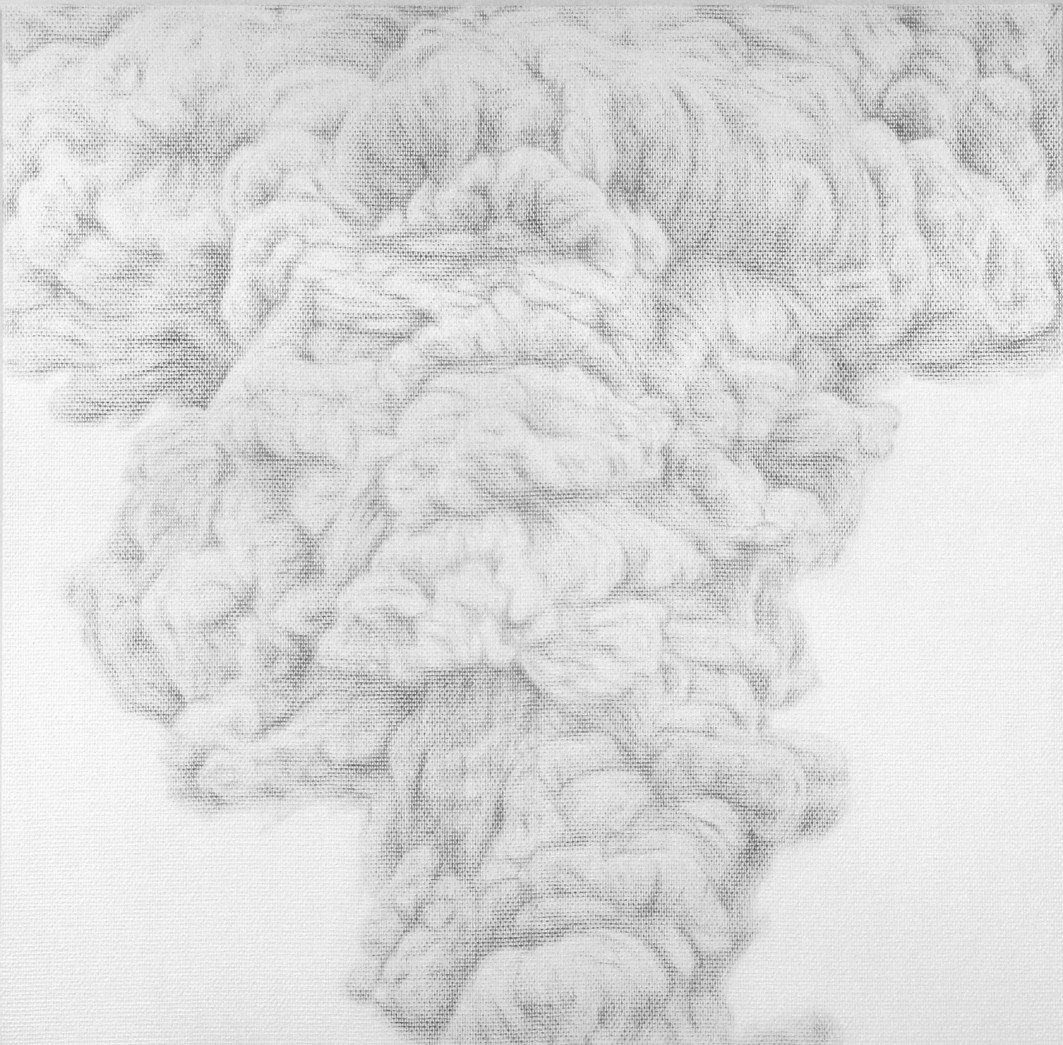
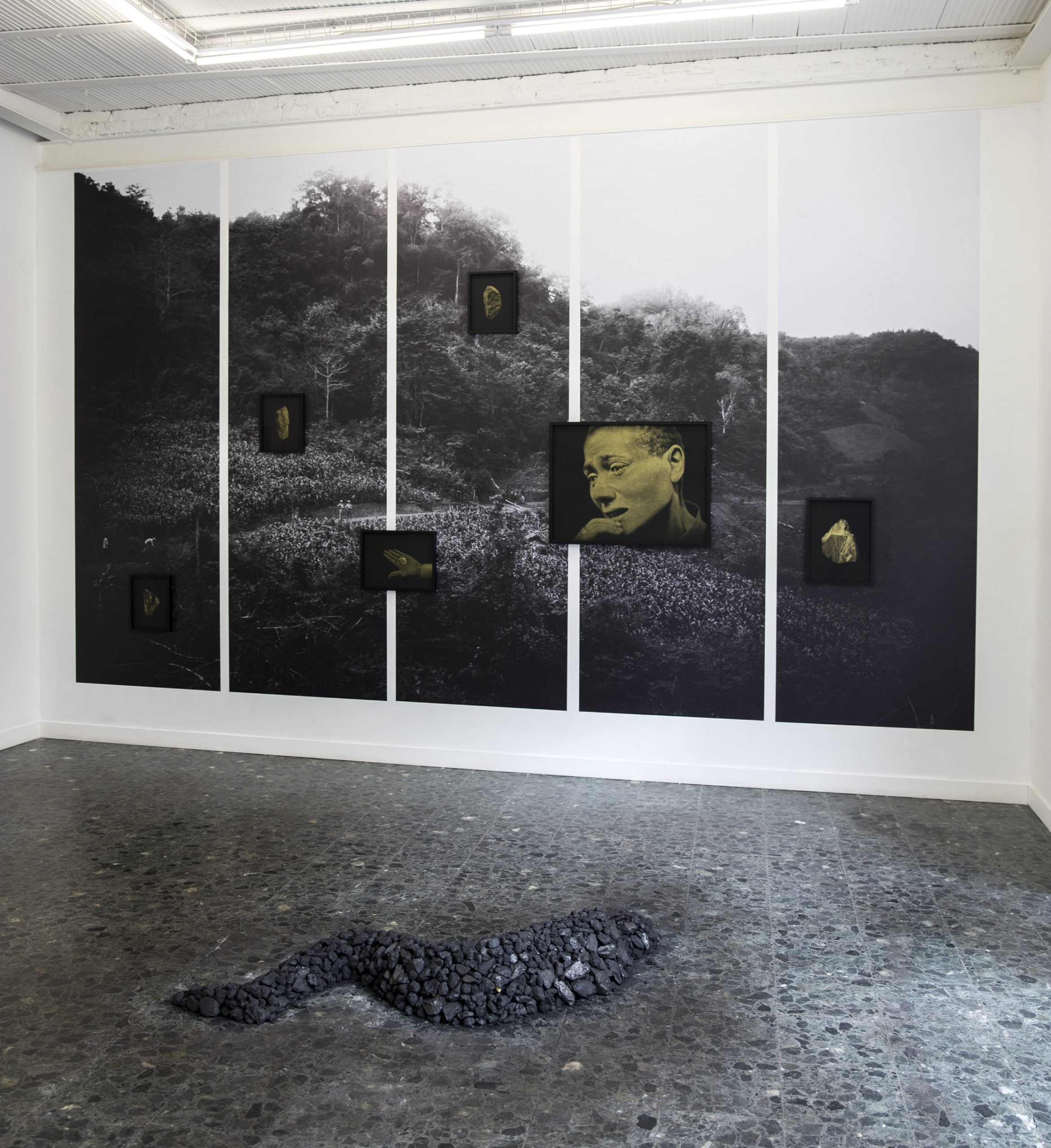
I wanted this poem — which gave its title to the exhibition — to be visually central to the show. Encouraged by Marie, I handwrote it in large format using gold ink on black paper — a unique piece that needed to be worthy of Matthieu’s words. In parallel, the poem inspired me to imagine, for the first time, a video work. The video gives form to another piece from the exhibition — A valeur variable, 2021–2025 — and features my voice reading the poem as its soundtrack.
.
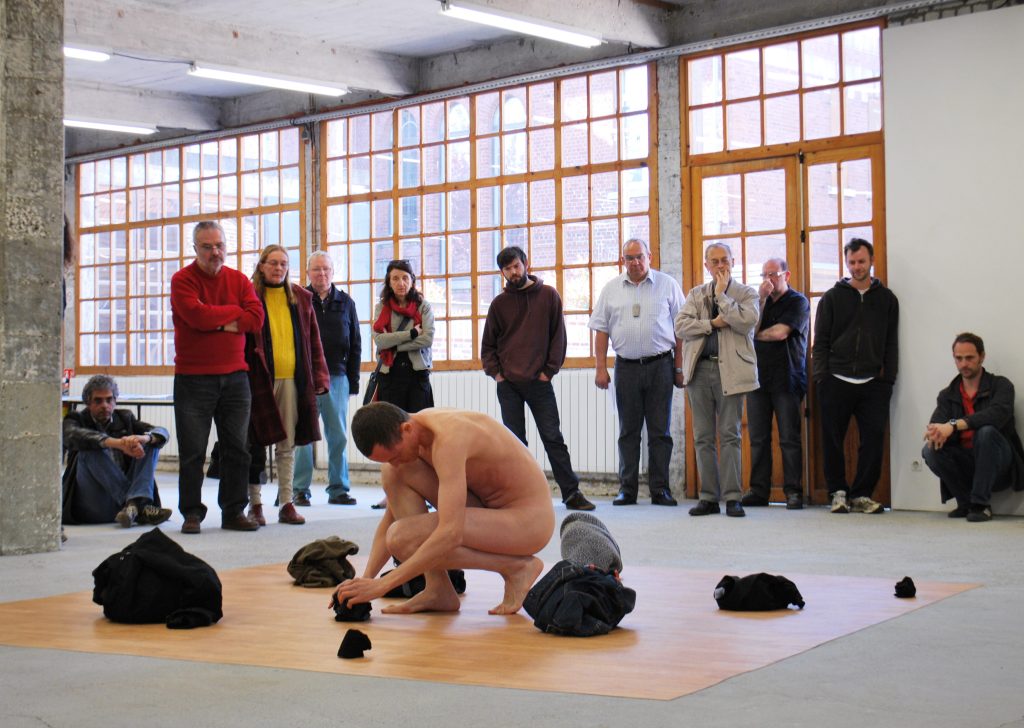
2011 / performance Material to touch / H of the Valenciennes Headquarters / credit: Marlène Perronet




.
My intention is not limited to simply exhibiting within the four walls of a gallery — it goes beyond that. I hope, in the near future, to share this video online so that anyone can discover it and hear Matthieu Gounelle’s poem, which resonates so deeply with the madness of the world we live in today. To do this, I will reactivate my portable box À valeur variable, 2021–2025 in urban spaces. Inside it is a piece of anthracite coal gilded with gold leaf, and I will distribute small flyers with a QR code inviting those who are interested to discover the poem L’or des fous.
.
Across all of my current work, there is a thread — a visible or invisible link — that connects everything. It can be seen as the embodiment of a rhizomatic thought, a kind of branching structure.
.

2021 / Vestige / ephemeral drawing / Temple Metro
.
Your artistic journey explores the connections between grand History and individual personal stories. How did this theme develop, and what message do you wish to convey through your works?
.
I began developing this theme in 2021, more precisely with the first drawing in the Fantômes series. When I started this work, mainly based on family archives related to the period of French colonization in Indochina and its aftermath following the anti-French independence war — archives I had discovered shortly before — I quickly realized that I was visualizing a reflection that had already existed within me for several years, following hypnotherapy sessions. The idea that our personal, family history is linked to the grand history. A transgenerational search quickly reveals these connections, which resonate within us, consciously or not. This is called the living past. Paying attention to it, searching the past, can help us better understand ourselves, attempt to decipher unnamed pains and patterns. Through my drawings, murals, performances, and photographs, I try to heal the past, free myself from unconscious repetitive patterns, and try to envision the present and future differently.
.
From this historical foundation, rooted in a specific territory and time, I open my work to the world — beyond borders and eras — because history never really stops where it seems to end. Continuity, echoes, and consequences always occur. Ultimately, I am speaking about myself, the world, and the time in which I live. Through my works, my intention is not necessarily to convey a direct message. I invoke and offer, I hope, more poetry — poetry that oscillates between shadow and light.
.
Within this body of work, I portray subjects that are at the core of my daily concerns, relating as much to the past as the present, to humanity, and to notions tied to cultural and material values. These very notions question the insatiable aspect of humanity linked to its desires, its pursuit of so-called artificial wealth, and a diffuse, general state of happiness that constantly drives us beyond ourselves. I create images about the state of the world, our ways of consuming it, and of consuming ourselves.
.
The golden light, very present in my work, is partly my way of bringing hope, respect, and kindness into this contemporary world we live in. Perhaps a part of my work relates to a modest, poetic, artistic form of activism — one that, with utopia, does not seek to transmit a direct message but aims to spark dialogue, to offer a vision by shedding light on what is essential: the preciousness of life and the world.
.



.
Your latest exhibition L’Or des Fous deeply moved me. The symbol of coal and the invisible philosophical thread that led you to the story of your personal life, to your roots, seemed absolutely fascinating. Could you say more about where the development of this project has taken you?
.
Today, I realize that this project has opened me up to the world. Previously, I developed a more conceptual artistic practice, constrained by a limited choice of objects, materials, and protocols that echoed, at the time, my inner self and daily life. While strong links remain in my current work, I have the almost physical feeling that I have made a 180° change in direction. From a perspective focused on this closed living space, a rotation took place to open my gaze toward the world. What is very interesting is that this new, unconfined outlook allows me to go further, both geographically and temporally, exploring territories and times of both present and past. It also allows me to go deeper in the integrity of my work, to fully embody it. Since 2020-21, I have often been asked about the psychological or therapeutic aspect of such work. My intention has always been to create images—whether visual or emotional. Now, the story of my personal and family life lies at the heart of my project. It is a foundation that demands new images—images which, through history, call upon the collective and thus allow me to invoke the world, because that is ultimately what interests me.
.
For example, my last exhibition L’Or des Fous at the Marguerite Milin gallery was, in a completely new way, an opportunity to transcend all borders and eras while echoing my personal story. It called upon both past and present, space, and multiple geographies to shed light on, while retaining hope, this current Western, liberal world we live in—a world that is staggering. I realize that this project has brought me closer to myself, to my hopes, fears, and convictions.
.
What are the main influences or inspirations that nourish your artistic work? Are there any artists, movements, or personal experiences that have particularly marked you?
.
There was a time when I relied on specific artistic influences. Today, I have freed myself from that. Since this new creative cycle began, I feel great autonomy in my choices, a liberation. My inspirations are multiple and fluid. Of course, family archives are very present: photographs, documents, letters, covering a period from the late 19th century to 1947. But far from imprisoning myself in this past, quite the opposite, I also draw nourishment from current events, literature, and cinema—both documentary and fiction. More than anything, I love the unexpected—that chance encounter with a word, a date, a material, a story, or an image that opens a new space for reflection or emotion.
.
I work a lot by intuition. My work weaves together like a rhizomatic thought, with invisible links connecting the works—through a title, a material, a resonance. This echoes a powerful experience I had during hypnotherapy, where I learned to connect images, words, and emotions to reach the source, the origin of self. This process continues today in my artistic practice.
.
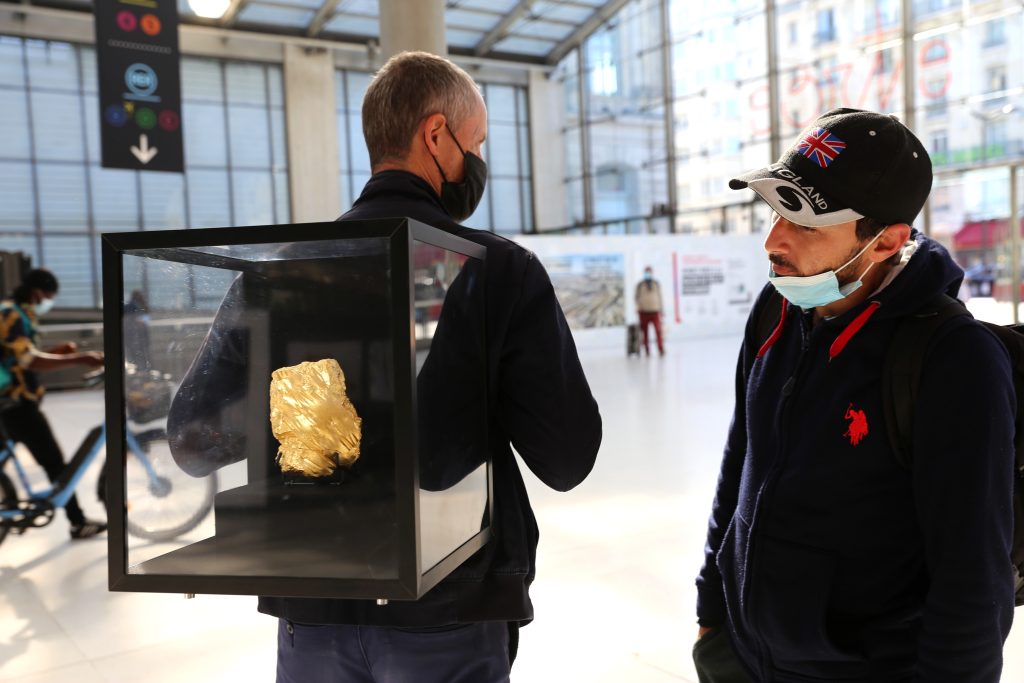
2021 / Variable value / Credit: Sophie Mabille
.
How do you perceive the evolution of your work over the years? Are there themes or techniques you wish to explore further in the future?
.
Today, I clearly distinguish two major periods in my journey: from the late 1990s to 2015, and then from 2020-21 to the present, with an intermediate space between the two that I call my “half-sleep” time. The early years were a phase of intense learning and experimentation: exploring mediums, establishing protocols, and appropriating various themes. Then came this voluntary “half-sleep” period during which I distanced myself somewhat from the contemporary art world and stopped producing marketable works, allowing myself only ephemeral and performative forms. It was a period nourished by human discoveries, traumas, technical epiphanies such as my encounter with gold, and my first actions in urban space.
.
In 2020, opening closets filled with almost fifty years of family history reactivated everything. I realized that all past stages formed a unique, structuring foundation ready to open up. Since then, my work has expanded and become denser. It opens itself to the world.
.
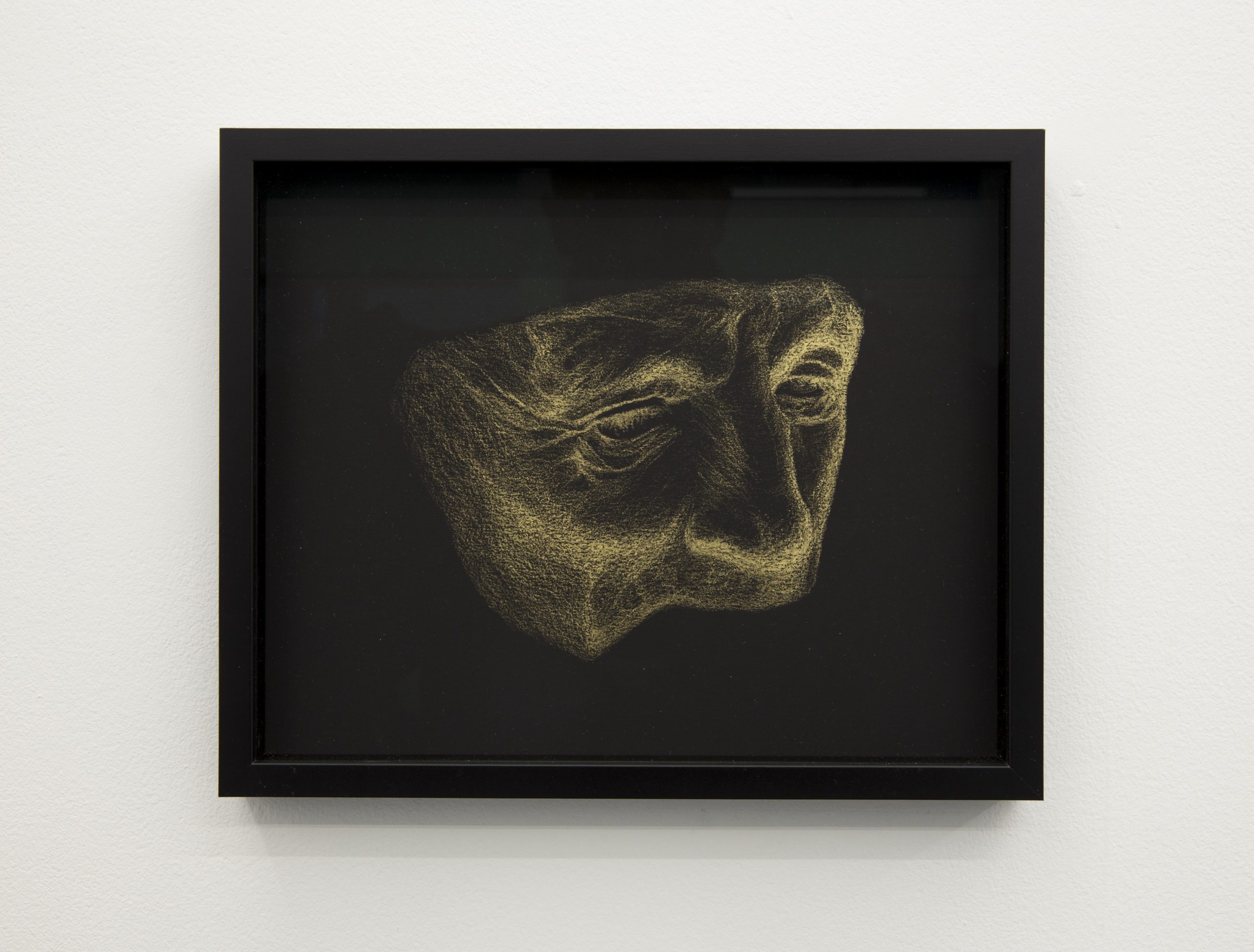
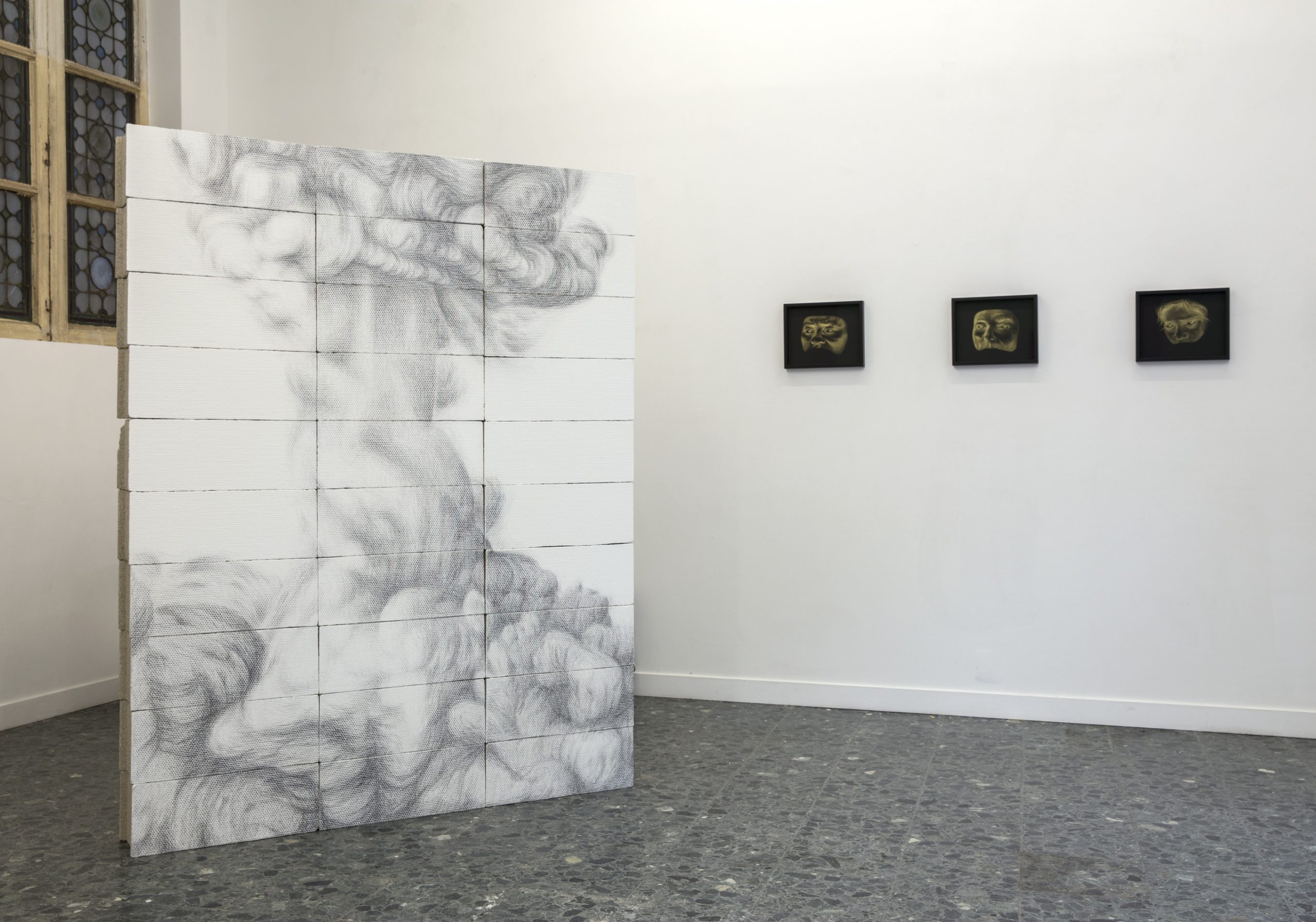
As for the future, I don’t yet know precisely where all this will lead me—and that’s perfectly fine. I want to explore video, 3D printing, and forms of socially engaged art more deeply. New themes will likely emerge. I don’t choose them upfront; it is the works themselves that bring them forth. My current series À la lumière de tes yeux deals, for example, with energy, the extraction of living forces, labor, and geopolitics. But my core focuses—memory, history, the unconscious, material and cultural values, precariousness, and the preciousness of life—will always remain present. They will evolve and transform, just like the world around me. Perhaps madness and happiness, very alive in my past and current questions, will one day find their place in this great ongoing work.
.

.
How important is interaction with the public in your work? How do you wish for viewers to perceive and interpret your artworks?
.
Interaction with the public is essential in my work. It is based on themes deeply rooted in my family history in Indochina, linked to French colonization and its aftermath after the anti-French independence war. These subjects, like all those I address, which question both the past and the present, territories, and history, concern us all. They go beyond the individual to touch on the universal and the collective. My interventions in urban space stem from this desire to stay connected to reality. They generate strong interaction with the public, creating rich exchanges, sometimes disconcerting, often poetic. This allows me to be in contact with people of all ages and social backgrounds, including the invisible who live on the streets. Being in the street lets me meet individuals of all ages and backgrounds, including those labeled invisible. It’s a way of reaching an audience rarely encountered in galleries and weaving authentic and unexpected connections through art.
.
Regarding the interpretation of my work, I let the public project their own story, personal references, fantasies, sensitivity, and memory, whether conscious or not. If I favor the golden color, it is partly to attract light and draw attention to these images filled with humanity, life, precariousness, pain, and hope. The performances I carry out in urban spaces are part of this same desire to illuminate these moments.
.
What I hope above all is that these moments of light, these images, contribute to a form of reconstruction of the world. I hope they will have a salvational, magical effect, capable of provoking awakening or awareness, both on an individual and collective, physical or spiritual level. Even the most intimate impact can, in its own way, help soothe the fire and heal this world in which we live.
.
Thank you.
.

.MacVal / the evening of the opening of the exhibition “The Ideal Gender” / 2025
.
.
Learn more about the artist:
.
Instagram
www.regisseneque.com
.
Represented by the Marguerite Milin gallery