
Drawing the Unseen
with
Nina Mae Fowler
.
.
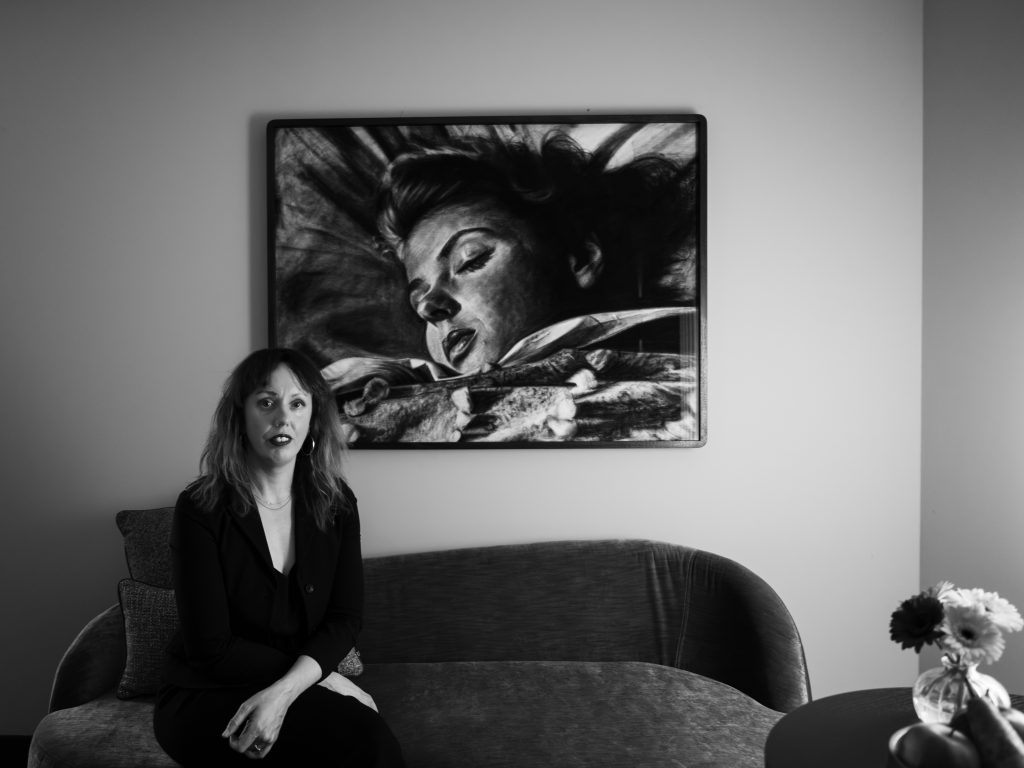
Nina Mae Fowler
By Christophe Beaumont
.
I am endlessly captivated by the work of Nina Mae Fowler, whose drawings occupy a space where beauty and tension, intimacy and spectacle, coexist with uncanny precision. Her art transforms fleeting cinematic moments, archival images, and the aura of celebrity into something profoundly human, revealing stories that linger beneath the surface. Each line, each shadow, seems to hold a suspended narrative — a frozen gesture of emotion, desire, or vulnerability — and it is a rare privilege to enter her world and witness the meticulous, passionate process that brings these images to life.
.
Born in London in 1981, Nina Mae Fowler trained as a sculptor at the University of Brighton, graduating with a degree in Fine Art Sculpture. Early in her career, she explored conceptual art through performance, video, and installation, before rediscovering the medium that would define her practice: drawing. She is particularly renowned for large-scale, cinematic portraits that are at once technically precise and emotionally charged, often inspired by film stills, archival photographs, and the golden age of Hollywood — yet transformed into wholly original visions that bear her singular artistic imprint.
.
Fowler’s work has been exhibited widely across the UK, Europe, and the United States, earning recognition for both its technical mastery and its psychological intensity. She has been shortlisted for prestigious awards including the BP Portrait Award and the Jerwood Drawing Prize, and her works have been commissioned for major projects such as Luminary Drawings at the National Portrait Gallery in London, now part of the gallery’s permanent collection. Her drawings and installations continue to be sought after by public and private collections worldwide, a testament to their lasting impact.
.
Her new exhibition at Galerie Suzanne Tarasieve in Paris, continues to probe the delicate intersection of memory, image, and emotion. Across this body of work, cinematic histories, personal obsessions, and the fragile truths of human experience converge, inviting the viewer into a world at once intimate, unsettling, and profoundly alive. In this interview, we explore Nina Mae Fowler’s process, inspirations, and the personal and professional experiences that shape the extraordinary work she continues to create.
.
.
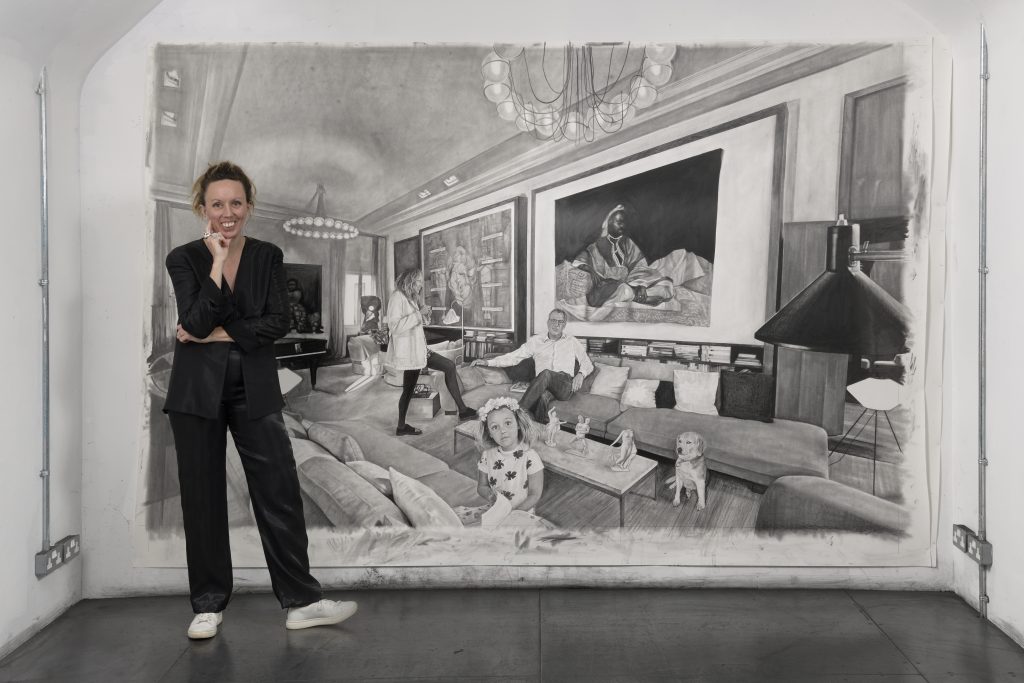
Nina Mae Fowler
by Douglas Atfield
.
Julia Palmeirao: Before talking about the exhibition, I’d like to go back to the beginning: how did you become an artist?
.
Nina Mae Fowler: I think it’s in the blood. My dad is an architect and my mum is a fashion designer. The environment I grew up in was very free – free in terms of imagination and curiosity (free from the internet, free from the rapid pace of life today) – so I spent a lot of time looking through bookshelves and listening to my dad’s records. My parents had a lot of books, and I was constantly taking them down from the shelves and exploring them.
.
When my parents moved to London, they didn’t have much money, so my dad made a lot of the furniture himself and did much of the framing around the house. But it was always very important to them to live with art on the walls and interesting furniture, so everything was beautifully considered. That artistic environment really shaped my childhood.
.
If you look at my new exhibition, there’s a colour that refers to celluloid film, which is very important to me. You can see it in the works that are framed by two coloured panels on either side. Achieving that colour is incredibly difficult, so I asked my husband Craig Wylie (J.P.: the painter and BP Portrait Award winner), to make it for me – and he did it perfectly. I think that colour surrounded me a lot growing up. My dad used it frequently in furniture and framing, so it stayed with me visually and emotionally.
.
My dad also loves cinema and my parents would go to many theatre productions, keeping all the programmes. I remember spending a lot of time watching movies with them, or carefully looking through those programmes. All of this had a huge impact on my artistic development. They were also incredibly supportive. My dad became very successful in London – he was Chief Architect at the BBC – and my mum developed her own brand of clothing, which allowed my parents to give me and my brother the best education they could.
.
At school, I was lucky to have access to an excellent art department. I was always a hard worker, and that department really encouraged me to pursue art seriously. I had enormous support from my parents throughout. When I decided to go into the arts, I chose Spanish, Art History, and Fine Art, for my A-Levels and my parents fully stood behind that decision.
.
I think when you know, you can’t ignore it. So when you ask how I became an artist, I don’t think I really made a choice. It was a path I was very fortunate to follow.
.
.
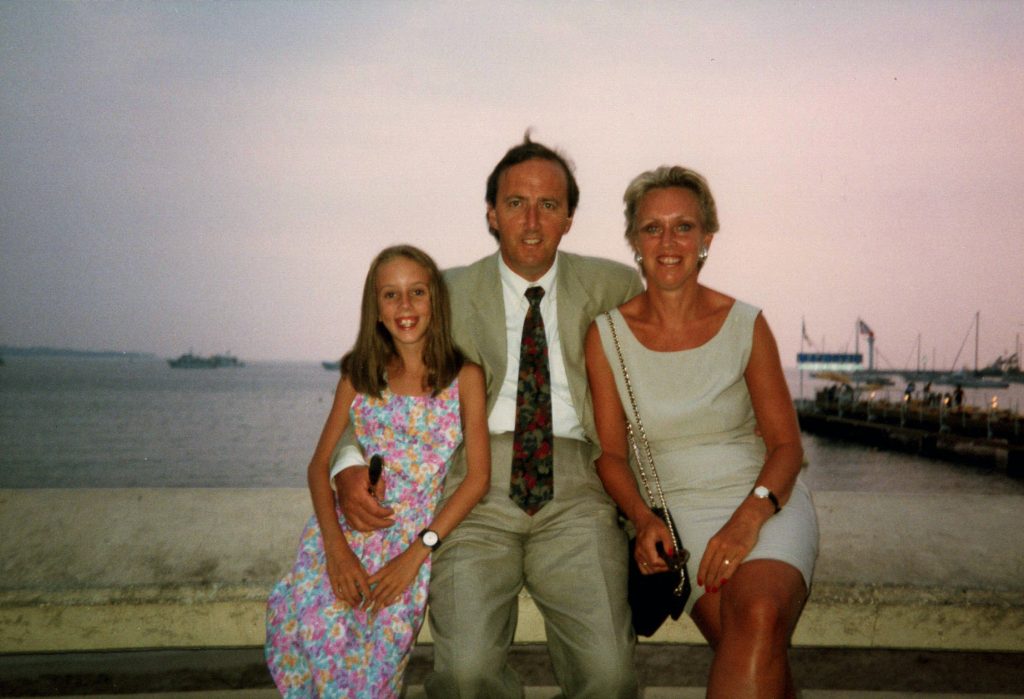
Nina with her parents
.
J.P.: After graduating, how did you navigate the transition between art school and becoming a professional artist – both financially and creatively?
.
N.M.F.: When I left university, I took on lots of small jobs so I could afford to keep a studio. Living back in London accommodation was small, so having a studio space was essential. I was teaching, working weekends – doing whatever I could to support myself while continuing my practice.
.
When I decided to go to art school, I knew it would really test me. At the beginning, I was making very conceptual work – performance, video art, sculpture. I genuinely wanted to explore those forms, and I was very self-motivated to push myself forward. It was an intense period – balancing studies, a creative life, and all those small jobs at the same time.
.
After graduating, I chose not to continue into further education. I felt strongly that I wanted to return to drawing. I’ve always had a deep love for art in all its forms, and I wanted to experience different practices. But once I’d gone through that experimentation, I realised how much I missed drawing and cinema. I just wanted to draw again – to return to the basics.
.
I also felt quite tired of having people standing behind me, pushing me in one direction or another. I needed to reclaim something for myself – to work more independently, and to reconnect with what felt essential.
.
In 2009, I had my first real breakthrough. I had the opportunity to exhibit at Docks Art Fair in Lyon and for the first time I thought, maybe my work is interesting enough for people to truly respect it. After that, a large installation was acquired by a foundation in the United States, and when the work sold, I thought – okay, maybe I can actually do this.
.
Even now, I still feel amazed when a work sells. It never feels ordinary.
.
.
.
J.P.: You’ve spoken about missing cinema, and it’s evident that film plays a central role in your practice. Was that influence rooted in your childhood – perhaps through your family – or did you encounter cinema more independently later in life? How did that relationship first develop?
.
N.M.F.: My mum used to show me films that she knew I would love. There were certain parts I was too young to see, so she would fast-forward through those scenes and skip to the ones she thought would really captivate me. In a way, it felt like she was editing the films for me – giving me her own curated version of what she loved. I was completely mesmerised by it.
.
That early exposure to black-and-white cinema didn’t feel like an education or something formal – it felt entirely natural, almost instinctive. Cinema was simply part of the atmosphere I grew up in. I soon had my own collection of books about film, so I would constantly draw from those images. I was always drawing, drawing, drawing.
.
It became a real passion. The people I was drawing, the films I was studying – it felt like everything I loved could somehow be held and resolved within those images. Drawing cinema allowed me to gather all those emotions and fascinations into one place.
.
This new exhibition feels like a culmination of that. I feel as though I’ve poured myself completely into it. And now, strangely, I don’t quite know what comes next. It feels a little like a full stop – or perhaps a pause before something new begins.
.
.

by Douglas Atfield
.
J.P.: You originally trained as a sculptor, yet today you are best known for drawing. Do you feel that sculpture still informs the way you approach drawing, particularly in terms of scale and physical presence?
.
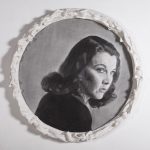
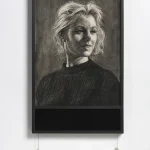
N.M.F.: My drawings are always framed in a sculptural way. For me, they are never just pieces of paper. I see them as objects – almost like sculptures – something three-dimensional. Even though they’re flat, I’m always thinking about space and scale, about how they sit in the room, how they meet the wall or the floor. That sculptural part of me hasn’t gone anywhere – it’s still there, grounding the work physically.
.
.



.
J.P.: There is a strong tension in your work between glamour and darkness, attraction and discomfort. When we look at your drawings, there’s often a feeling that something is about to happen – something imminent, almost unsettling. Is this a way of questioning our relationship to images, celebrity, and power?
.
N.M.F.: For me, the first thing is empathy. I need to empathise with the subject somehow – that’s always the reason I choose a particular image. It’s very important to me what that person is feeling.
.
When I select images, especially of actors, I usually know a lot about their background. I often know what happened to them later – whether their lives declined, or whether something tragic occurred. That added knowledge creates a deeper empathy, and I think that goes into the work. It creates that feeling of imminent danger, or of tragedy, that you sense in the drawings.
.
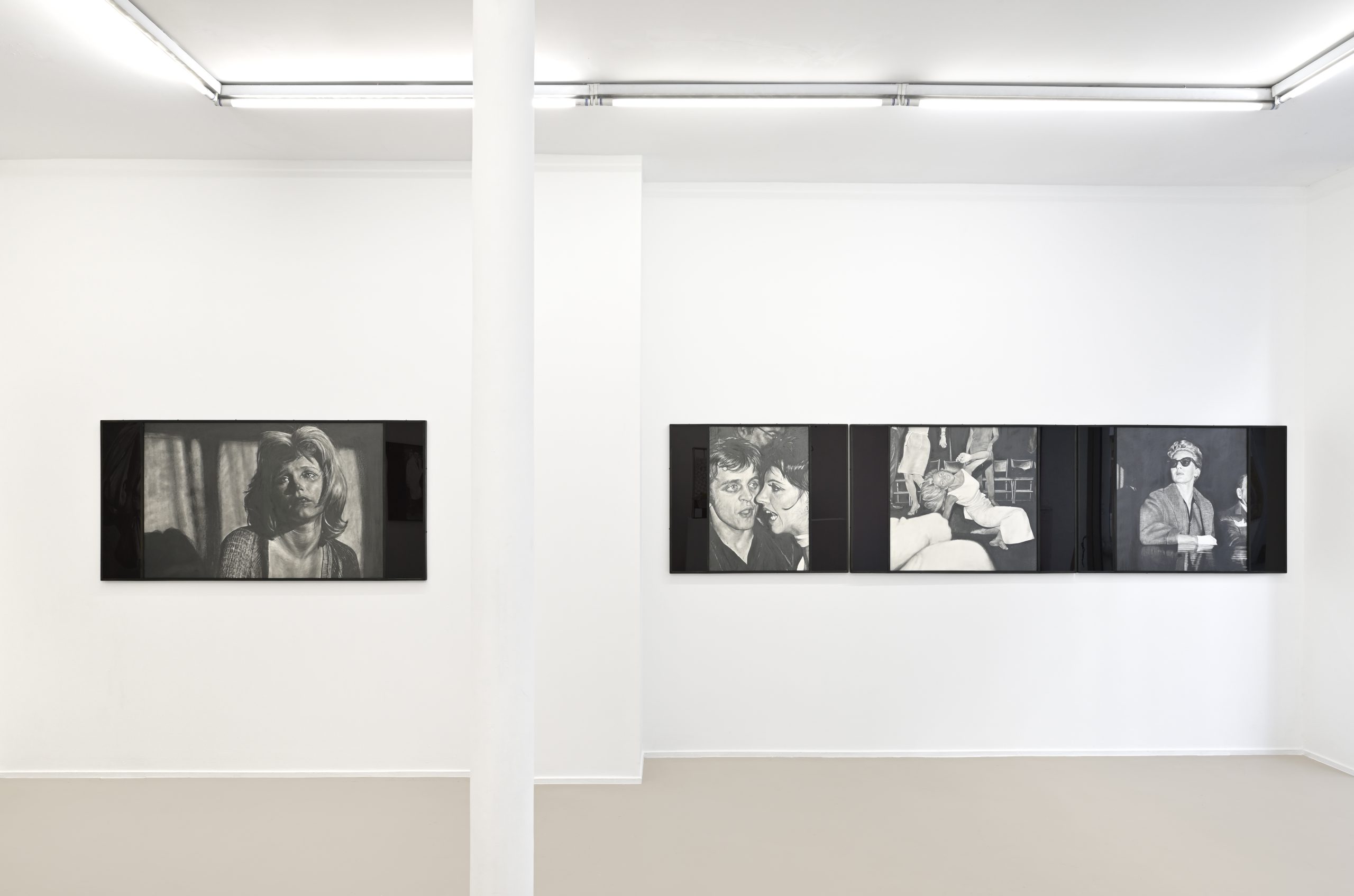
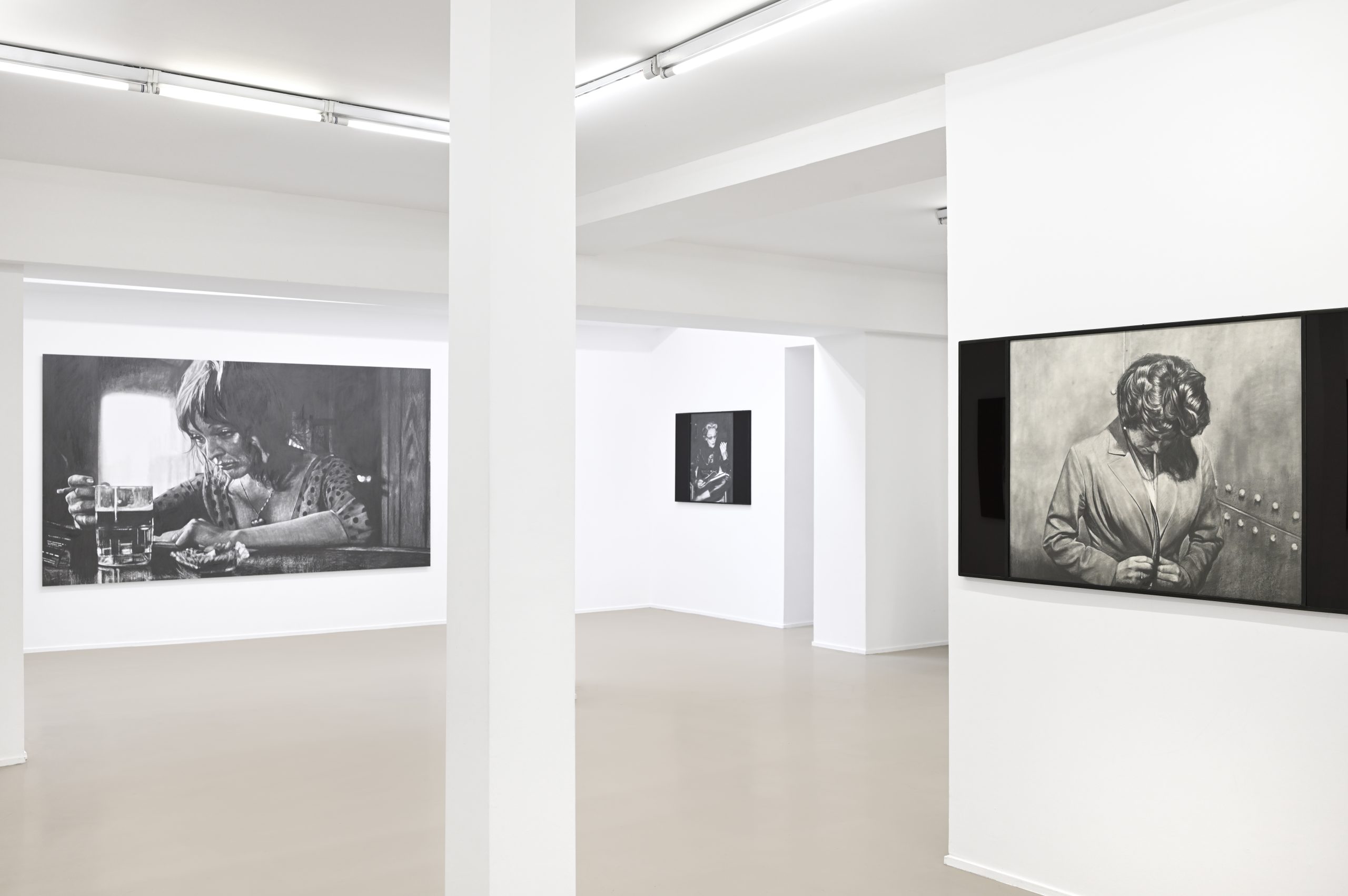
I often choose stills from films where the actor is playing a very intense or vulnerable role. For example, in the current exhibition there is a large work entitled Susan on the main wall – the actress Susan Tyrrell. She gave an incredible performance in John Huston’s film Fat City. The role she played was extremely difficult – a woman on the edge. In the scene I chose, she is sitting in a bar, just looking – and you can feel something unresolved in her expression.
.
She was nominated for an Oscar for that role, but afterwards she disappeared from Hollywood. Later, she spoke in interviews about being sexually abused during the filming. Knowing that history, and then returning to the film, you begin to see something else in that moment – as if she is not only acting, but living something real. That added layer of drama and truth is what creates the emotional intensity in the work.
.
I’m often more interested in faces that are not immediately recognisable. Of course, in the exhibition you will see figures like Marilyn Monroe or Elizabeth Taylor, but I prefer choosing those who are not completely consumed by fame. I think that’s why they move us differently.
.
It’s important to me that people don’t need extensive knowledge of art or cinema to connect with the work. Even without knowing the background, I want the drawing itself to speak – to create that emotional response on its own.
.
.

Susan. Pencil and graphite on paper, 2025
.
J.P.: Do you think that your choice to make drawings in black and white helps to strengthen this feeling?
.
N.M.F.: Yes, I think so. We naturally associate black and white with melodrama, and we associate it with the past.
.
.
.
J.P.: I was also thinking about the younger generation, who grew up in a completely different visual world, full of color.
.
N.M.F.: I know… so I think they’re lost in time. My choice to do black and white makes it feel like I’m working in one era, like in the past. I’m working across several decades, but the use of no color makes people think I’m working only in the golden era of cinema.
.
The younger generation doesn’t really know who the people are in my drawings anymore. But I think it’s very important to keep those people’s memory alive. It’s very important to realise that not much has changed in how women were treated in Hollywood.
.
When all the stories came out surrounding #metoo, I realized this is what all my work has been about. This is what I was thinking about for years. And then when the movement exploded, I thought… yes, that’s exactly it. My work has been exploring this all along – the truth behind all the lies. Back then, it was much more mysterious. Now we know more. But that feeling, that hidden truth… that’s what my work is about.
.
.
.
J.P.: Some artists see drawing as a way to impose control – a careful construction – while others see it as a way to let go and discover something unexpected. For you, when you are working, is drawing an act of control, of release?
.
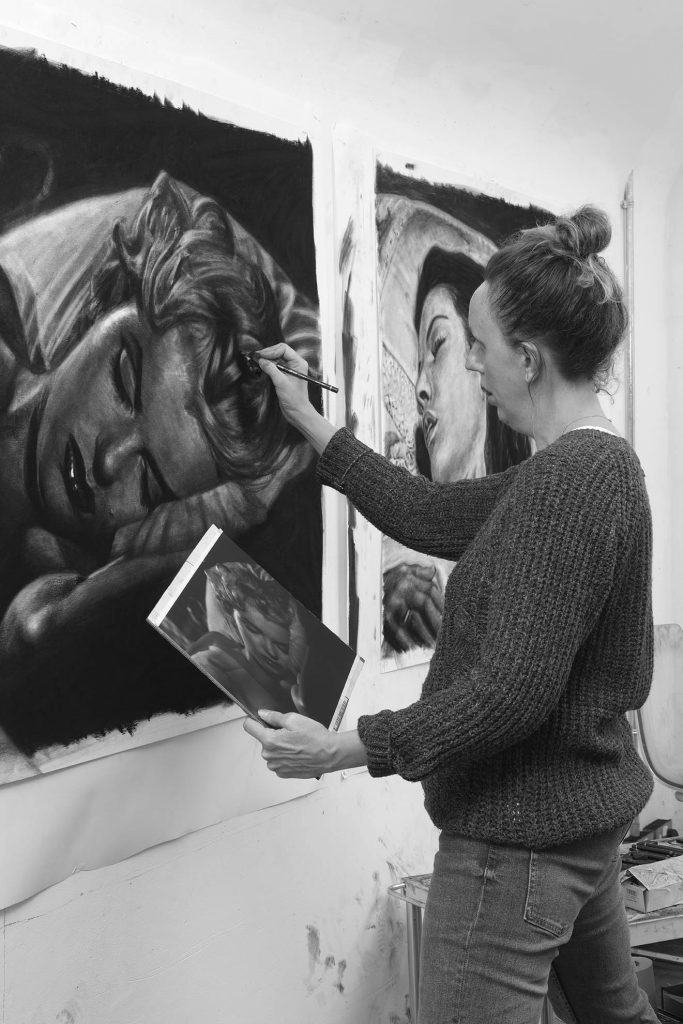
N.M.F.: I would say both. Part of what I do is about control, about placing every mark very intentionally. But there’s another part where I’m working with rubbers – erasers – and I’m removing, blending, taking away. So in a way you’re putting something down and that’s the control part.
.
Then you use the rubbers to blend and to take away – it becomes more like a painterly process on the surface. So there’s this tension: putting the mark down is controlled, but the act of removal – of blending and erasing – is more about letting go, letting the image breathe and change.
.
.
.
J.P.: Your process feels extremely precise and almost obsessive. Could you describe how you work, from selecting an image to completing the final drawing?
.
N.M.F.: I live with the images for a long time before I decide that this is the one. If it comes from a film, I spend a lot of time getting to know the stills, playing around with them. I am always trying to make a drawing that steps away from the original photo – whether I introduce something new or take something away. I don’t want to create an exact copy. The soul of the image is material.
.
I sometimes live with the images for years before I feel it’s the right time to draw them. I also like to be a little challenged by them – in terms of drawing, technically. These challenges help me improve. Sometimes I look at the image and already know which pencil or eraser I will use to create it. Capturing these moments with pencil on paper still excites me, and I feel that I get better and better over time.
.
For this current exhibition, I faced a lot of drawing challenges. There were a few works that really tested me – moments when I thought, I can’t do this. I just can’t get it. I turned the drawings upside down, I looked at them through a mirror, I took photos, I studied them on my computer, I made changes. Some things are really difficult.
.
In those moments, I ask my husband to take a look. As an artist himself, he’s very good at seeing what’s missing, what isn’t coming through. It’s precious to have that kind of support – not only professionally, but personally as well. During the last five months of preparing this exhibition, I couldn’t cook, I couldn’t buy food. I’m not saying that’s my role, but I really appreciate that he understands I might drop a few balls as a mother, and that he’s willing to step up. I do the same for him. It makes me emotional because I feel so lucky to have him by my side.
.
It makes me very emotional because I feel so lucky to have him by my side. I really miss him when we’re apart, and there was a lot of that before this show. It touches me deeply, especially because I’m a mother. You know — because you’re a mother too.
.
.
.
J.P.: Oh yes, I know. I know how important it is to have a supportive partner and father for our children. I understand that very well — I’m fortunate to have an amazing man beside me too. My husband is very supportive, both to me and to my children — his stepchildren. So I truly know how you feel.
Oh… I wasn’t planning to cry during this interview, but I feel very grateful that you shared this.
.
N.M.F.: Yes, because without that support, we wouldn’t be able to do so many of the things we do.
.
.
.
J.P.: And it is something truly precious, because being in a relationship where both partners are artists can at times be very challenging.
.
N.M.F.: Being an artist is inherently selfish in some ways — you have to be, in order to create. Sometimes I want a drawing to be finished so badly, but I feel in my heart that it’s not ready yet. In those moments, I need my husband to come and make a small comment — and suddenly everything falls into place.
.
.

Nina and Craig in Paris, 2026
.
J.P.: Your drawings range dramatically in scale, from intimate works on paper to monumental compositions that command the entire wall. How do you determine which image demands a large physical presence and which calls for a more restrained, intimate format? Is the scale driven by the emotional intensity of the subject, the cinematic quality of the moment, or by the way you want the viewer’s body to encounter the work?
.
N.M.F.: It really depends on the image – the image tells me what it needs. I love installation work, and I love making an impact. As a woman artist working on paper, I do feel that scale matters. Working large immediately captures people’s attention. Sometimes I feel like I just want to scream – and making something very big is a way of doing that.
.
I’m drawn to larger formats because I love the idea that an exhibition can overwhelm the viewer in a physical way – that it becomes an experience, not just something you look at. And now, when I look at the drawings in this exhibition, they almost feel smaller to me. I already have that feeling that I’d like to go even bigger.
.
.
.
J.P.: Your current exhibition Celluloid Studio at Galerie Suzanne Tarasieve in Paris presents a body of work drawn from cinematic imagery and archival sources. Could you tell us how this particular series came together — what themes or emotional undercurrents you wanted to bring forward, and how the title Celluloid Studio reflects the way you think about the relationship between cinema, memory, and the act of drawing?
.
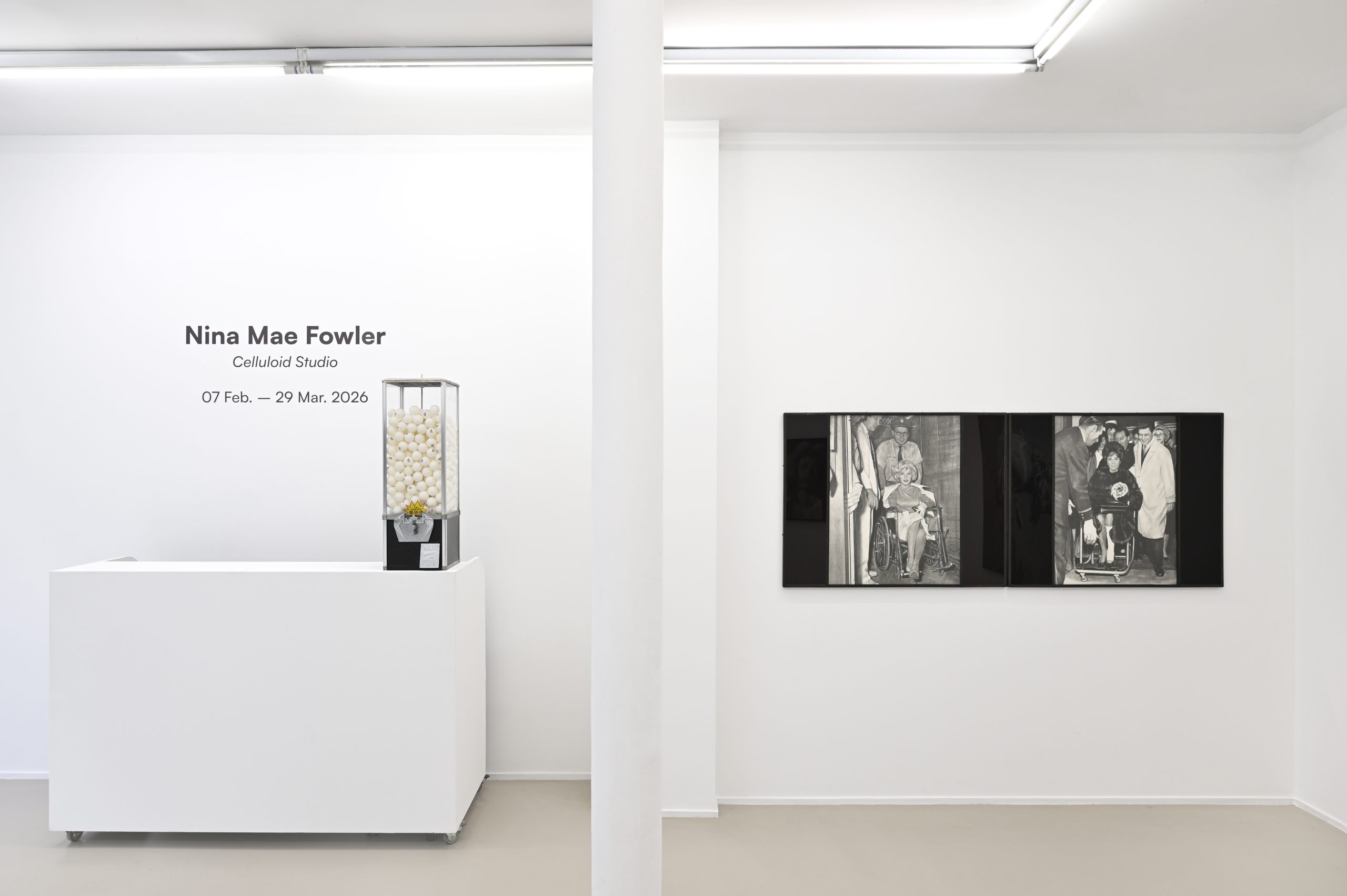
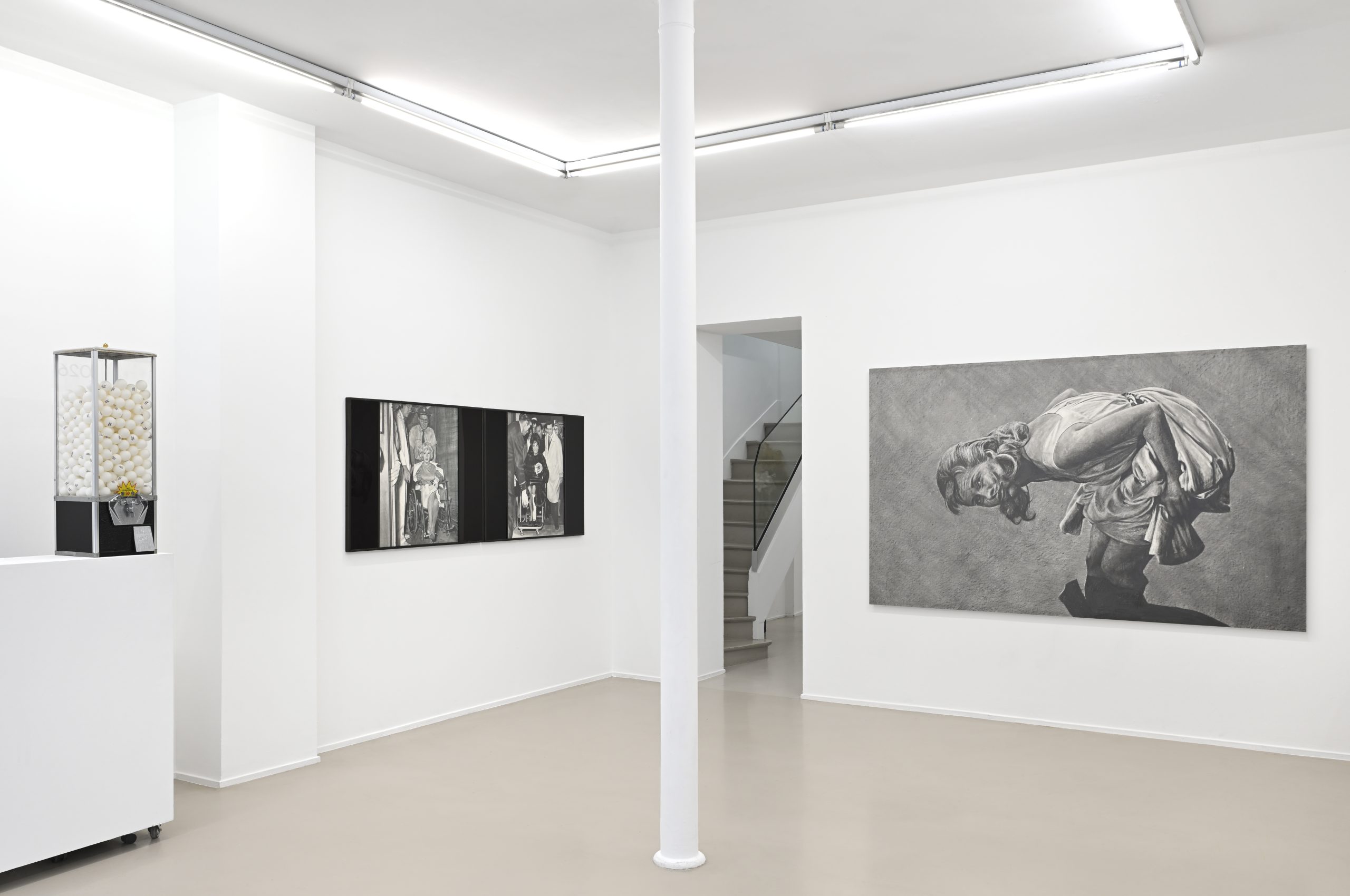
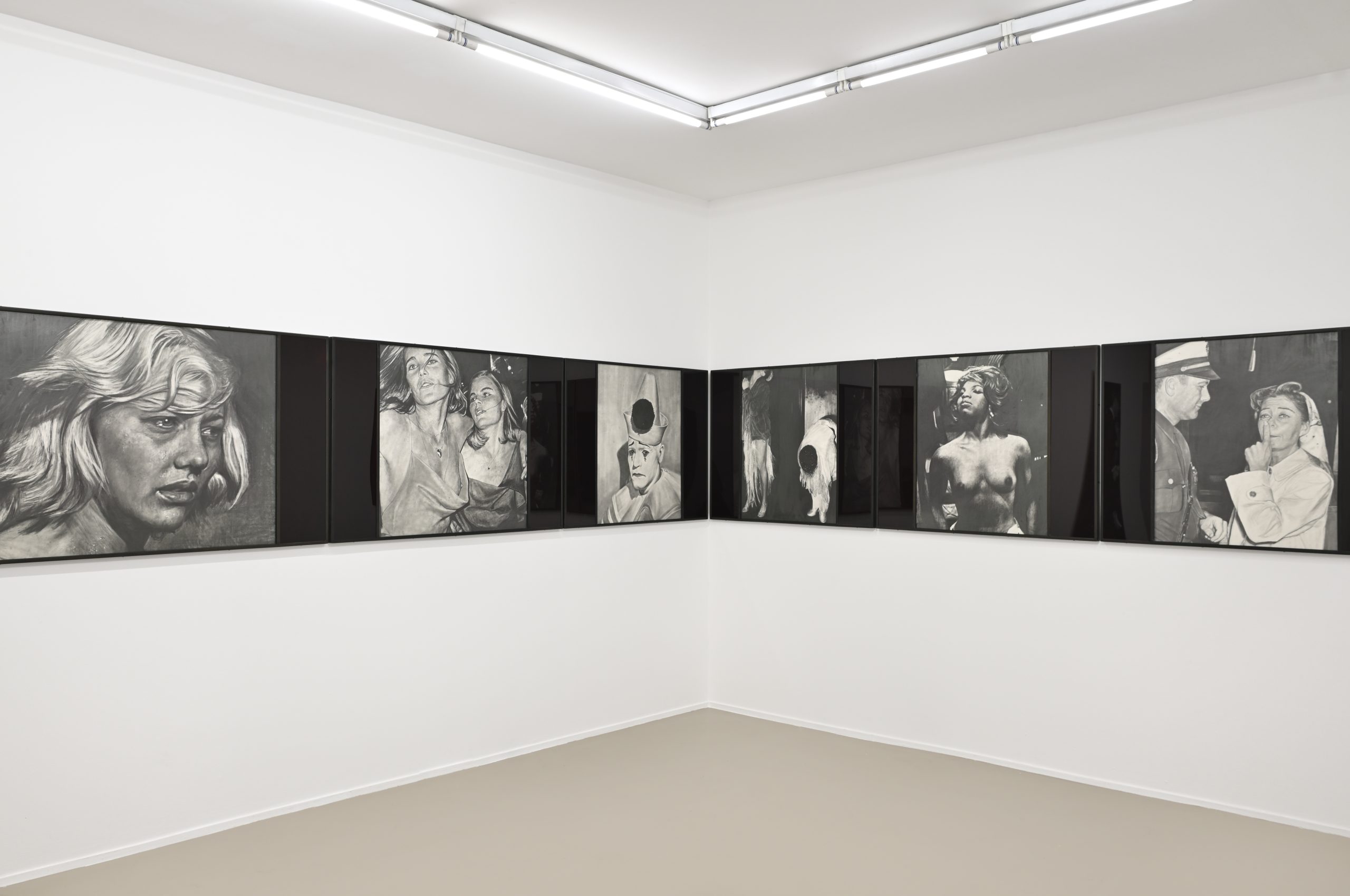
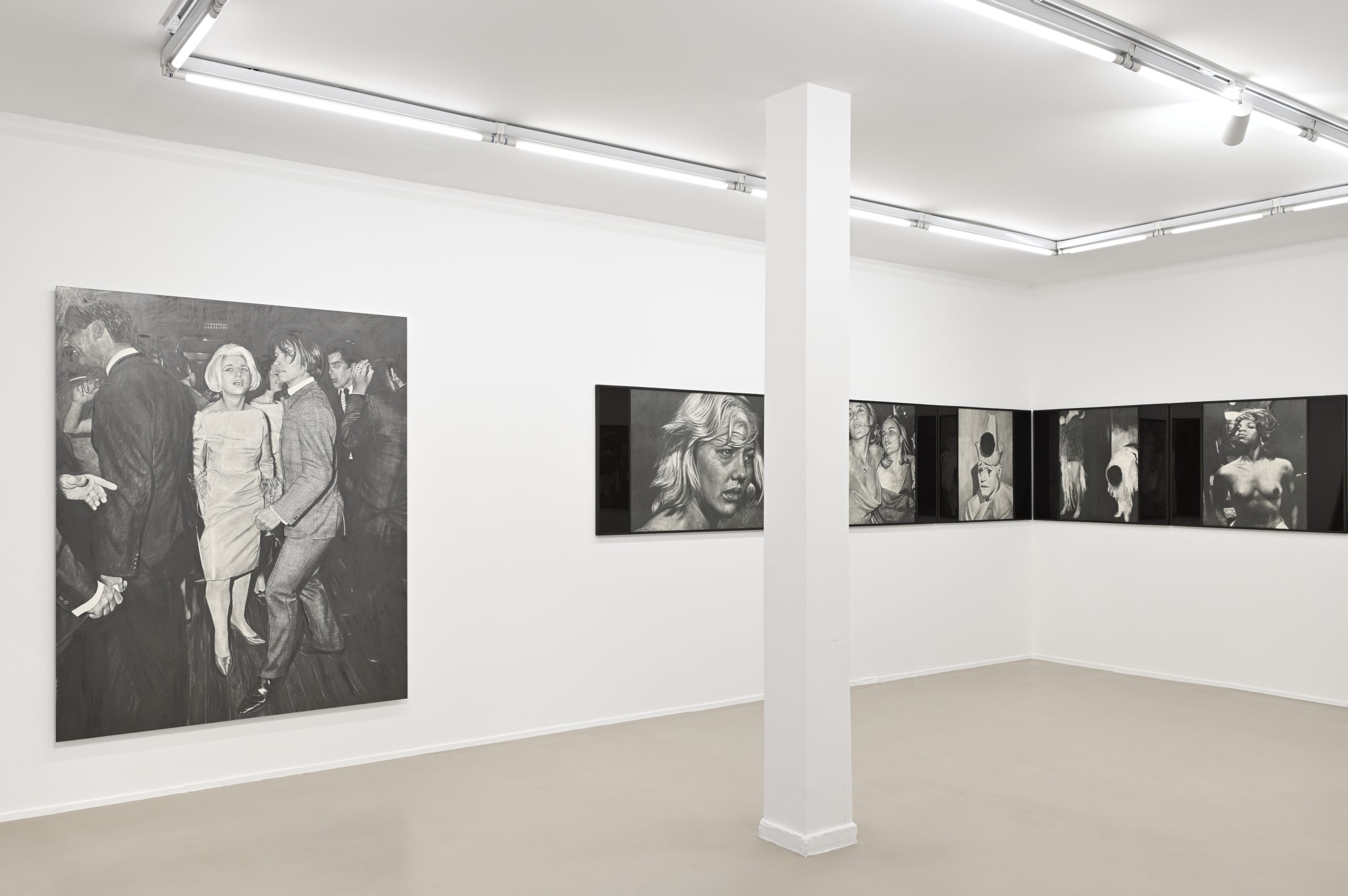
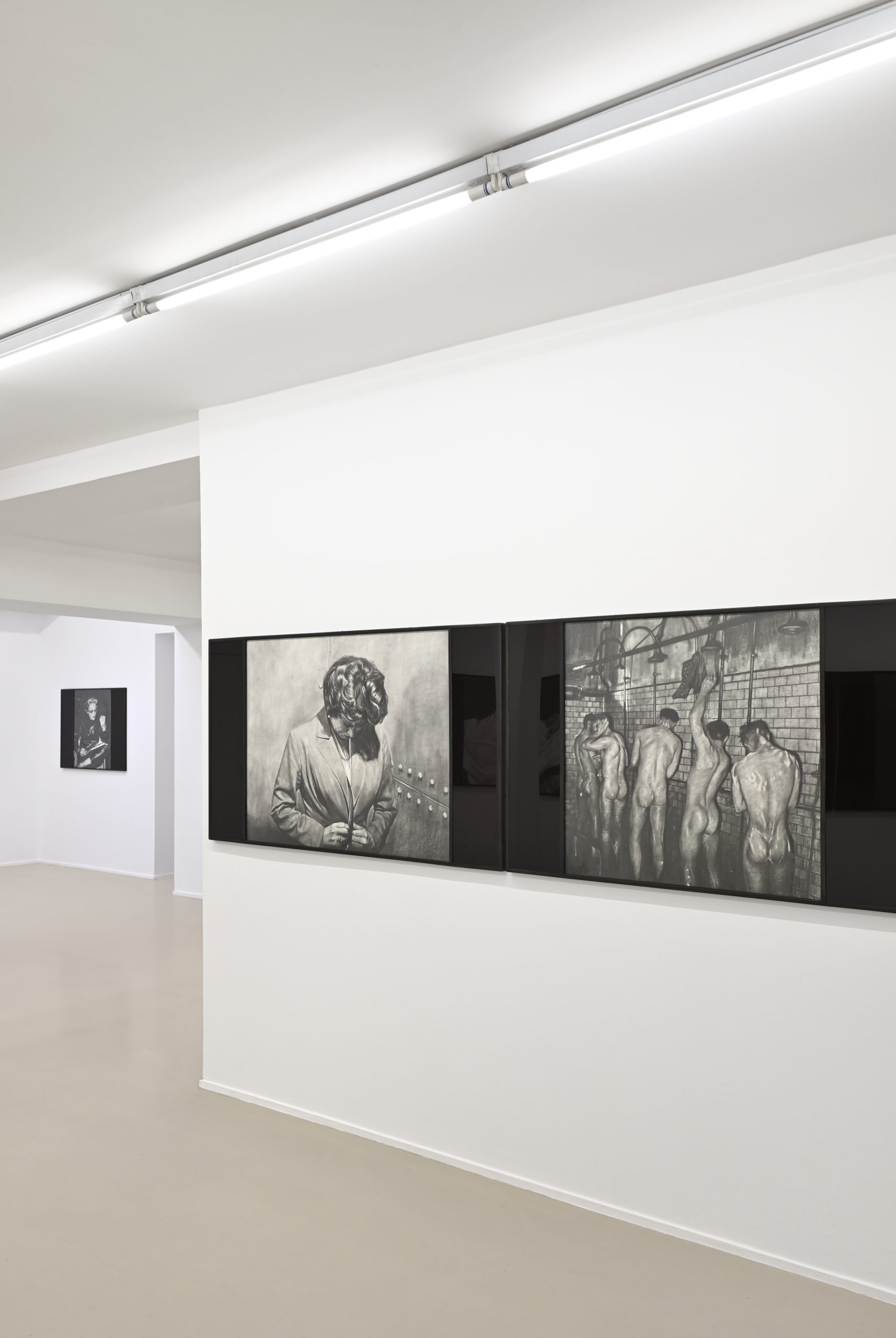
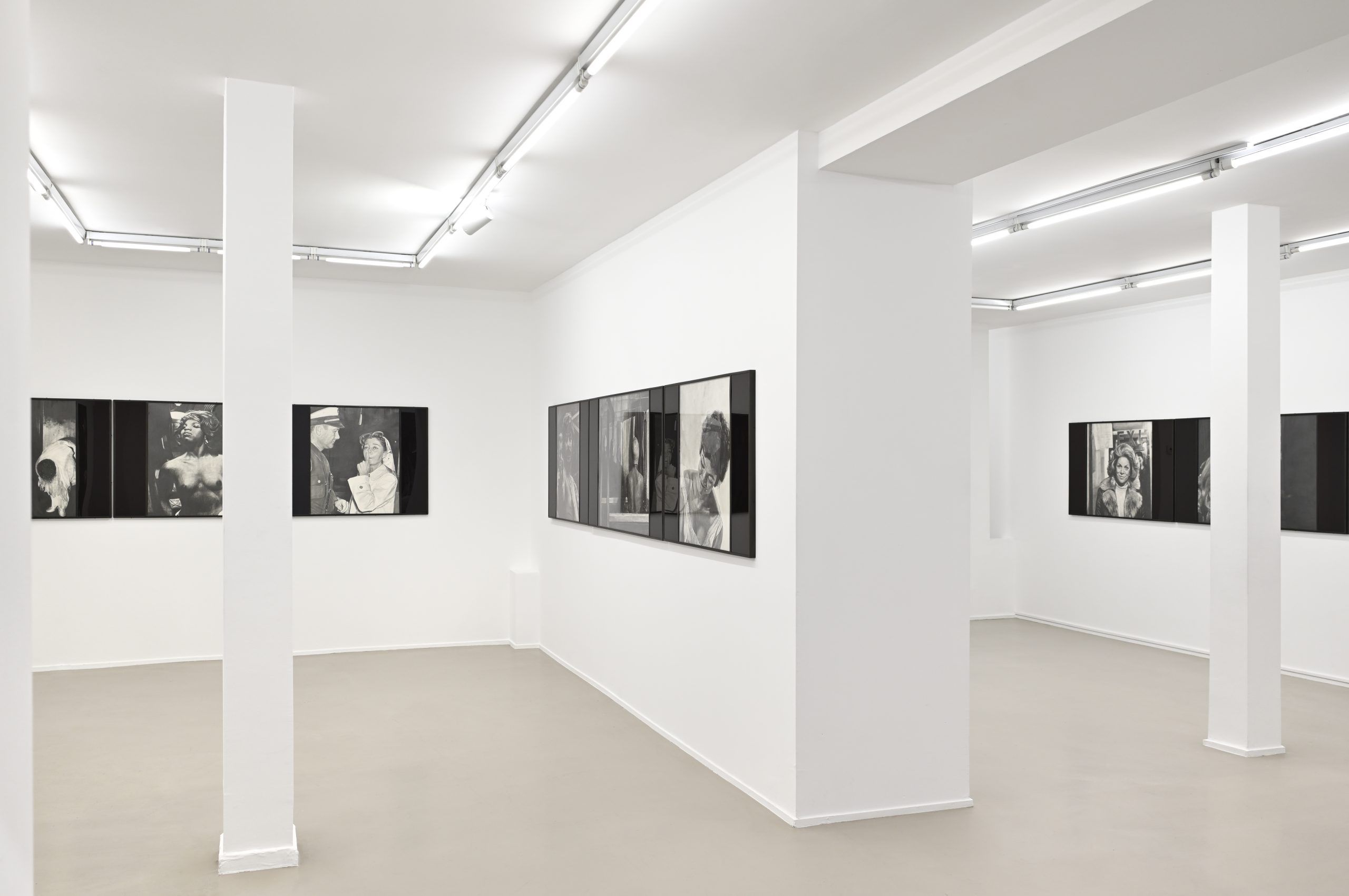
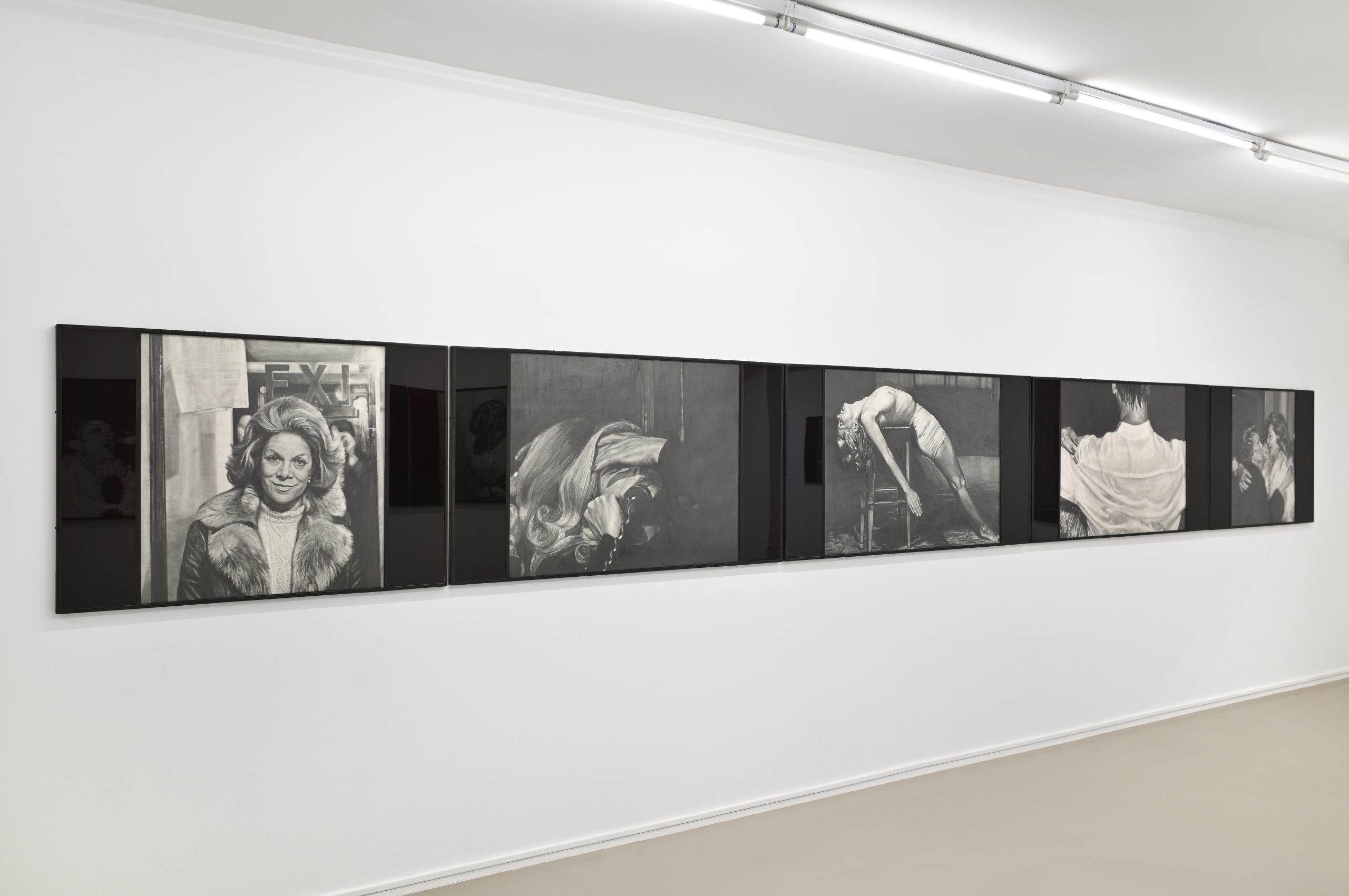
N.M.F.: The exhibition is formed almost like a film strip. You can see the handmade frames, the painted panels, and the glass plates embracing the drawings — it’s all a kind of reference to celluloid itself.
.
I wanted the works to feel connected, like frames following one another, as if the viewer is moving through a sequence. The framing becomes part of the narrative. It’s not just about the image, but about how it is held, protected, and presented — much like a strip of film.
.
So the exhibition itself becomes cinematic, not only in the subject matter, but in the way it unfolds in space.
.
.







.
J.P.: When I received the invitation from the gallery, the work Lilith, chosen to represent the exhibition, immediately captured my attention. There is something deeply unsettling in the pose of the young woman – the image feels ambiguous, almost sinister. We cannot quite grasp what is happening, yet the tension is palpable. Could you tell us more about this piece and what drew you to this particular image?
.
N.M.F.: In this drawing, you see the French actress Jean Seberg. I was completely fascinated by the terrible things she had to endure in her life. In the scene itself, there is nothing overtly sinister – she is simply in a lake, looking at her reflection. But that ambiguity is exactly why I chose the still. It could mean many things.
.
In the film, she is struggling with her mental health, and when you combine that narrative with what we know about her life, the image takes on a different weight. The composition, the story of the film, the biography of the actress – it all comes together for me. That is where the power lies.
.
There is also something about the image that feels almost like a historical painting, as if it could have been made hundreds of years ago. There is a sense of fragility – of woman-child, innocence and vulnerability – suspended in time.
.
.
.
J.P.: When I first saw the work, I immediately thought of Paula Rego – particularly the psychological intensity of her female figures, who often inhabit ambiguous, theatrical spaces between power and vulnerability. Do you see any affinity with her work?
.
N.M.F.: Yes, actually, she is someone I mentioned in my speech at the opening of the exhibition. She interests me very much, especially as a mother and as a female artist. I once read an interview with her where she said that so much of life felt like pretending – being a mother, being a wife – almost like playing a role. And that the only time she felt she was truly living was when she was alone in her studio.
.
That really stayed with me. I find that idea very powerful – that the studio becomes the only place of absolute truth. It’s something I relate to deeply.
.
.

Lilith. Pencil and graphite on paper, 2025, 1750x2305mm
.
J.P.: How does the title Celluloid Studio reflect the way you think about the relationship between cinema, memory, and the act of drawing?
.
N.M.F.: I became very interested in celluloid as a material – as a medium that belongs to the past and is no longer really used. Symbolically, it works perfectly for me. It is dangerous, unpredictable, flammable. That fragility and volatility mirror the subjects I deal with – cinema, fame, desire, power, and their hidden consequences.
.
And “studio” has multiple meanings. It can be an artist’s studio, a dance studio, a film studio. It’s a space of creation, but also of performance.
.
The title also connects to the book Celluloid Sacrifice, written in 1966, which explores sex in cinema. All these references – material, symbolic, historical – come together in the title. It holds the complexity of what I’m trying to explore.
.
.
.
J.P.: The exhibition has a very strong scenographic presence. Was this the result of a curatorial collaboration, or did you approach it yourself – perhaps influenced by your background as the daughter of an architect?
.
N.M.F.: It was a collaboration. I don’t mind having a curatorial touch. I like working with people on the installation – it’s important for me to have another eye. Of course, I always see the space in my head when I’m preparing an exhibition. I really like to make the work for the space. I am very involved in how the work is placed, how it feels in the space, but I also enjoy the dialogue. It becomes richer that way.
.
The last time I had an exhibition here, I approached it differently. Because it was my first show in the space, I felt I needed to demonstrate the full breadth of what I could do. There were colour drawings, smaller works, sculpture — it was almost like an introduction, a way of showing the different languages I work in.
.
This time, however, I felt much more at ease. I’m more familiar with the space now, and that gave me the confidence to create a more unified body of work. The exhibition was conceived almost “in the round” — as a complete environment rather than a collection of individual pieces.
.
There are 24 drawings in total, which relates directly to film: 24 frames per second. That rhythm felt important. It reinforces the cinematic structure of the exhibition and connects back to the idea of the film strip running through the space.
.
I feel that this time, it has really worked as a whole.
.
.
.
J.P.: Thank you.
.
.

Nina Mae Fowler
by Michaël Huard
.
.