
Bodies in Tension
by Susanna Inglada
.
.

Susanna Inglada
by Aad Hoogendoorn
.
In the work of Susanna Inglada, drawing refuses to remain still. It expands beyond the page, cuts into space, casts shadows, and confronts the viewer with scenes of psychological and political intensity. Born in Spain and based in the Netherlands, Inglada has developed a practice in which figuration becomes a charged arena for power struggles, grotesque humor, and uneasy negotiations between bodies.
.
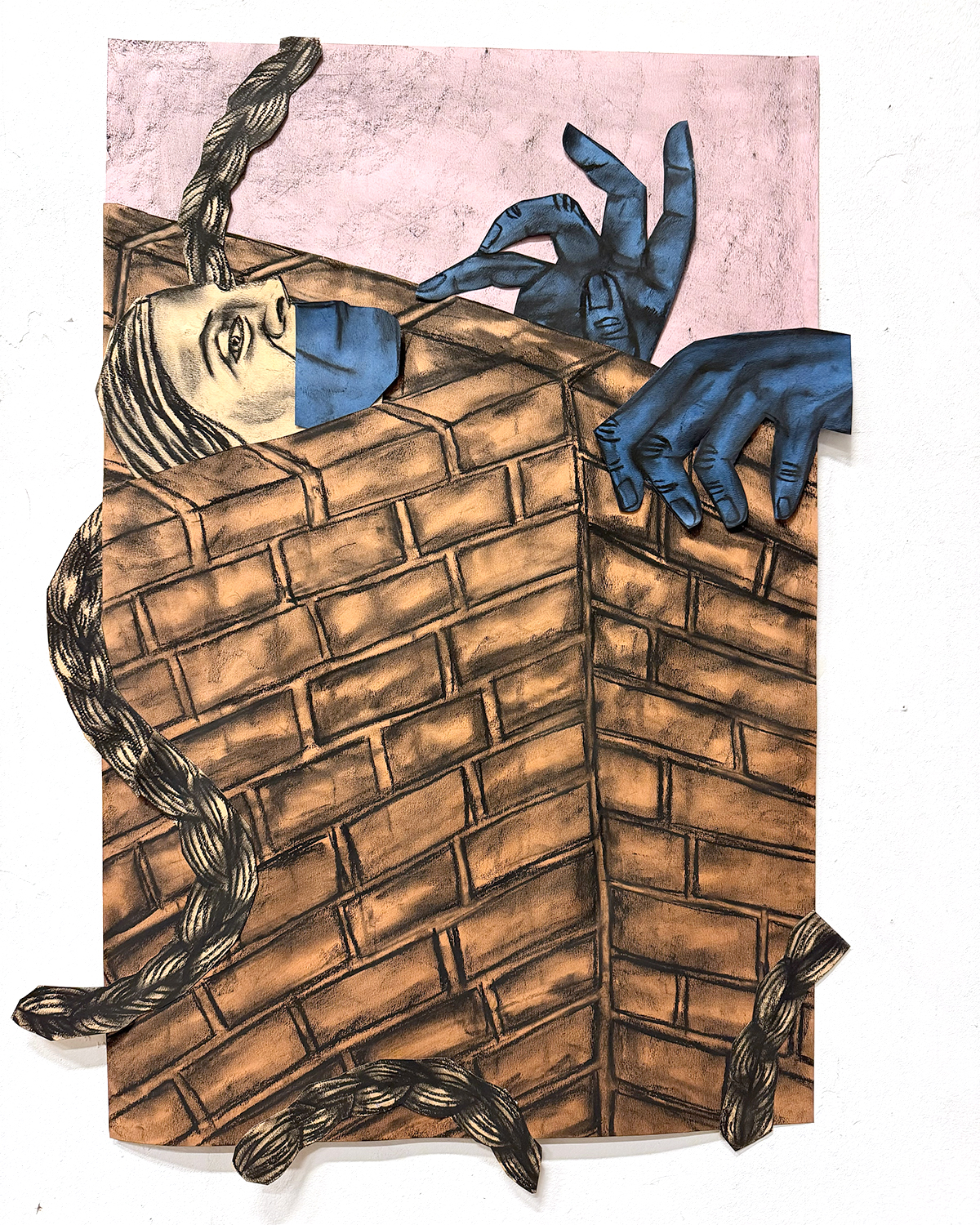
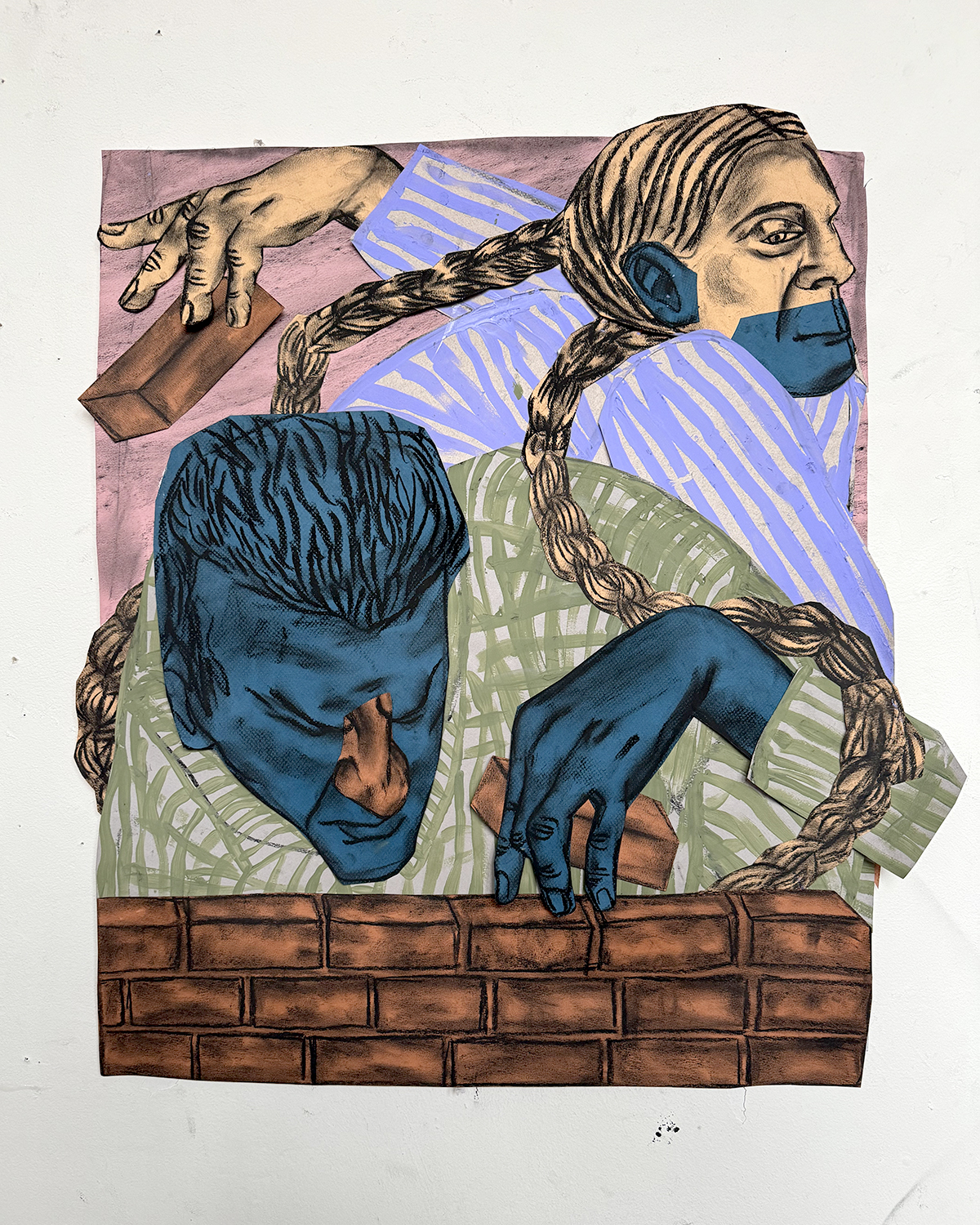
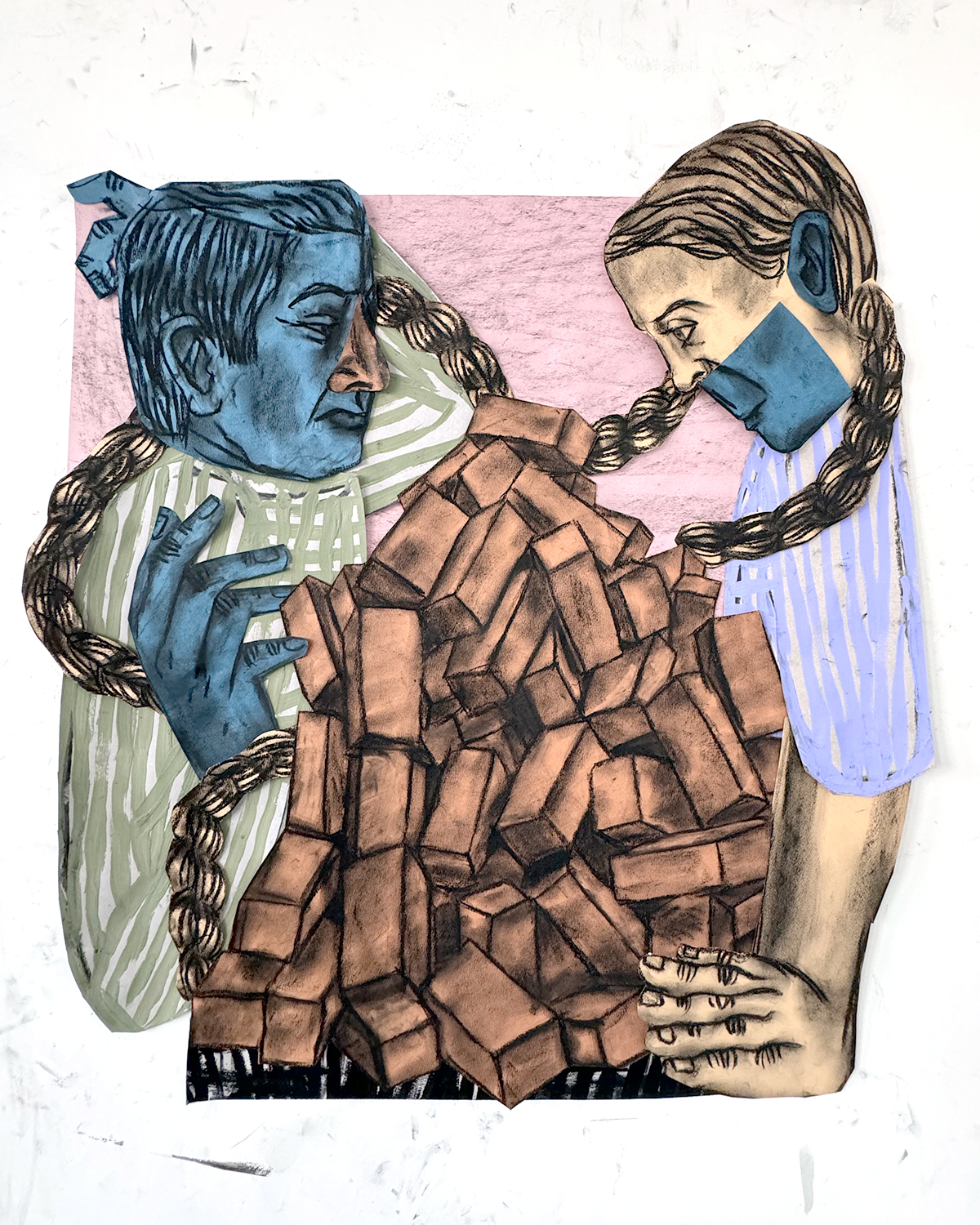
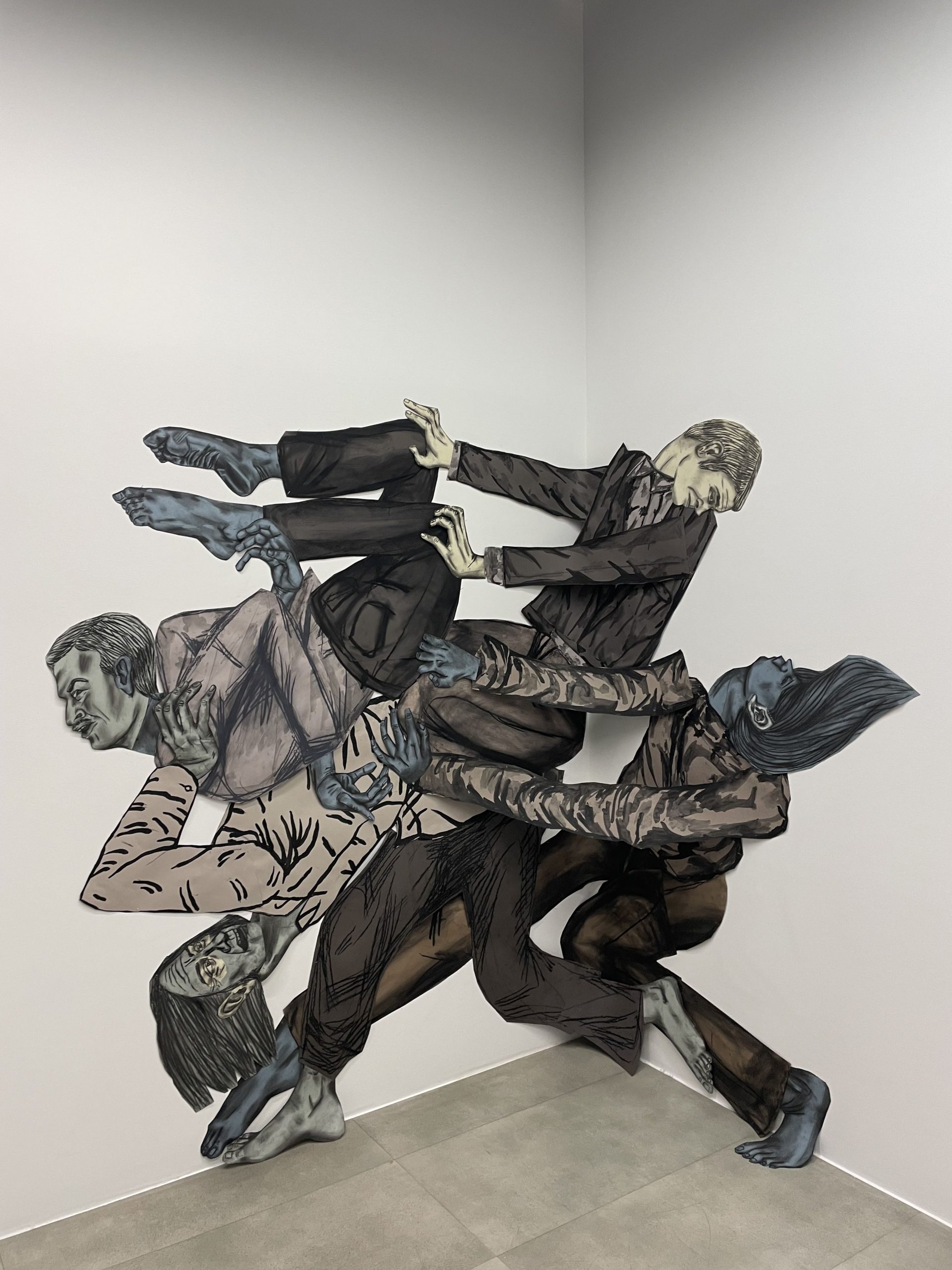
Her recent exhibition at Drawing Lab in Paris – an institution devoted to contemporary explorations of drawing – provided a particularly resonant context for her spatial investigations. Monumental cut-paper figures occupied the gallery like suspended actors in a theatrical mise-en-scène. No longer confined to the wall, the drawn line became structural and architectural. Shadows extended limbs, multiplied gestures, and formed a secondary choreography that shifted as viewers moved through the space.
.
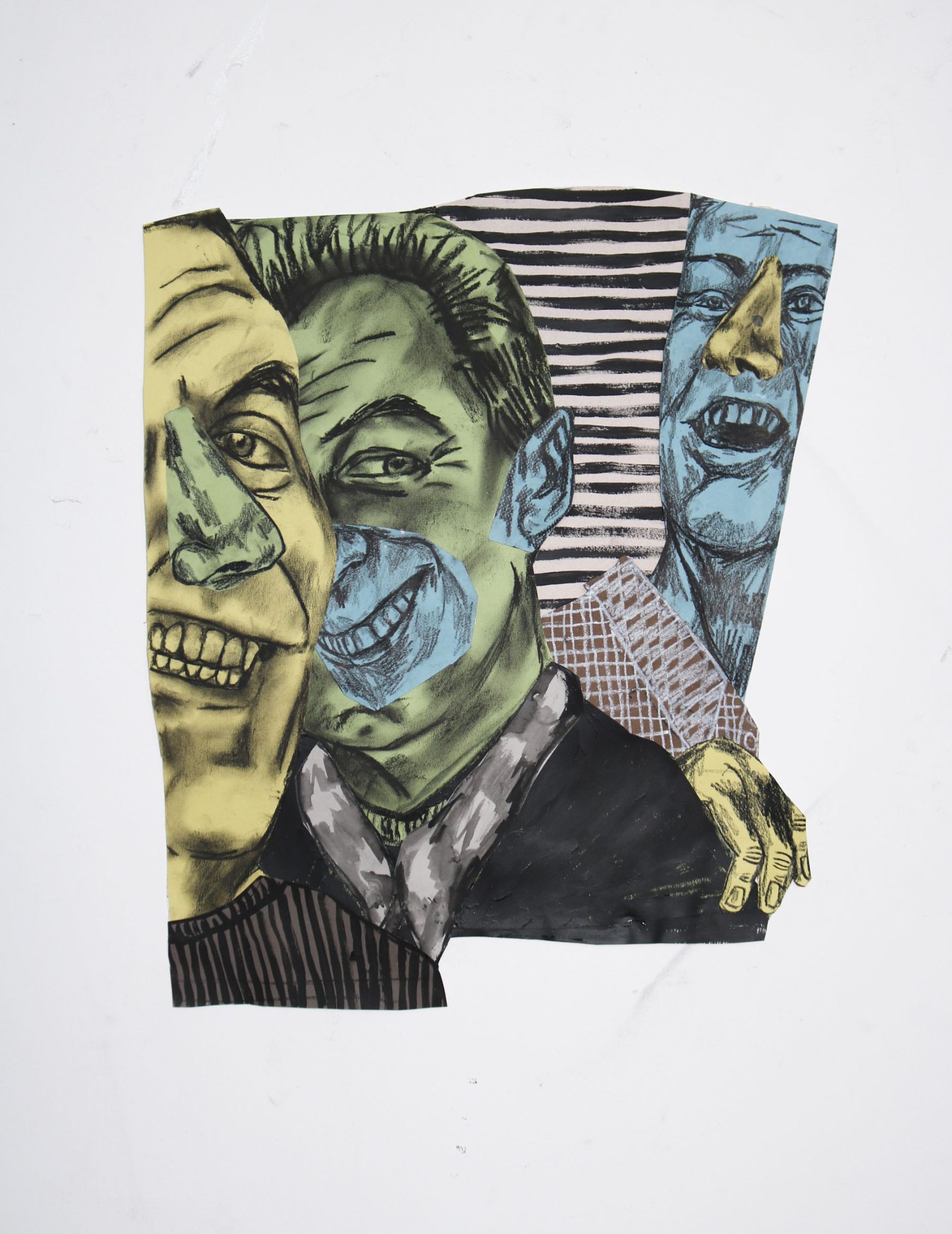
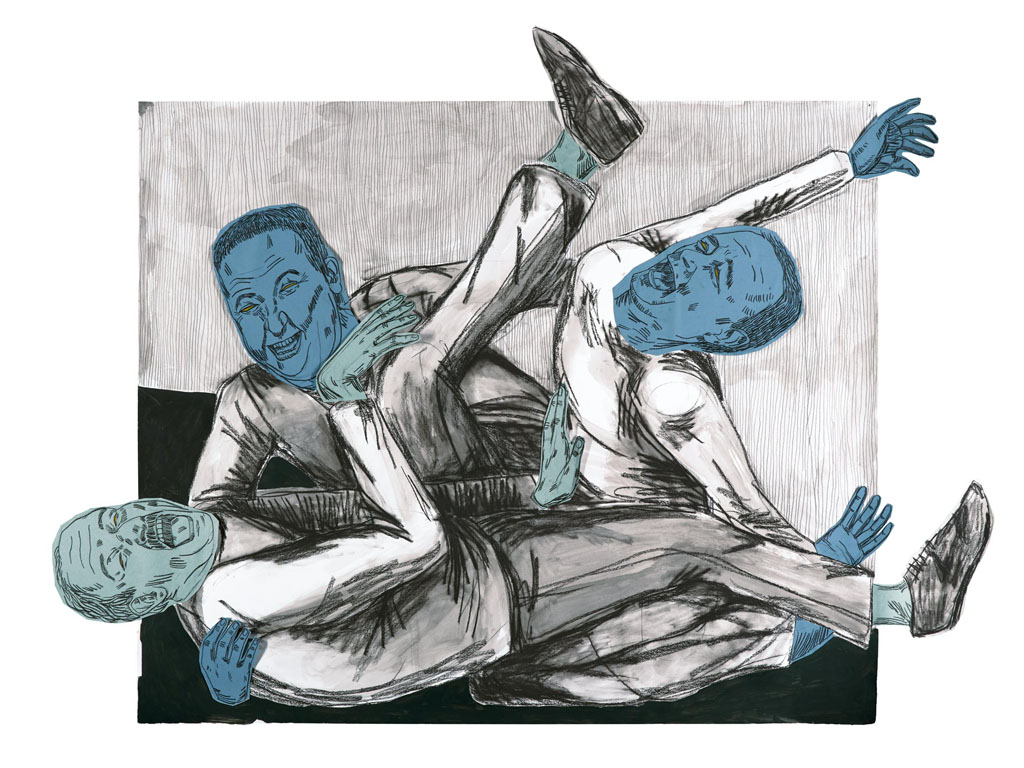
Across her practice, Inglada persistently examines systems of authority and submission. Her hybrid figures – part human, part animal, part architectural construct – stage ambiguous encounters that oscillate between confrontation and absurdity. Exaggerated hands grasp, elongated arms dominate, torsos fracture and recombine. These distortions do not merely dramatize the body; they expose the fragile mechanics of power embedded within it.
.
The Paris exhibition sharpened these tensions. Here, drawing was not simply a medium of representation but an instrument of spatial and psychological confrontation. Visitors navigating the installation became implicated in its unstable dynamics, caught between spectator and participant.
.
In the following conversation, Inglada reflects on her creative trajectory, her evolving relationship to scale and space, and the risks inherent in transforming drawing into an immersive, theatrical environment.
.
.

.
Julia Palmeirao: I was mesmerized by your work the first time I saw it at the Drawing Now art fair, and I was thrilled that you received recognition there, which led to your solo exhibition at Drawing Lab in Paris. Could you tell us about that experience – what it meant to you, and how it influenced the works you presented in the Paris show?
.
Susanna Inglada : Thank you so much for your kind words! I have been working with Maurits van de Laar since 2018. In 2019 he started bringing my work to Paris, almost every year, to participate in Drawing Now Art Fair. I saw it as a great opportunity to show my work and to present a bit of its development each year. Every edition was a new challenge and a huge opportunity. I have always been extremely happy when Maurits called me to ask if I wanted to participate in the fair, and even more excited when we were accepted into the fair in the past years.
.
I never expected to be nominated, and certainly not to receive the prize. I am extremely thankful to the jury and to my gallerist. Having a solo exhibition at Drawing Lab is an incredible opportunity for my career, and it allowed me to unfold a new chapter in my work and to be seen by the French art scene. Showing my work in Paris for longer than the five days of the fair was a huge opportunity for me.
.
The space at Drawing Lab is not easy, but when I first saw it I immediately had a vision. I am very happy that I managed to use the entire space and create an immersive installation.
.
It was also a great experience to make a small catalogue of the exhibition and to be able to invite a curator and someone from outside the visual arts to contribute to the catalogue and bring another reading of my work. They are both art friends whose work I admire, and they live in different countries – one in Rome and the other from Iran who lives in Germany. I love what they wrote about my work.
.
Having the financial support to make the exhibition possible was an incredible gift, and I am thankful to everyone who supported the project. I was also delighted that two exhibitions in Amiens developed from the Drawing Lab project, allowing me to show more of my work and collaborate with FRAC Picardie and Maison de la Culture d’Amiens. Working closely with curator Joana on this was a grateful experience.
.
.
J.P.: We will come back to your current exhibition later. For now, could you tell us about how your practice began with drawing, yet today your works occupy space almost sculpturally? How did this transformation occur?
.
S.I.: Actually I started with painting, but I always found the drawing underneath more interesting than the paint on top of it. Over time I began reducing the medium, going back to simple lines and the raw energy that comes from making them.
.
At some point I started to feel that the frame of the paper was limiting me. One day I took a pair of scissors and began cutting fragments of my drawings and moving them around the studio. Suddenly the frame was gone, and the works started to feel alive.
.
I began thinking about space differently. My studio became like a stage. I also felt a certain nostalgia for theatre – I used to act for many years before committing fully to visual arts. Somehow that theatrical sensibility started to enter my visual practice, almost as if I were directing actors with my drawings.
.
I love the flatness of drawing, but I wanted to play with it, almost to fake it. So I started trying to make the work feel sculptural while still remaining flat.
.
–

Susanna in her studio
by Saskia Hardus
.
J.P.: You mentioned your theatrical background – are there other disciplines, like literature, music, or dance, that continue to influence your visual language?
.
S.I.: Yes, absolutely. Literature, music, and film are constant sources of inspiration for me, especially cinema. One book that inspired a work in this exhibition was Blindness by José Saramago. I also love films that have a strong psychological dimension or that explore the dynamics between individuals and social systems.
.
.
J.P.: Your figures often appear entangled in systems of dominance and submission. Your works suggest scenes of political theatre. Are these narratives constructed from specific events?
.
S.I.: I often get inspired by the news and by things that are happening in the present that trouble me. I’m engaged with politics and social conflicts, and I’m interested in reflecting on them and trying to understand why things happen. Personal experiences also play a role, as well as historical events from the recent past of my homeland, Spain – especially the dictatorship and the Civil War, and how their legacy still resonates today.
.
Sometimes a work begins as a reaction to a specific emotion or event. But after that initial impulse, I try to move away from the specific situation and bring the work toward more universal questions. In that sense, I think my work speaks not only about politics, but also about the human condition and our shared existence.
.
.

.
J.P.: The distortion of the body is central to your visual language – elongated limbs, fragmented torsos, hybrid anatomies. What does distortion allow you to express?
.
S.I.: Distortion allows me to speak about the difficulty of living together and the complexity of human relationships. I’m interested in the idea that identity is never fixed or pure – it is always mixed, layered, and constantly shifting.
.
Through the body I try to show that things are rarely black and white. The answers are often somewhere in the grey areas, where contradictions and tensions coexist. In that sense, my work resonates with philosophical ideas that question stable identities and clear binaries, and that see the self as something relational and in constant transformation.
.
The fragmented or hybrid bodies also suggest how interconnected we all are, how our actions and identities overlap and influence one another. Distortion becomes a way to reflect on ambiguity, on the tension between the individual and the collective, and on the complexity of the human condition.
.
.
J.P.: There is also a grotesque, almost carnivalesque humor in your work. Do you see this as a form of satire?
.
S.I.: Recently, I got a book from an exhibition I participated in at the Huis van het Boek in Den Haag, an amazing museum, by the way. The book is by Michel de Montaigne, titled How We Weep and Laugh at the Same Time. It really resonated with me.
.
I think humor is a path to enter into deep thoughts, emotions, and topics. Through humor, we can reflect on serious, even painful, subjects in a way that feels accessible and immediate. I find this fascinating, it allows the work to have multiple layers, mixing the grotesque and the reflective, the absurd and the profound.
.
.
.
J.P.: At Drawing Lab in Paris, the installation felt particularly choreographed. How did the space influence the exhibition?
.
S.I.: I always love to let the space shape the exhibition. When I first saw the Drawing Lab, I already envisioned the central piece, the forest, and from there I began to play choreographically with the space, the narrative, and the architecture until everything came together.
.
This is, for me, the ideal way to work: reacting to the architecture, letting the space guide the arrangement, and creating a dialogue between the work and its environment
.
.
J.P.: Shadows played a significant role in the exhibition, extending and multiplying forms. How consciously do you work with shadow?
.
S.I.: To be honest, shadows used to feel like a problem for me, something I didn’t know how to control. But I’m starting to embrace them. I think there’s so much to explore in how shadows shape a work.
.
Until now, it mostly happened by accident, but these are the moments in the practice that something start to “shout” at you, inviting you to pay attention. Now, I’m starting to consider learning to engage with shadows, almost like dancing with the work, letting them become an active part of the piece.
.
.
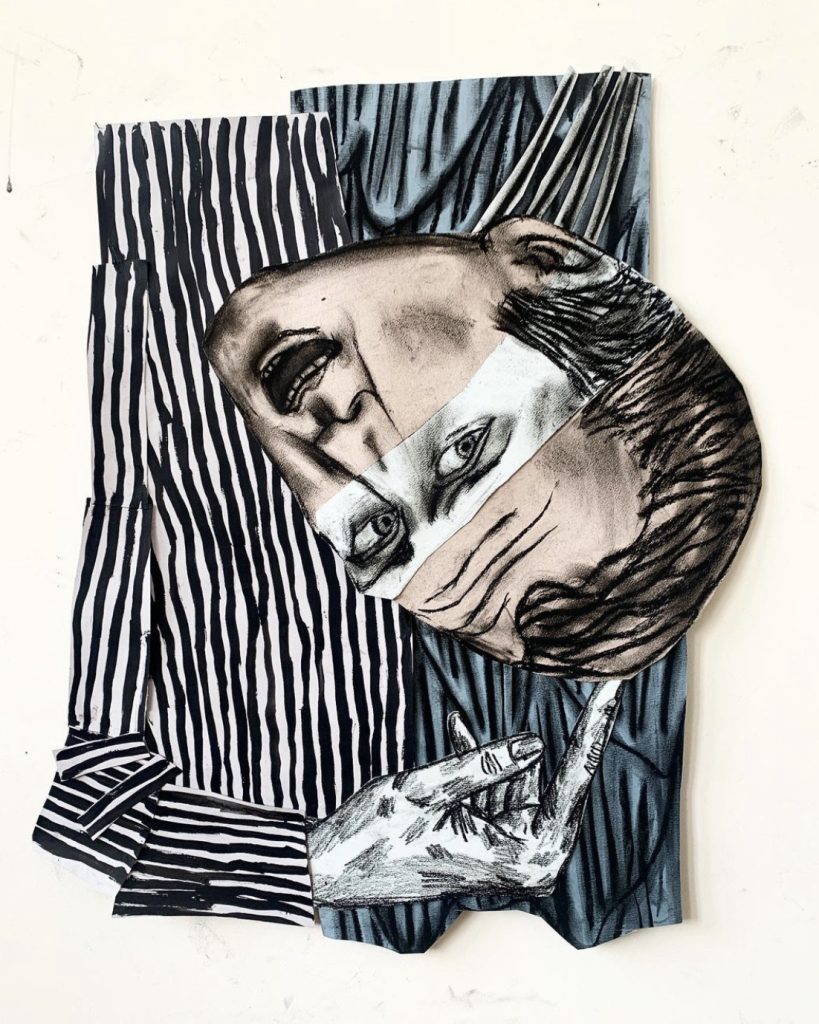
Caete ya! Mixed techniques on paper
.
J.P.: Your palette is often restrained – predominantly black ink on white paper. Why this economy of means?
.
S.I.: I need to work with a restricted palette to reach certain emotions. The colored paper I use has limited possibilities, and it’s within these restrictions that I fight to find a path for specific emotions to emerge.
.
My palette has evolved over time, influenced by the places I’ve lived. For example, when I moved to the Netherlands, I was working with a lot of color ( that came from Spain ) but gradually shifted into greyscale. Living in Rome brought some warmth and color back into my work, while in Belgium I began experimenting with pastels tones. Each place left its mark, shaping how I use color, or the absence of it, to convey emotions and thoughts.
.
.
J.P.: Scale is fundamental in your installations. Standing before your figures can feel confrontational. How do you determine scale?
.
S.I.: Scale is extremely important. As you said, I like to confront the viewer with the work, to surround them and create a sense of being confronted. Most of the figures are larger than human size, so the viewer feels small next to them.
.
I also use scale to emphasize the rhythm of the narrative and to provoke reflection. For example, in a recent installation, I presented elements upside down. They were natural elements, so the question becomes: who is really “upright,” the viewer or the surroundings?
.
.
J.P.: Your installations often implicate the viewer in the dynamics of the work. Have you observed any surprising or memorable reactions from visitors? How do you think the presence of an audience transforms the piece?
.
S.I.: I often say that the work is only activated by the viewer. The viewer becomes the main character of the story. I don’t have power over them; I can only guide them through how I place the works and how I imagine the narration unfolding in space.
.
I love watching people move through the installation and discover the work. Sometimes I see that they follow the path I imagined, and other times they surprise me by discovering something I hadn’t noticed myself. I really enjoy those surprises.
.
.
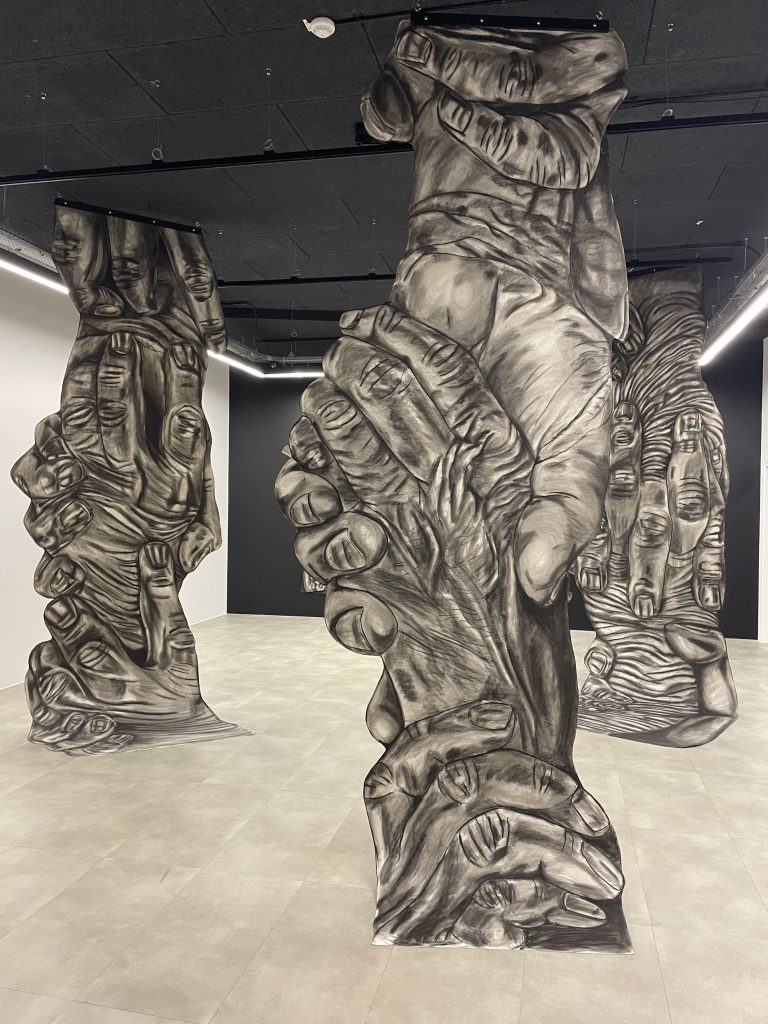
All Parts Of Us. Drawing Lab / 2026



.
J.P.: Looking back at your trajectory, what has shifted most in your practice?
.
S.I.: I used to be very afraid to show, talk about, or reflect on the personal. But I discovered that it’s precisely in the personal that I am true to myself. Since I let go of that fear and opened that door, my work has become stronger to me .
.
.
J.P.: After this exhibition, where do you see your research heading? Are there new materials, scales, or spaces you’re excited to explore?
.
S.I.: I would like to continue exploring ceramics and moving image, and perhaps work more consciously with shadows. I am also experimenting with textiles, and I dream of bringing some movement into the work.
.
At the same time, I am expanding my practice into public space, exploring the possibility of creating works that can exist outdoors and even become architectural. There are many spaces I would love to explore, especially difficult ones, because that’s often where the most interesting discoveries happen.
.
I hope to have more opportunities like the one at Drawing Lab, where I can really play with space and create monumental work. I’m very excited to create new works and develop new projects. I also dream of collaborating one day with an opera or theatre production, and I would love to see how I could develop a publication as well.
.
.
.
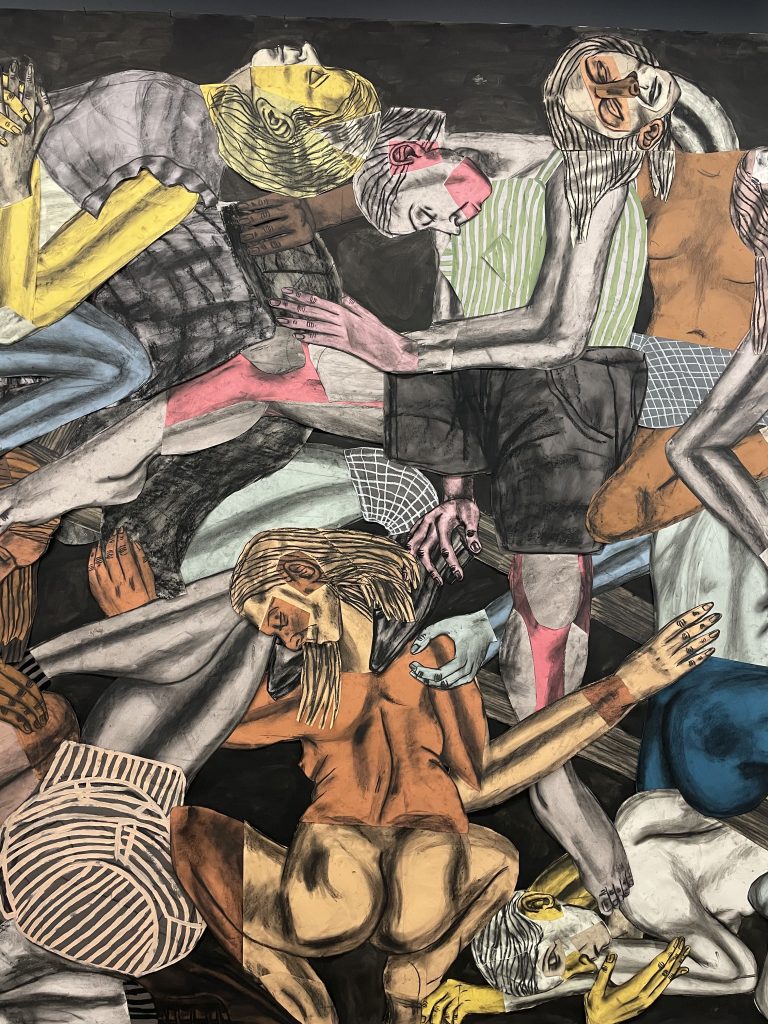
All Parts Of Us. Drawing Lab / 2026
.
J.P.: Finally, what does risk mean in your practice today?
.
S.I.: To me, risk means trying a new medium, experimenting with something unfamiliar, and stepping out of my comfort zone. It’s about exploring, taking chances, and being open to discovering new possibilities in the work.
.
.
J.P.: Thank you!
.
.



.
.