
Where Movement Becomes Memory, and Breath Becomes Art
Interview with Sophie Dupont
.
.

Sophie Dupont
.
In the quiet spaces between breath and movement, Danish artist Sophie Dupont finds her voice. She navigates the realms of visual and performance art, weaving together painting, sculpture, photography, and immersive installations. Her work is not merely seen; it is felt, experienced, and lived.
.
Dupont’s artistic journey is deeply personal, rooted in a profound exploration of human existence. Her practice delves into themes of vulnerability, identity, and transformation, often using her own body as both subject and medium. Through performative rituals and abstract expressions, she invites audiences to confront the essence of being, to pause, and to breathe.
.
Trained at the Royal Danish Academy of Fine Arts and London Contemporary Dance School, Dupont’s multidisciplinary background informs her holistic approach to art-making. She has performed and exhibited internationally, sharing her work on stages and in galleries across Europe, Asia, and the Americas, bringing her intimate explorations of the body, breath, and emotion to audiences worldwide.
.
Yet beyond exhibitions and performances, Dupont’s art is a testament to resilience and introspection. It is a journey from abstraction to embodiment, from silence to expression, and from the personal to the universal. In her creations, she seeks not just to depict life, but to breathe it into existence.
.
.
.
J.P.: Looking back at your early years—what drew you toward art in the first place? Was there a specific moment, influence, or experience that made you choose the artistic path as your life’s work?
.
S.D.: I actually started out as a dancer and began studying more seriously around the age of 16 or 17. At that time, my mother was very sick, and she passed away from breast cancer when I was 21. Just a month after her death, I moved to London to attend the London Contemporary Dance School. It was an incredibly difficult moment—losing my mother was devastating—but it was also complex.
.
I had a stepfather whose manipulative behavior caused me serious psychological trauma and even periods of physical paralysis. In a way, my mother’s passing brought a bittersweet sense of relief, because it allowed me to step away from that difficult relationship. Of course, losing her was profoundly sad, but it also marked a turning point in my life. The mixture of grief and liberation shaped not only my personal path but also my artistic journey, guiding me toward dance and, eventually, a broader creative practice.
.
J.P.: After your bachelor studies in London—how did you experience that period?
.
S.D.: When I moved to London after my mother’s death, I was pursuing my dream of becoming a dancer, but my body kept breaking down—I was constantly sick, fragile, and vulnerable. The life of a dancer can be very harsh, with constant scrutiny of the body, weight, and appearance, and I was carrying all the grief and trauma of my past into that environment. It became clear to me that I needed to find another way of working with the body—one that wasn’t about perfection or measurement, but about presence.
.
Those years in London were very formative, but also challenging. I realized during my studies that I never really found a way into choreography. Of course, I could learn choreography from others and perform it, but my true passion was improvisation. For me, improvisation felt pure and alive.
.
At that time, though, I wasn’t educated or confident enough to claim improvisation as my own artistic method. To call it my way would also have been a kind of concept, and I wasn’t ready for that yet. So I often felt something was missing—I didn’t have the choreographic skills that were expected, and without them, I feared I would end up only dancing for other people.
.
But deep inside, I already knew that being a dancer in someone else’s work would not fulfill me. My temperament, my inner needs, were leading me somewhere else, even if I couldn’t quite define it yet. So I decided to stop my studies in London and return to Denmark. Back home, I was surrounded by wonderful friends, and I was also very close to a family where I am the godmother to one of their children. They owned an art supply store in Aarhus, and I began working there as a driver—delivering materials to art schools and artists. Very quickly, this opened a path for me into the world of visual art.
.
In Denmark, we have excellent pre-schools dedicated to different artistic disciplines—music, visual arts, and more—so I decided to enter one of those schools and pursue the artistic line. But dance never left me. Alongside my studies, I continued training and sometimes performing as a dancer, working with the choreographer Marie Brolin.

This Will Also Change. Overgaden Institute of Contemporary Art. 2017
.
J.P.: So there you first turned toward visual art, how did you begin to develop a personal language of expression? What drew you to working with images, paint, and color as a way of processing your inner experiences?
.
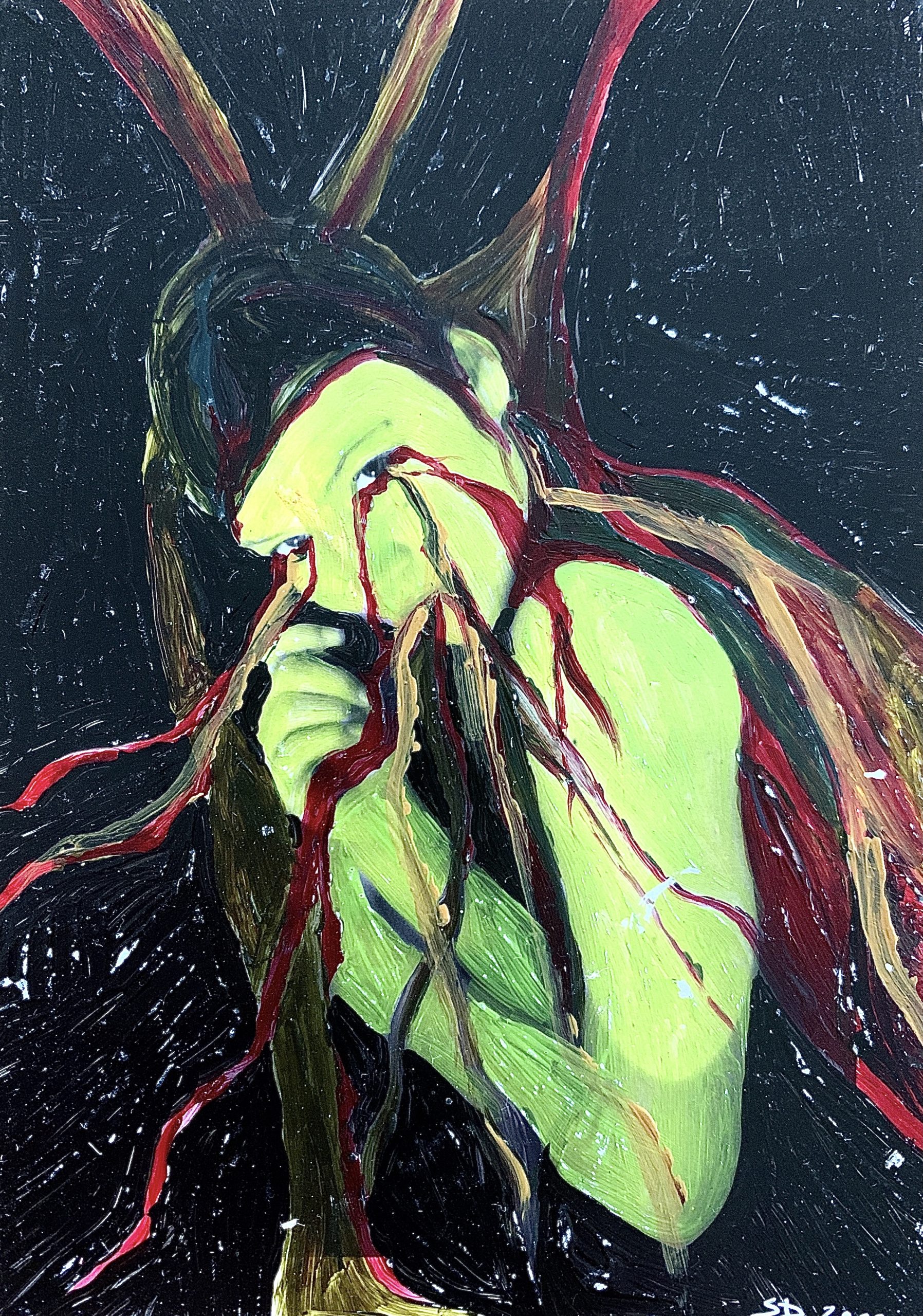
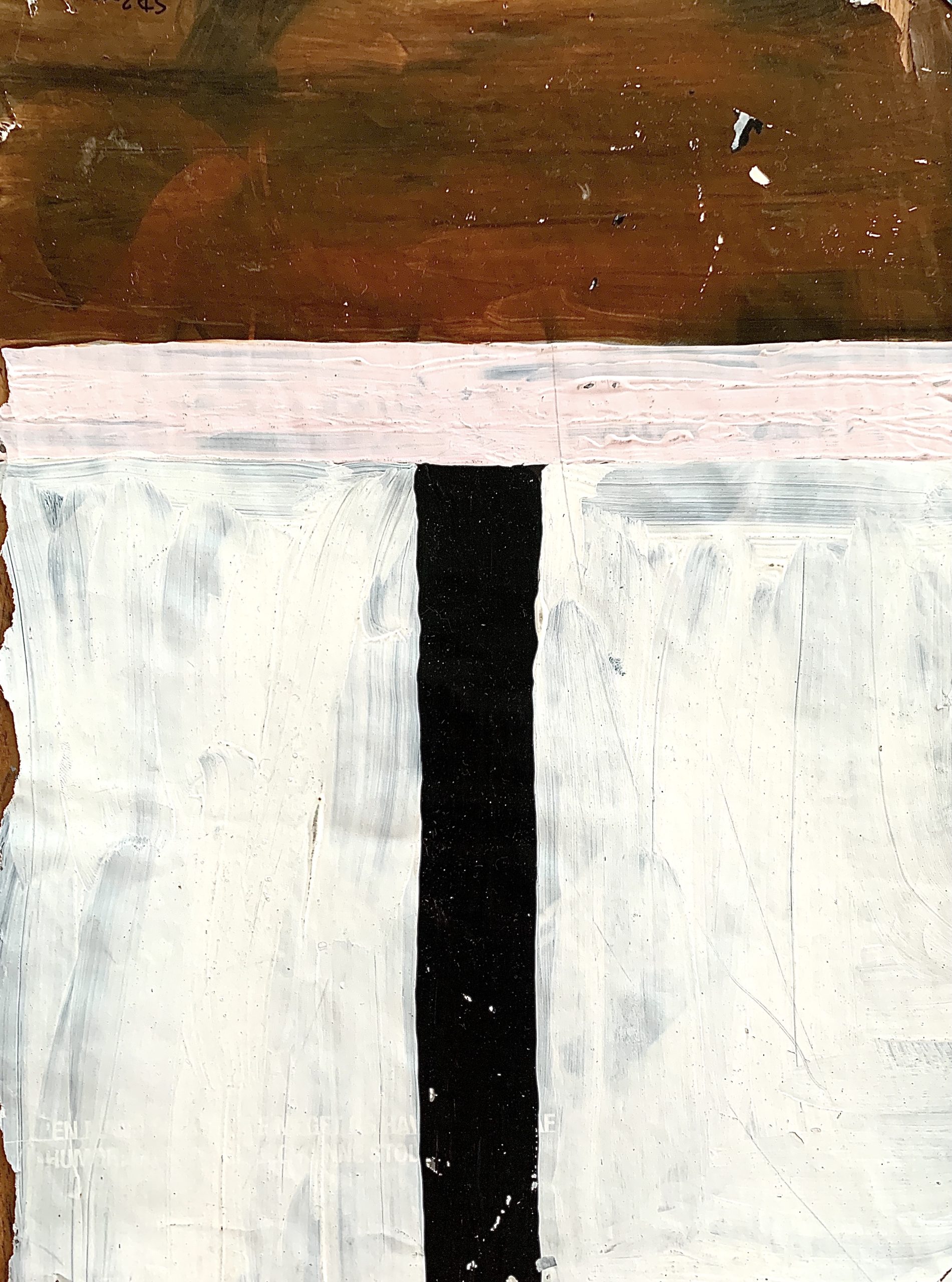
S.D.: I still carried a lot of unresolved pain from my past. I tried to talk about it with different people, I tried different ways to work through it, but nothing really helped. Around that time, I began collecting catalogues and fashion magazines filled with images of beautiful people. Since I was working in an art supply shop, I had access to paint, and I started experimenting—painting directly onto those glossy images, covering parts of their perfect bodies.
.
I think this impulse came partly from my dance studies, where we had exercises that encouraged us to go inward: to breathe, to feel, and to ask ourselves questions like, what color is my heart? what color is my arm? I began to feel a strong connection between inner sensations and colors, where emotions could be translated into visual form. Applying paint onto those idealized images became a way to express what I was carrying inside—a language of color and emotion imposed on top of perfection.
.
My whole being was paralyzed—not only my body, but also my entire way of seeing and experiencing the world. From around the age of 14, after going through trauma, I reached a point where I couldn’t cry anymore, couldn’t feel anymore. I had lost sensations that normally connect us to life.
.
So for me, it became a kind of mission to swim back to life, to come back to myself and my emotions. With color and paint, I slowly began to feel again. It was a long process, nearly ten years. And unlike methods where you hit a pillow or try to release anger physically—things that didn’t work for me—I needed another approach. I couldn’t deal with it only by speaking intellectually, but I needed a more contemplative way. Through abstract work with color, I found a language that allowed me to reconnect with emotions I had lost.
.
My sense was that my mind and my heart had become disconnected—my feeling of being a whole person was detached. I found myself holding contradictory states at once: cold and angry, or unbearably sad while feeling like I might vomit. Those layered, simultaneous emotions were impossible to name or sort out verbally, but in abstract work I could bring them together. Painting allowed me to compose those conflicting sensations into color and form, to give a shape to what felt like a divided self.
.
I really did it to survive. For me, art comes from life—it isn’t only an intellectual exercise or something I decided to pursue academically. For me, art was a way to breathe, a way to keep going.
.
At the time, I was still dancing, and a friend and teacher from the pre-school, who was a painter, suggested that we try collaborating. I agreed, and when he came to my house, he saw all of my paintings scattered around. He encouraged me to apply to the art academy—a thought that had never crossed my mind before. That’s how I entered the art academy.
.



.
J.P.: During your time at the art academy, you explored abstract painting and self-portraiture. How did these experiments evolve into the video works you created, and what inspired you to translate your abstract paintings into performative actions on video art?
.
S.D.: I experimented with a lot of different abstract paintings at first. I wasn’t even sure that art was what I wanted, and I was still a bit confused. Letting go of dance was difficult because being a dancer is such an integral part of your personality—it’s hard to separate yourself from it.
.
Gradually, I began to explore work that could be described as performative. I started making portraits of myself in different appearances and experimenting with painting in many ways. During my six years at the academy, I continued this exploration, but it wasn’t until around 2010 that I had the idea to transform my abstract works into wearable forms—costumes, essentially. I started making clothing as if it were abstract painting.
.
At that time, I wasn’t particularly interested in performance. But in these video works, you can see performative actions emerging. You can trace a connection between my early abstract works and these later experiments, where painting, costume, and movement begin to intersect.
.
.

2010. P2 Strandlodsvej. Group show. “Second Party”. Beaver Projects, Copenhagen.


.
J.P.: So would you say this period marked the beginning of your work in performative art?
.
S.D.: In some ways—yes. At that time, in the dance world I came from, things weren’t as experimental or free as they are today. Dance was very structured—you trained, you learned, and then you performed fluently on stage. Performance, in the sense of contemporary experimental work, wasn’t something I really considered part of my practice. I knew of course the choreographers who redefined dance like Trisha Brown, Lawrence Wiener, Meredith Monk, Steve Paxton and the whole Judson Dance School but I never resonated with them at this time – now I do for sure.
.
For me, presenting work in front of a crowd felt foreign. I couldn’t see what I could communicate in that context—it simply wasn’t my language yet. It wasn’t that I didn’t find performance interesting, but I didn’t experience it as a medium through which I could express myself. It wasn’t part of my artistic vocabulary at that point.
.
Hypnerotomachia Poliphili Performance in Four Parts Mixed Materials 2011
.
J.P.: Your work seems deeply connected to your own experiences and emotions. How did the challenges and stories from your life guide the way you developed your artistic language?
.
S.D.: Looking back, I realize part of the reason I masked my feelings—why I didn’t allow myself to fully express my pain—was partly influenced by being a woman in a male-dominated environment and partly feeling it was simply too much in general. When I was at the academy, expressing vulnerability or fragility could easily be dismissed as ‘women’s painting,’ which was seen as lesser.
.
I see my art as humanistic and feministic —overall it’s about human experience, not just gender. But of course, my perspective and struggles as a woman inevitably influence what I create. I spent a long time trying to find a language that felt authentic, one that could be accepted on its own terms. My life has been so colored by psychology and many difficult personal stories that, at some point, I became a little tired of stories. When I began exploring new forms, I started combining abstract painting with unexpected elements—machines, creatures, mixes of history—creating strange, hybrid worlds. I think this approach reflects my desire to work beyond stories and narratives, which had dominated much of my life. I wanted to reach a place where I could engage with the essence of life itself: something more elemental, something I could feel and breathe. In this way, my practice became about exploring everything and nothing at once, finding a language for life’s core experiences rather than just its stories.
.

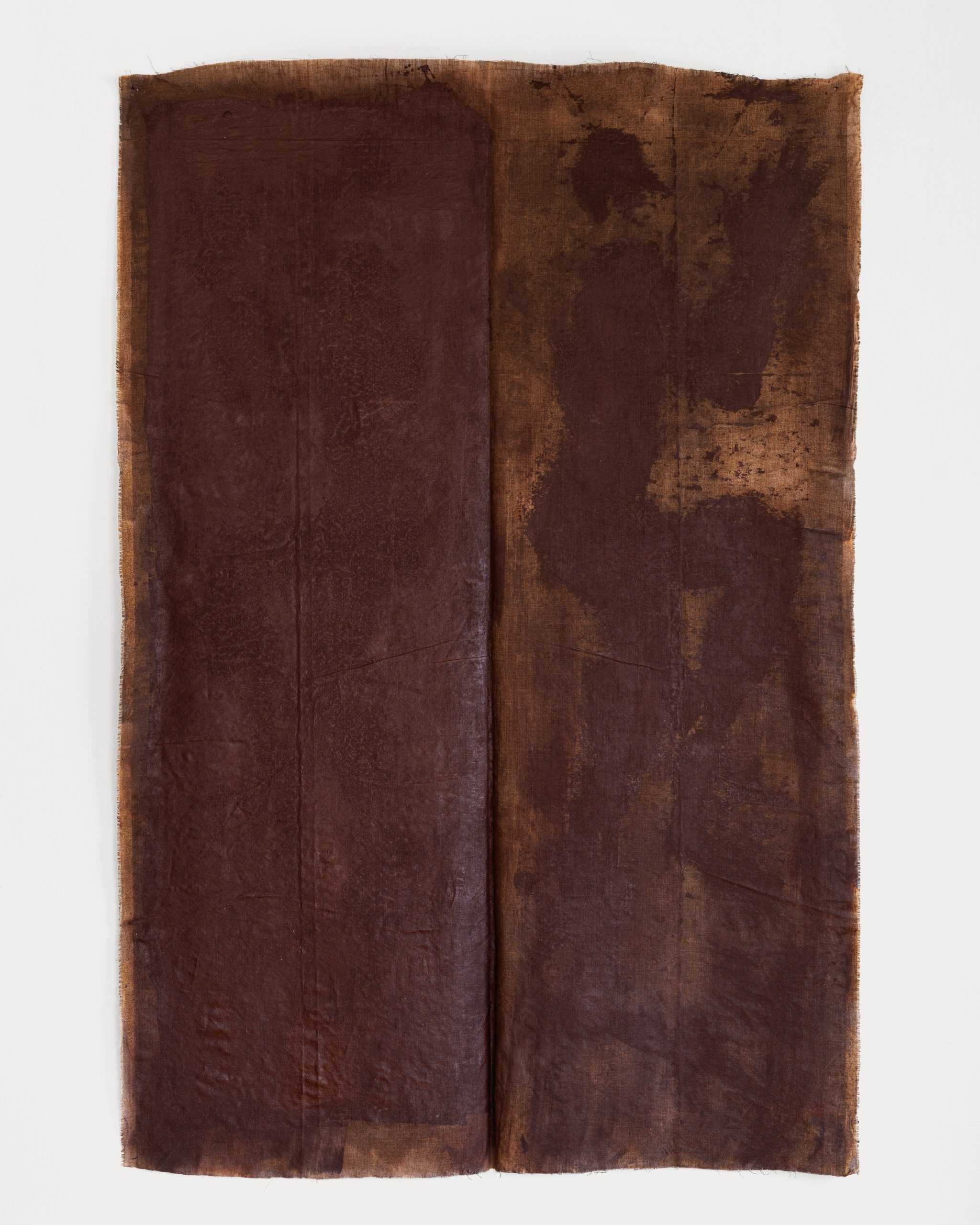
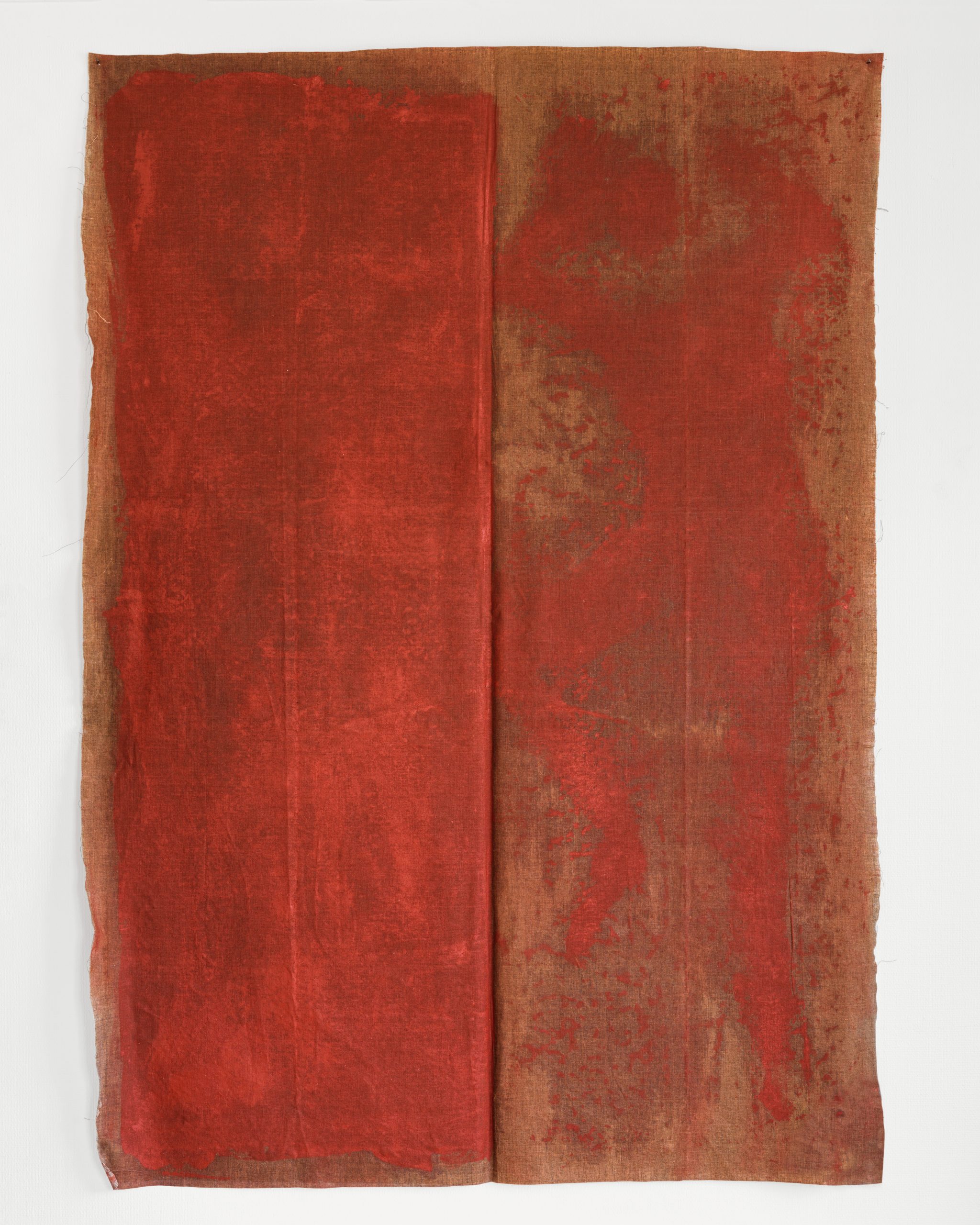
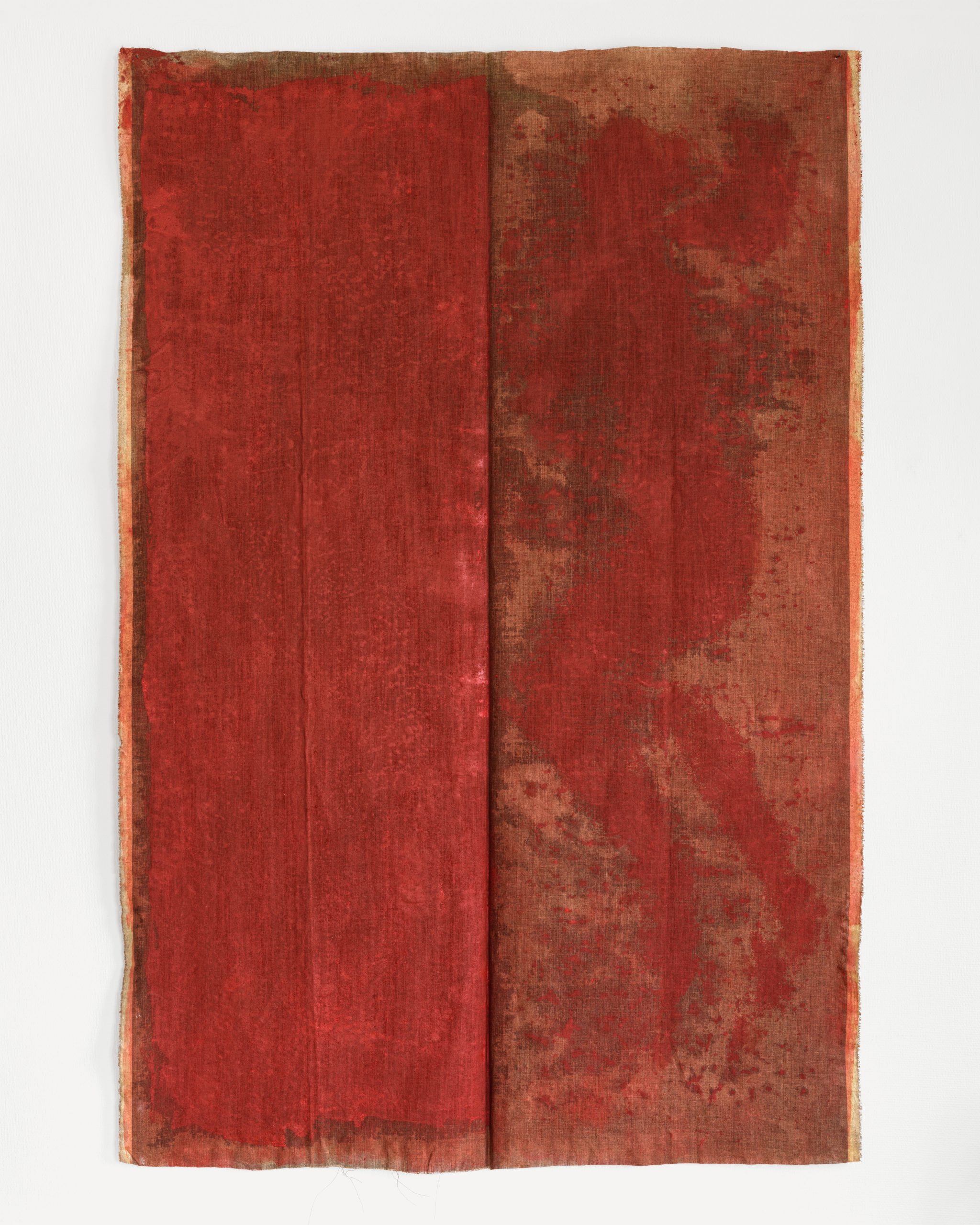
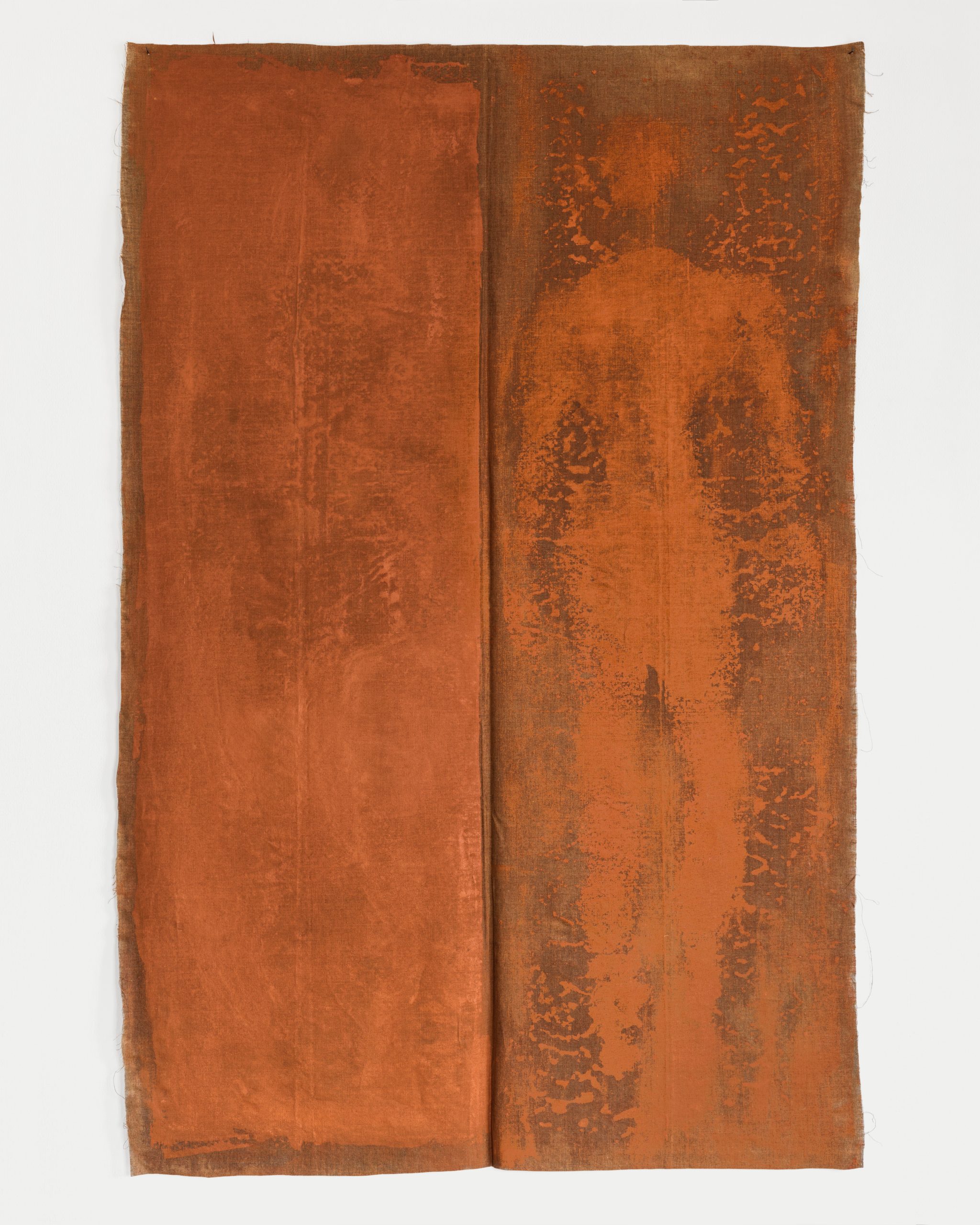
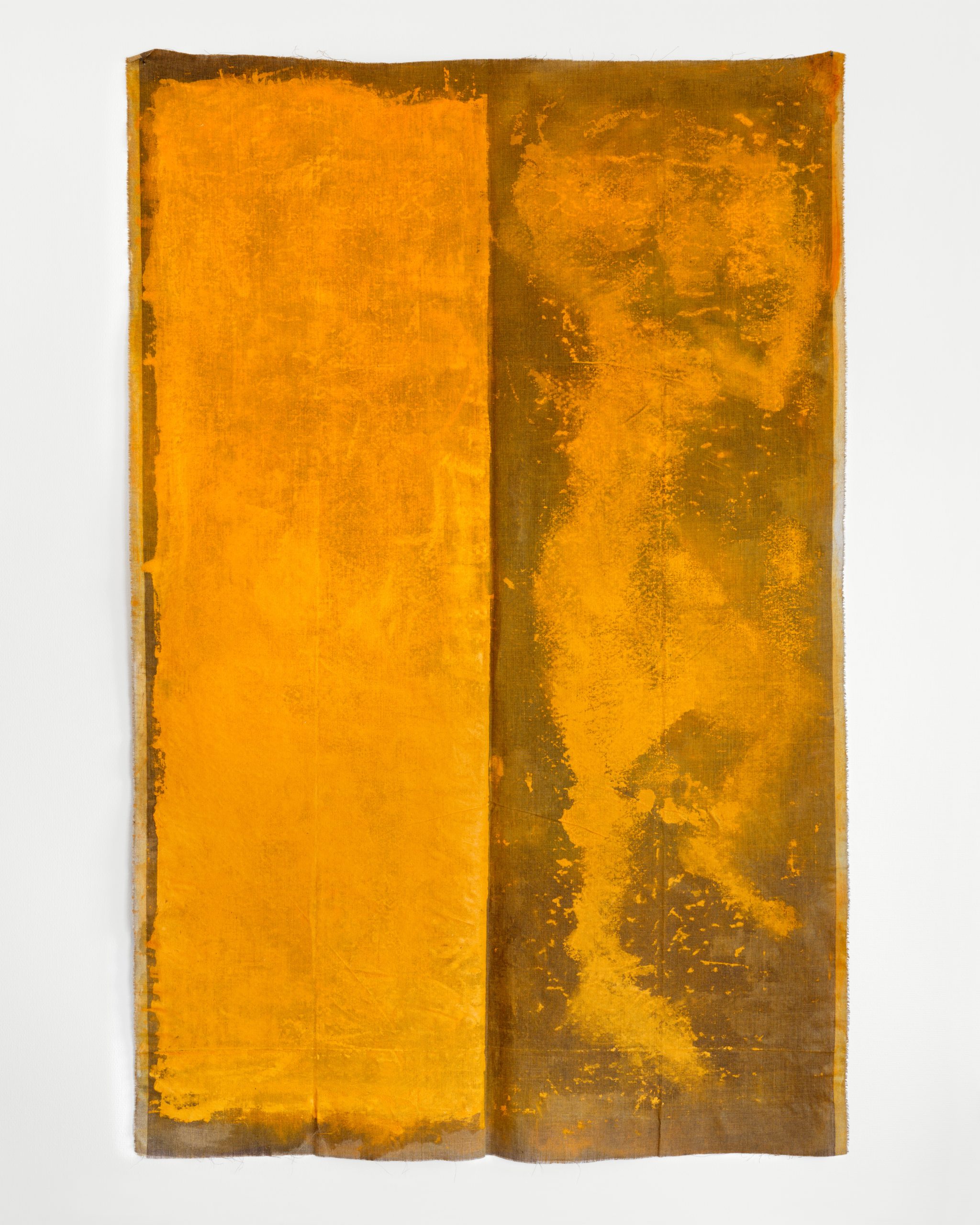
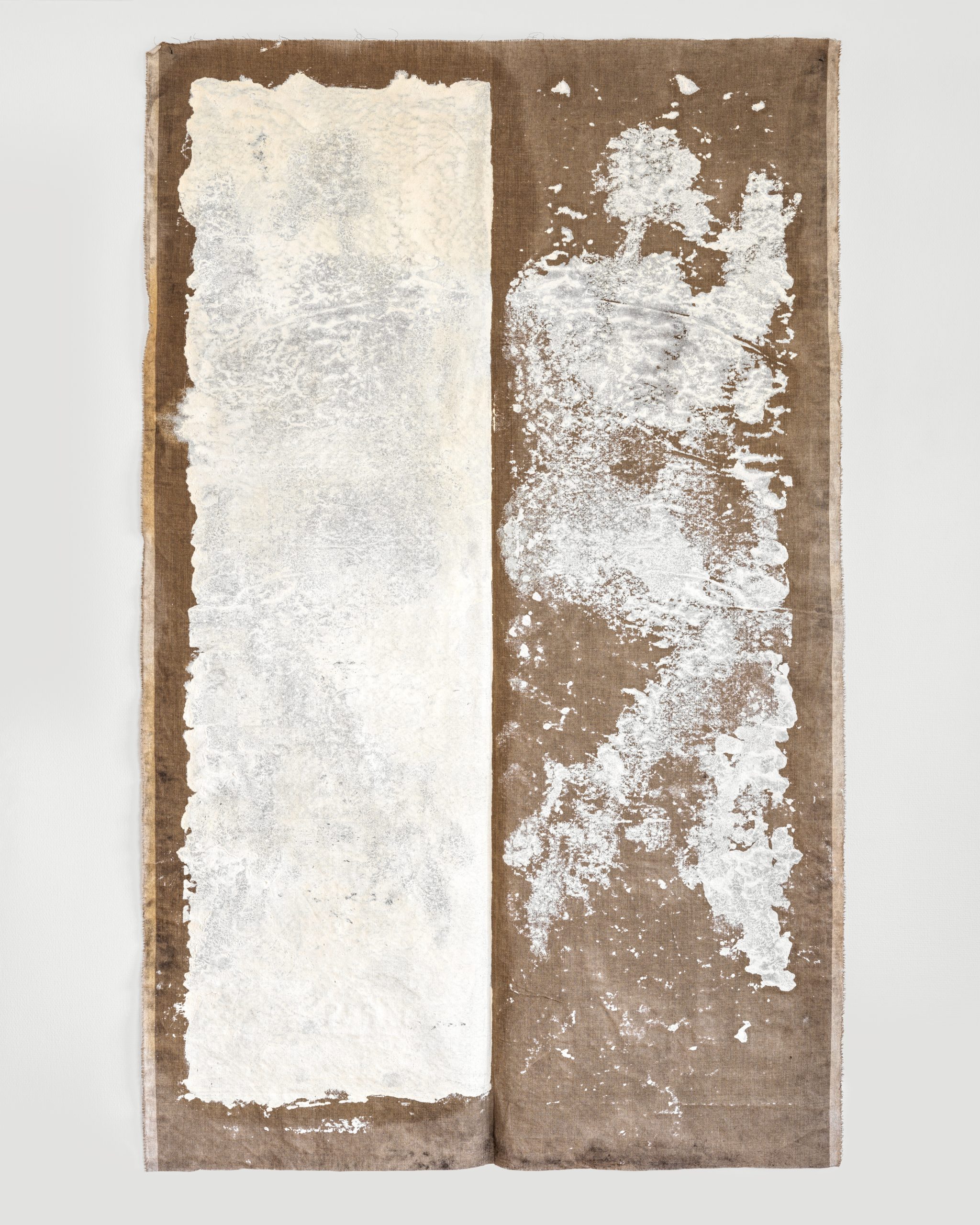
Sleeping prints, LA, 2023



.
J.P.: How did your background in both visual arts and contemporary dance shape your interdisciplinary practice?
.
S.D.: For me, dance was always a way to connect and to express myself beyond words. It was an outlet, a form of emotional expression that worked on every level. Contemporary dance, in particular, demands a deep connection to the body and combines discipline with freedom—learning, training, and ultimately letting go.
.
Music played a central role in this process. Its intensity shaped the way I understood expression, and dance became a channel for communicating experiences I couldn’t put into words. Those early challenges in my life—family difficulties, physical paralysis, and personal loss—found a form through movement, through the body, and through the interplay of sound and motion.
.
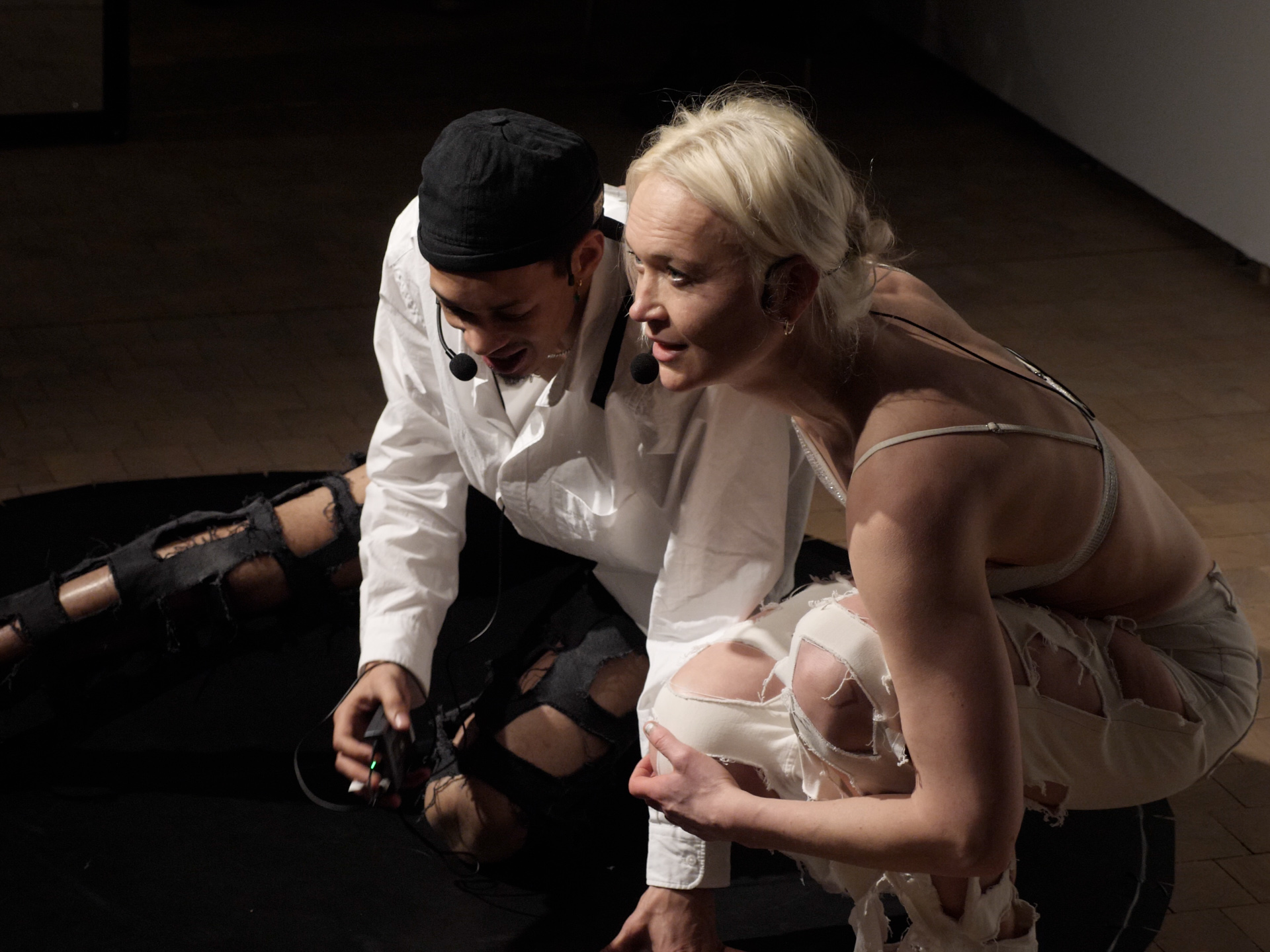
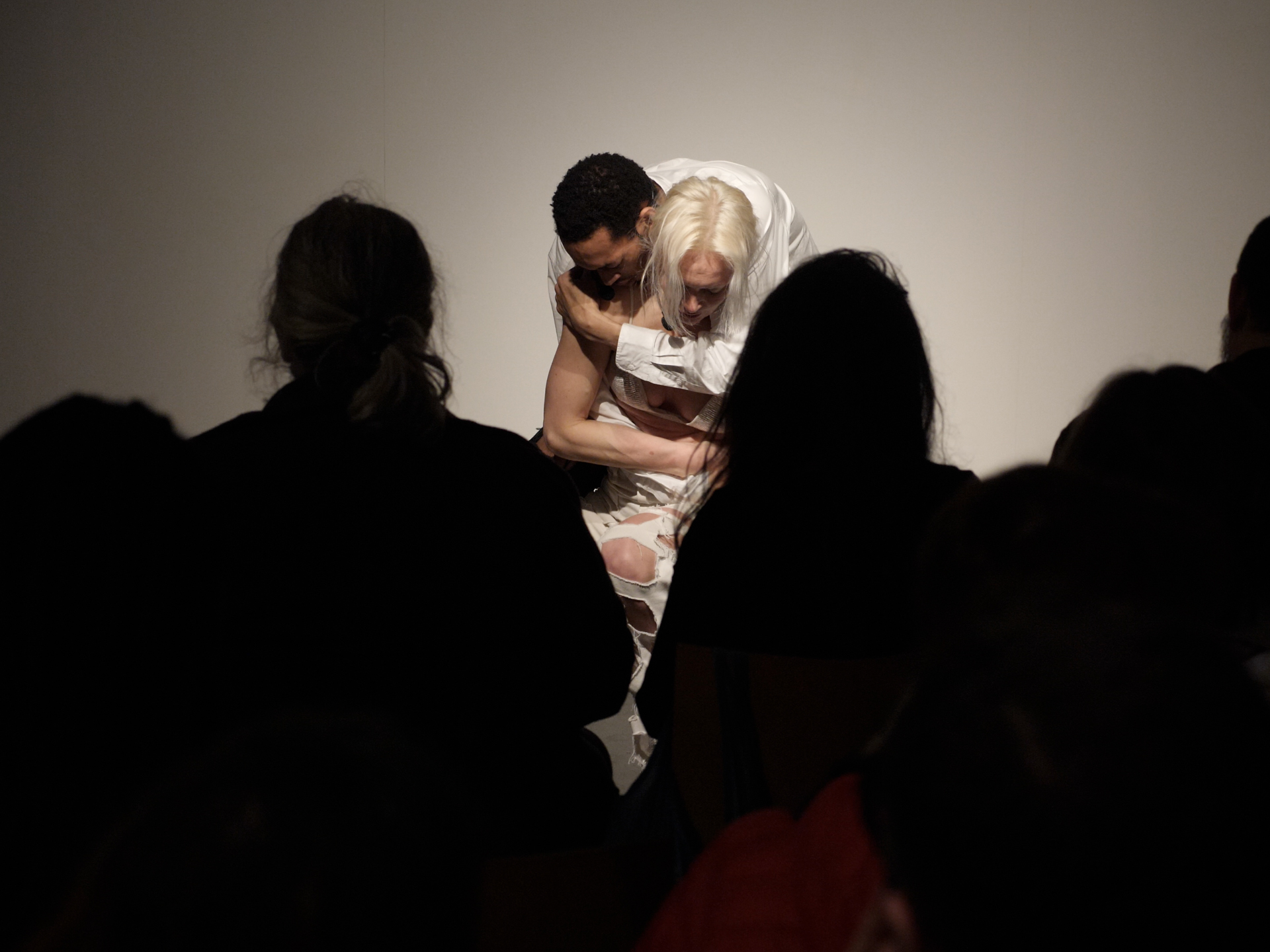
Later, when I turned toward visual arts, I brought these same sensibilities with me: awareness of space, rhythm, and emotional resonance. The physicality of dance and the emotional weight of music carried over into my visual practice, creating a dialogue between body, emotion, and visual form. This interdisciplinary approach allows me to explore ideas holistically, connecting movement, sound, and image into a single creative language.
.


.
J.P.: What influenced your decision to use your body—and breath—as your primary material? Your performances often center on the act of breathing. What inspired this ritual, and how did your background in dance and visual art inform this approach?
.
S.D.: My father, my mother and my stepfather were psychologists, so I grew up in a very ‘psycho’ environment. Perhaps that’s why so much of my work is without language—because words can so often be used to manipulate or distort meaning. I wanted to find another kind of language, one that cannot be twisted. For me, that language became breath.
.
You can hold your breath, or breathe in many different ways, but breath itself is universal and truthful. We all understand it instinctively: if someone is struggling to catch their breath, we immediately sense that something is wrong. And we can also tell whether it is authentic or performed. That honesty—something so simple and direct—is what drew me to use breath as my primary material.
.
From the beginning, my work has been about engaging with the essence of life. Early on, when I tried to focus on my difficult childhood, my paralysis, or my mother’s death from breast cancer, I quickly realized these personal narratives alone couldn’t sustain my interest. They were important, of course, but staying trapped in the role of the victim felt limiting, even tedious.
.
Instead, I became drawn to the fundamentals of existence—the things many people take for granted: breathing freely, walking and balancing without constant thought, simply inhabiting the body. I didn’t have that ease. From a very young age, I faced unusual physical and psychic challenges, and even basic acts like breathing could be difficult.
.
My grandmother, who was a doctor, taught me an essential lesson early on: if you struggle to inhale, first exhale completely, and then you will be able to breathe in. This became more than a technique—it became a metaphor and a practice, a way to reconnect with life and the body at its most elemental level.
.
By centering my performances on the act of breathing, I discovered a form of expression that is both deeply personal and universally accessible. My background in dance gave me the tools to understand the body as material, while my engagement with visual art encouraged me to ritualize and frame these gestures. Breath became the bridge—a simple, elemental act that carries memory, trauma, and transformation, while also opening a space for connection with others.
.

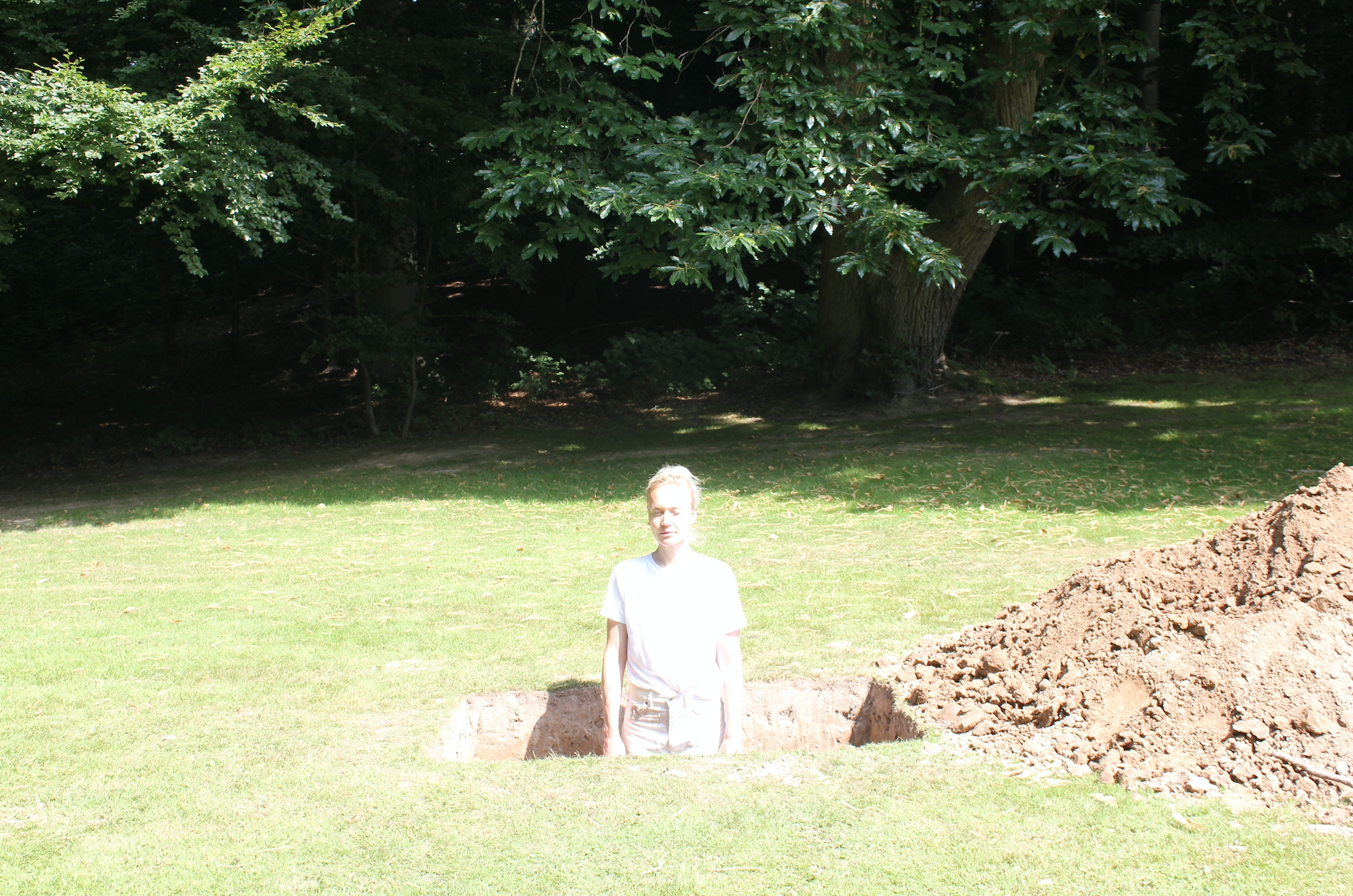
UNTITLED IN THERTEENTH PARTS (SELF-BURIAL) Part of Walking Landscapes Mon. 23 July 2021 at 7-19



.
J.P.: Let’s talk about some of your specific works. Could you share how early experiences or performances led you to choose your body and breath as your primary artistic materials? For instance, in your 2011 piece Marking Breath, you spent an entire day silently carving lines into panels with each exhale. What first drew you to working with breath in this way, and how did that initial exploration evolve into a work you’ve now performed in over 30 places around the world?
.
S.D.: During my studies in London, one of my greatest interests was Rudolf von Laban. He developed a system for the notation of movement, and I was fascinated by the idea of translating movement into a minimalistic notation system. This concept deeply influenced the way I began to think about the body and breath.
.
I started wondering: how could I apply a similar approach to breathing? My dance education, combined with practices like yoga, had already made me very familiar with controlling the breath. I had also, from a very young age, developed a strong personal relationship with breathing.
.
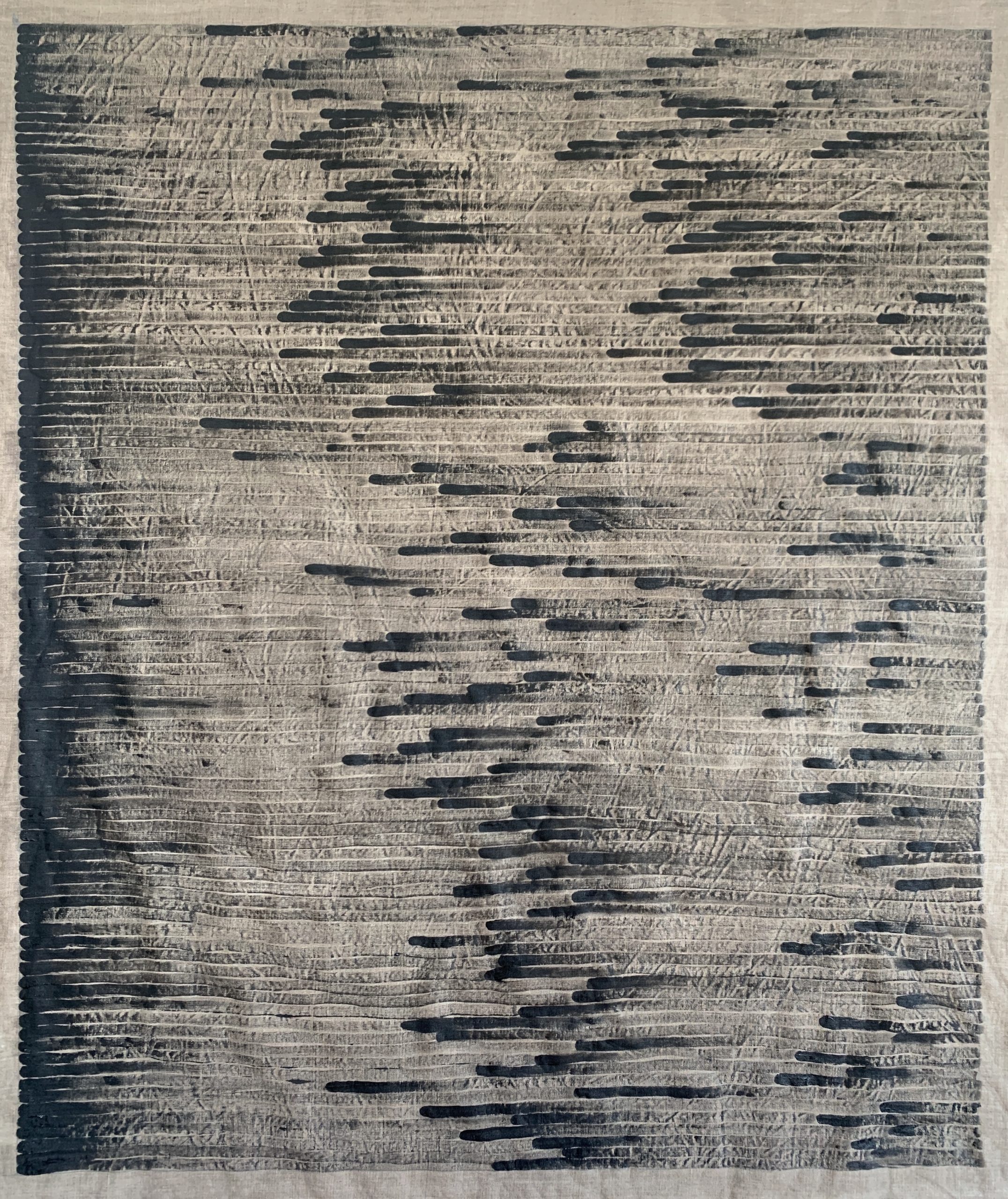
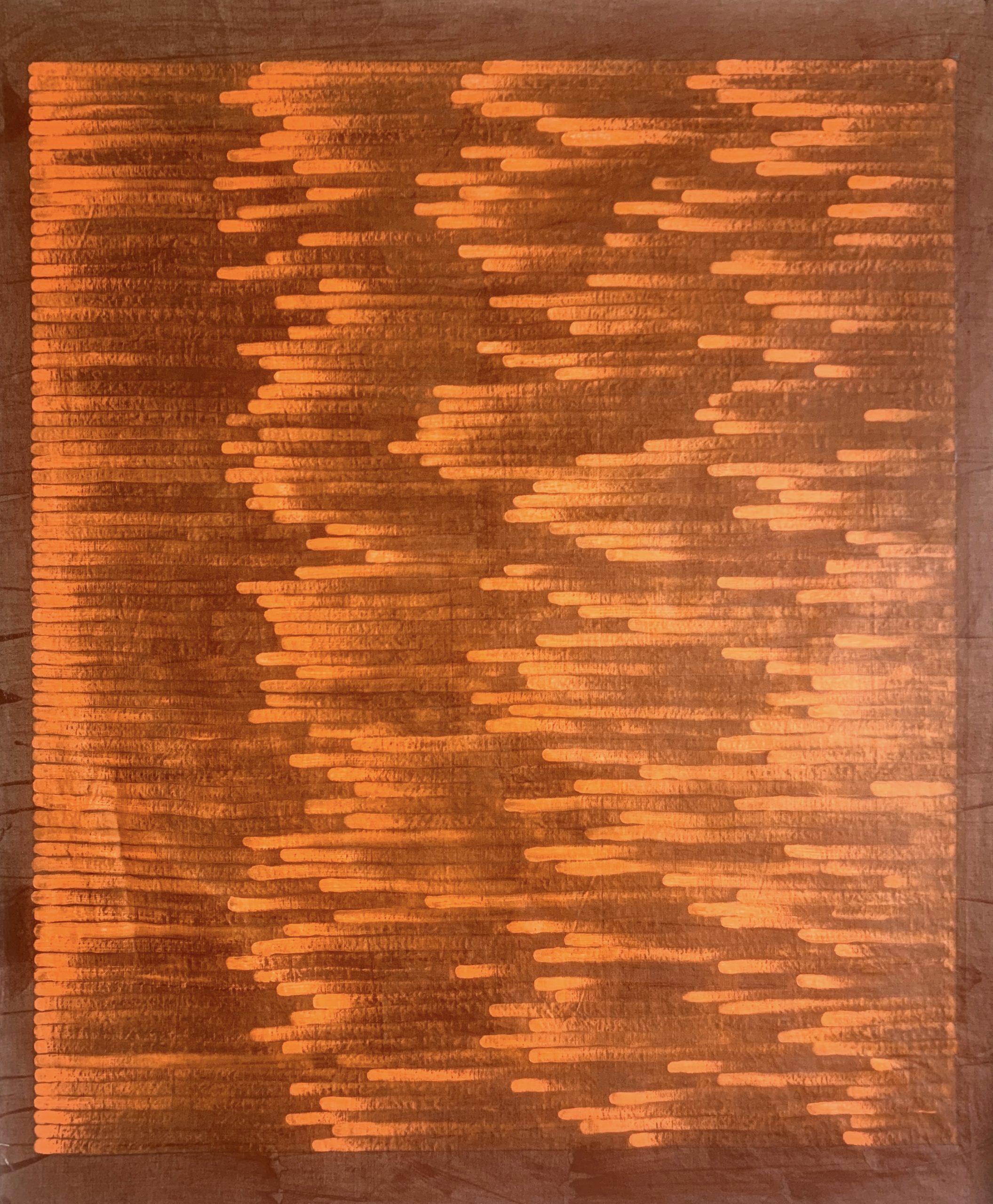
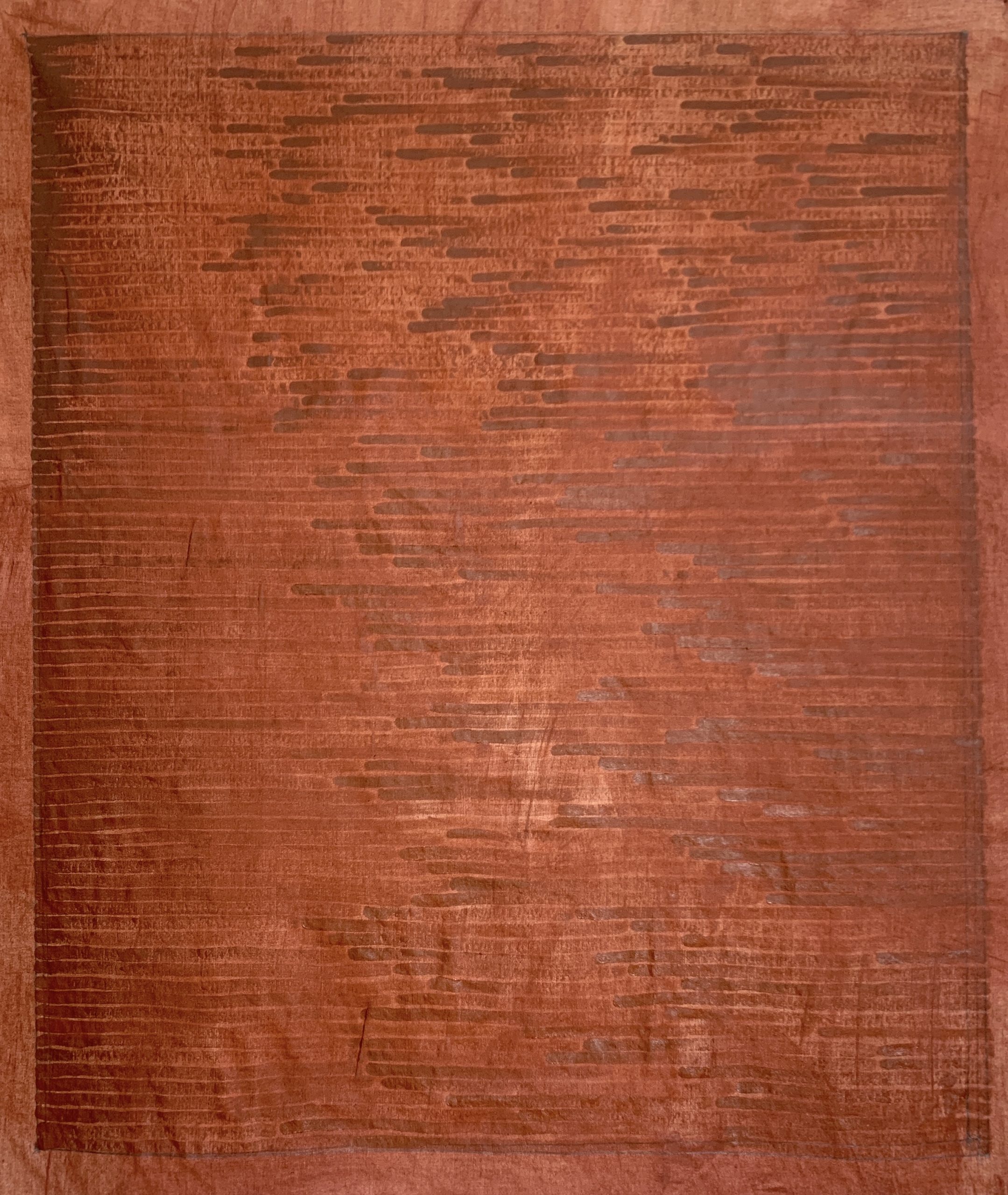
In 2009, I began experimenting with a kind of notation of breath, inspired by Laban’s method. Just as he translated bodily movement into visual symbols, I started exploring ways to visualize and record the subtle rhythms and qualities of breathing—turning something invisible into something tangible and expressive.
.
When I started working on the notation of breath, I saw a connection with Agnes Martin, whose work I have always admired. Of course, our works are very different, but there was a similarity in language coming from different places, and I found that deeply inspiring.
.
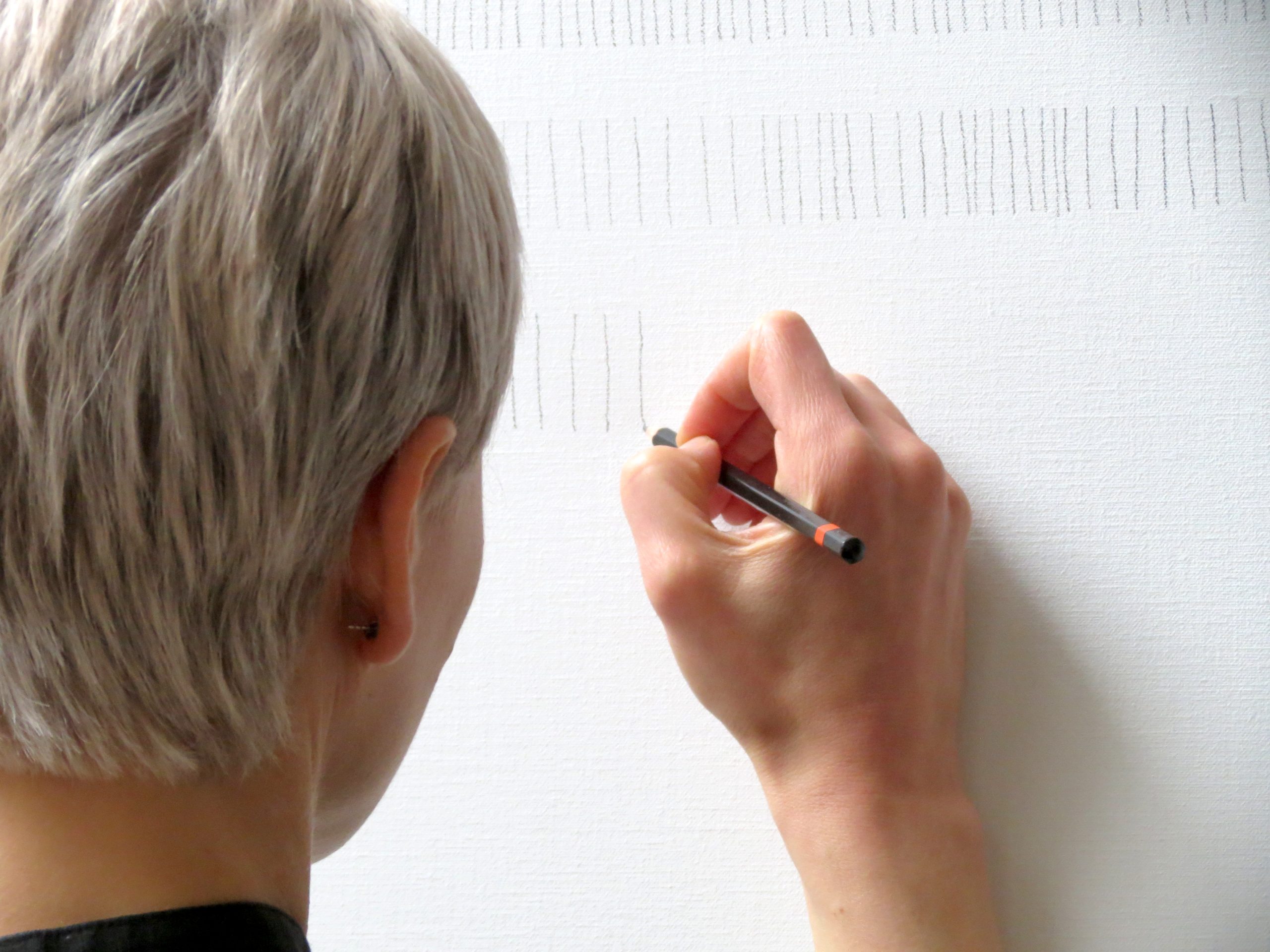
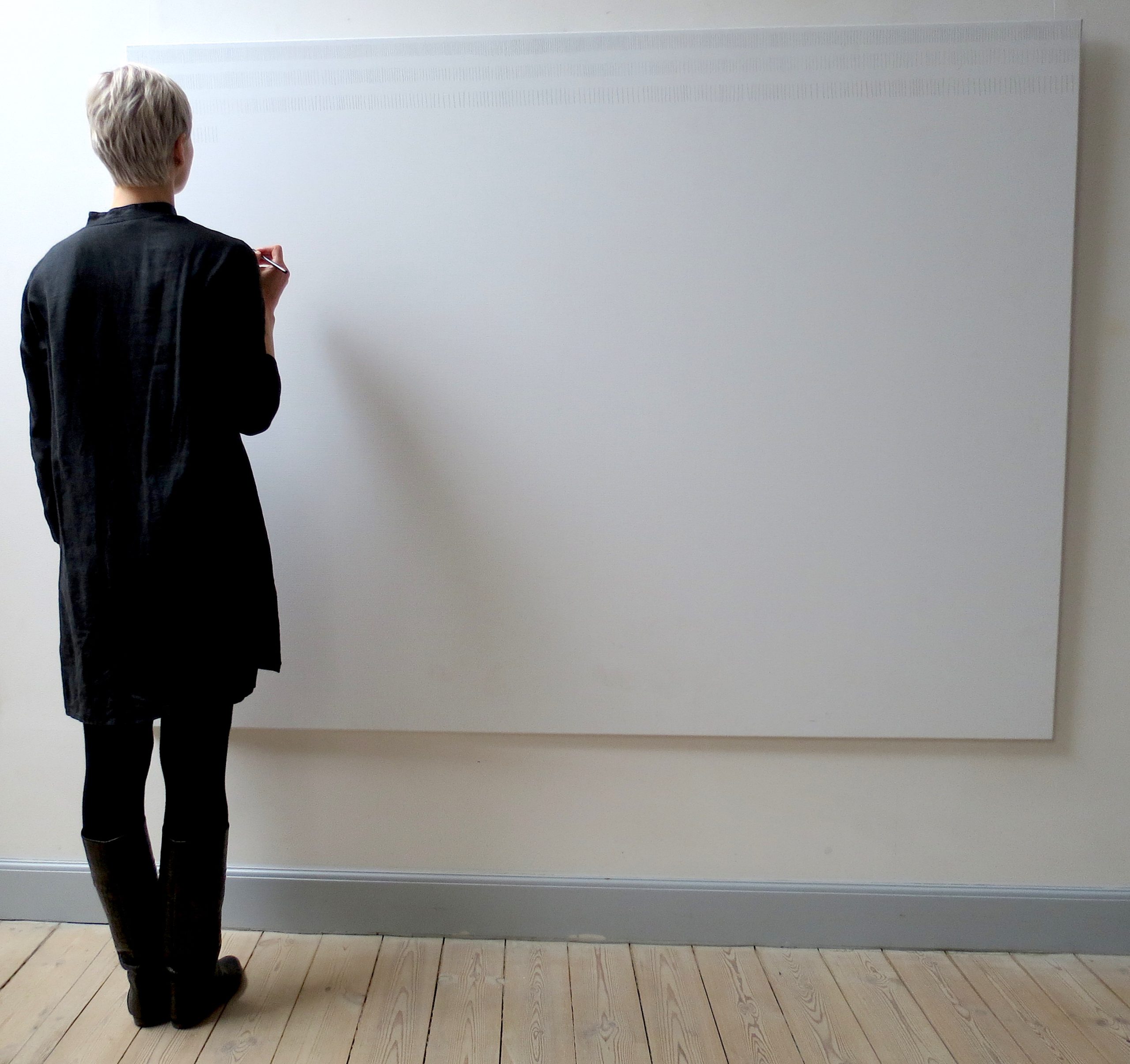
In the beginning, I would record my breath for 20 minutes, then an hour, sometimes two hours—just pencil and paper. Then, for an exhibition in Fifth Floor, Copenhagen, I transferred the work onto the wall with pencil. That was the first time I did it on a large scale, and I worked on it all day long from sunrise to sunset.
.
My concept really began to develop strongly to work with what is already there, rather than inventing something entirely new. To structure the work, I chose a natural timeframe: from sunrise to sunset. By setting these time limits, I was liberating myself—I didn’t need to make constant choices. Knowing that I would spend the whole day breathing and doing nothing else felt freeing. For me, the structure of a full day allowed me to immerse completely in the practice. That’s how this work began.
.
.

Marking Breath. 18, 19 & 21 January sunrise – sunset
Marking Breath on aluminium 100 x 66 cm at LES GENS HEUREUX. Part of group show HOW TO START AN APARTMENT IN YOUR GALLERY curated by Mikkel Carl.




.
J.P.: So you like systems?
.
S.D.: I don’t like to work with my imagination or fantasy—perhaps because my imagination is too vivid and tends to pull me in many directions. And yes, I like systems—not because I want to control myself, but because I don’t know how to work without them. Systems give structure and clarity, allowing me to focus fully on the process rather than being overwhelmed by endless possibilities or distractions.
.

.
J.P.: When you perform, you often invite the audience to join in. How did you come to involve others in your breath-based practices, and what does that shared experience add to your work?
.
S.D.: You can get bored by doing the same thing over and over, but for me, that repetition became a point of reflection and inspiration. When I first started focusing on breath in my practice, people sometimes thought I was crazy—paying attention to only breathing. But to me, this is the base of our lives: we are always within ourselves, always breathing, even as we speak, eat, dance, or interact with others.
.
In my performances, I aim to cultivate a sense of humility and presence, both for myself and for the audience. For me, being human was not natural in the usual ways—walking, breathing, feeling emotions—it all had to be learned. By focusing on the breath, I explore what it really means to inhabit a body and experience life fully.
.
When I began marking breath in public, it wasn’t to say, ‘Look at my breathing; it’s fascinating.’ It was to draw attention to a universal, shared act. Over time, I realized that people were intrigued and wanted to participate. That’s when I started inviting them to join in—because breath is not just mine; it’s everyone’s. It’s a shared, collective experience, and allowing others to be part of it transforms it from a personal practice into a communal one.
.
It all started very simply, with breath—my own difficulty breathing. But over time, I began to do research, to read, to think more philosophically about it. When I looked back, I realized that religious texts and spiritual practices from many cultures also emphasize breath, the spirit, and the soul.
.
Breathing is the first autonomic act we perform at birth, and it is the last one at the end of life. In this way, breath frames our entire existence. It carries not just life itself, but also cultural, spiritual, and symbolic meaning. That awareness has deeply informed my work, turning something so ordinary and automatic into a profound medium for artistic exploration.
.

Marking Breath. In Situ PH Geric Cruz. 2024


.
.
J.P.: You’ve called breath a universal language. How does it create connection between people in your performances?
.
S.D.: For me, breathing represents a horizontal way of communicating—a language that places everyone on the same level. In performances such as “I Breathe You, Do You Breathe Me?”, where participants focus on their own breath and begin to listen to each other, you can clearly see this unfolding. At first, people might feel tense, but as they begin to relax and tune in to their breathing, they also start to engage and interact with one another in subtle but powerful ways.
.
The breath grounds us in the present, when you bring awareness to breathing, you enter a state of presence. This presence can even liberate you from the emotional state you’re in at that moment, because you are simply here, now, with others.
.
During these performances, some participants may breathe in a shallow or difficult way, reflecting their inner state. Yet everyone present immediately understands it. Breath does not require translation—it is not about personal stories or words, which can be heavy, complicated, or guilt-inducing. Instead, breath communicates essence. The feeling of difficulty, of release, of joy—it is all conveyed through breathing in a way that everyone can contain and connect to.
.
This is the beauty of breath: it is a universal language. It transcends culture, age, or personal history. It can hold pain, but it can also turn playful or funny in an instant. Breath creates a shared movement of energy—small, subtle changes that are immediately understood by everyone present.
.
J.P.: You’ve performed in many different cultural contexts—from Scandinavia to France, Asia and Central America. How do audiences in different countries respond to your breath-based works, and what cultural differences have you noticed in the way people engage with them?
.
S.D.: For me, it has been very interesting to observe how different audiences approach and interact with my work. I’ve performed in many different cultural contexts, and I can definitely see cultural differences.
.
In Catholic countries, for example, there often seems to be an easier way into my work. Even though people may not be deeply religious today, the culture still carries a sense of ritual and community practice—whether through family, church, or collective traditions. That makes it more natural for people to engage in a performance that asks them to share presence and breath together.
.
In Scandinavia, by contrast, we tend to emphasize individuality. Our relationship with spirituality is often very private, even solitary. Many people live alone, and the idea of ritual is less embedded in everyday life. This can make collective, breath-based practices feel less familiar at first.
.
That said, I have seen changes, especially after COVID. People everywhere, including in my own country, seem more open now—perhaps because we all experienced isolation and recognized how much we need connection. So while the entry point may differ depending on cultural background, the core of the work—breathing together, sharing presence—remains universally resonant.
.
THINK ABOUT YOUR FIRST LOVE was part of a NIFKA project started in 2000.
.
J.P.: Your recent performance in Paris on June 21, 2025, titled REST. Paris. Solstice., took place near the Palais de Tokyo, specifically in front of the Trocadéro Gardens. This performance was held on the summer solstice, the longest day of the year, and served as both a performance and a ritual. This work seems to blend activism, and a critique of societal pressure. Do you consider your art a form of activism?
.
S.D.: Yes, I do see it as a form of activism—though of course, a very different kind. When we look at the stressful environments many people live in, particularly in Western countries, it’s clear that our society—capitalist, fast-paced, and demanding—creates pressure on our bodies and minds.
.
By “nature,” I don’t just mean mountains or forests; I also mean the natural processes of our own bodies: breathing, resting, sleeping. Many people suffer from insomnia, stress, and the constant push to produce more, move faster, and achieve more than perhaps they truly need.
.
I began to call my work activistic because, for me, it is about reclaiming the breath—insisting that we take time to breathe, to rest, to truly feel ourselves. It’s about living fully in three dimensions, not just existing in a network or a flat, two-dimensional space (the screens). My work advocates for a real emotional life, an inner life, and a physical being that must be engaged, felt, and lived.
.
.
J.P.: On the International Day of Peace, September 21, you performed Breathing Peace. Sunrise to Sunset 6:53–19:11 at Rådhuspladsen in Copenhagen. It was part of CAFx – Copenhagen Architecture Biennial. How did the performance go, and what was the experience like for you?
.
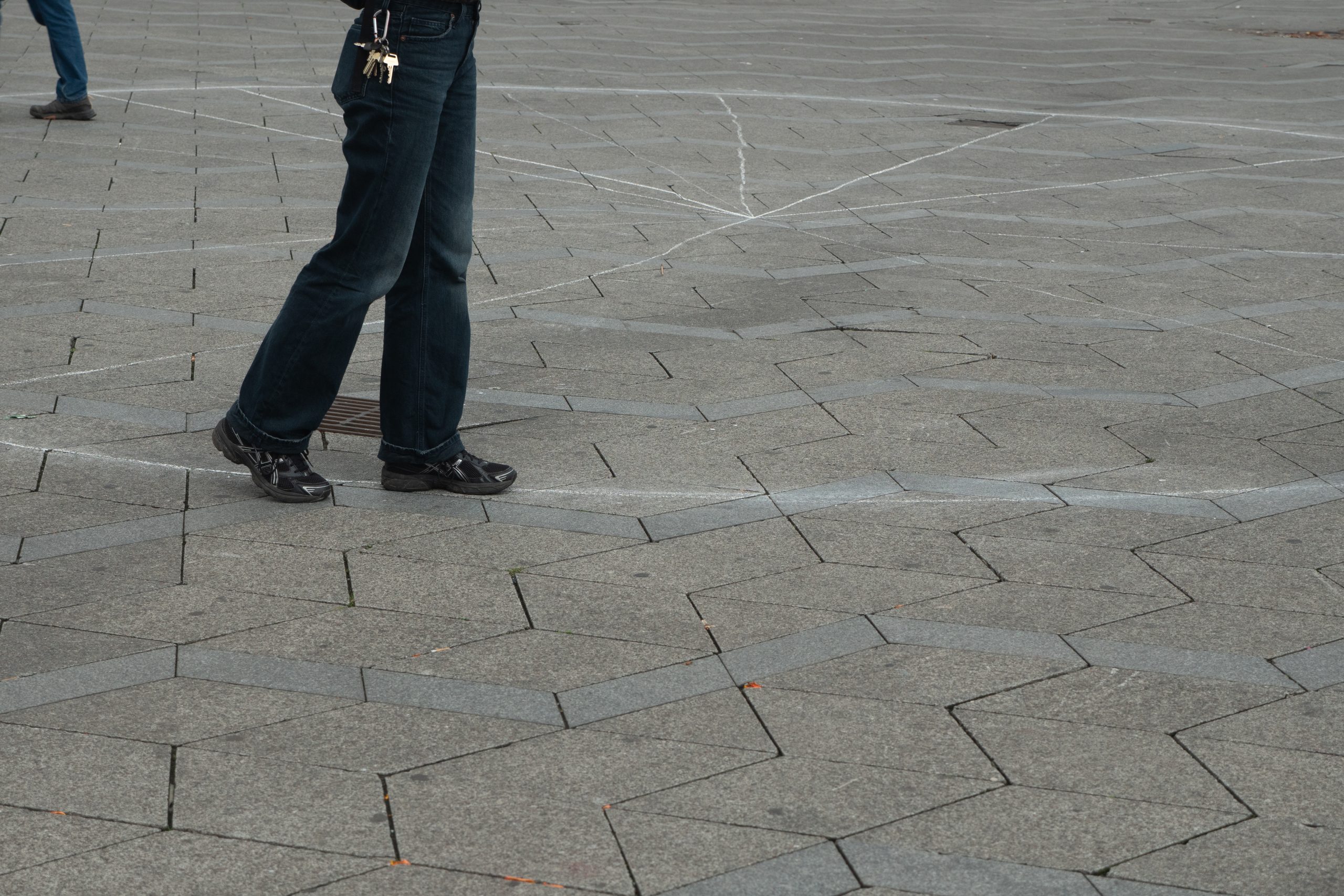
S.D.: This performance was something deeply personal to me. In a world shaken by war, division, and unrest, I wanted to offer something simple — something essential, something human: the breath. Breathing Peace was a durational performance marking International Peace Day. From sunrise to sunset, Rådhuspladsen – Town Hall Square – became a kind of collective lung: a living, breathing sculpture made of bodies in presence. Together, we inhaled and exhaled peace — for ourselves, for each other, and for the world. Participants walked slowly in a circle, breathing together in rhythm. One by one, each person stepped into the center and drew a line outward from their body — like rays of a sun. A shared mark of care, presence, and peaceful resistance.
.
This performance touched something very deep in me. Growing up surrounded by conflict — one that, over time, left me paralyzed in my body. I see more and more how that experience has shaped my work.
.
Breathing Peace was not just a performance — it was a return, like Marking Breath. A return to the body, to slowness, to softness, to the possibility of healing — both personal and collective.
.
Throughout the day, the weather shifted — rain fell, the sun broke through, winds moved between cold and warm. People joined, some hesitantly, others with calm curiosity. Some asked questions, others simply breathed. In the last two hours before sunset, my friend and fellow artist Zara Wall arrived, singing a haunting political song — its lyrics holding hidden messages from women, carried softly through the rain. We walked in the rain. By the end of the day, a few people remained — still walking, still breathing peace, despite the cold and wind and pouring rain. It was touching.
.
What happened that day — quiet as it was — has stayed with me. I now realize that peace, as a practice, is at the heart of my work. As a friend of my called my work; A kaleidoscopic chorus against, without and beyond violence.
.
This is a performance I hope to continue developing — and I’m already planning of bringing it to Paris next year on the International Day of Peace September 21.
.


.
J.P.: What new projects are you working on, and where do you see your practice taking you next?
.
S.D.: At the moment, I’m working on a solo exhibition for two museums in Denmark — Holstebro Art Museum, opening on 7 February 2026, and later in the summer, the show will travel to Sorø Art Museum. As part of the project, I’m creating a monograph and engaging in conversations with Art-historians and a brain researcher writing about my work — a process I deeply enjoy. I’m interested in how to bring my performative practice into the museum space, and how to translate presence and performativity into works that can live, stay, and breathe being sensed without me. For this show, I’m working with local participants, and I’ve also collaborated with a perfumer to create a scent titled A Scent That Makes You Want to Breathe. I’m having a wind machine built — not for spectacle, but as a quiet, constant presence. It breathes with us, through us. I’ve long been fascinated by a question from Navajo thought:
.
Where does the breathing stop and the wind begin?
.
This question stays with me. It sits somewhere between poetry and philosophy — between the body and the world. Are we simply pulling air in and out, or are we part of something larger, something continuous? The wind, like breath, is invisible, yet it moves everything. It reminds me that breathing is not just something we do — it’s something we’re part of. A shared, ongoing rhythm. In the exhibition, the wind machine becomes a kind of non-human performer. It stirs the air gently, interacting with fabrics and space, or simply existing as a quiet reminder that breath and wind are not separate — they blur, they merge. It’s this in-between space that interests me — where body and environment, emotion and air, self and other begin to dissolve. In a time of deep disconnection, breath — like wind — brings us back into relation. The main work in the show is titled: Breathing joy, anger, sadness, anxiety, fear, love, hold – shake it out.
.
In this piece, I ask people to breathe through these emotions while being filmed — allowing the breath itself to express these feelings. It’s deeply moving to witness how we each communicate our inner landscapes in ways that are so different, yet somehow similar.
.
The exhibition invites visitors to breathe collectively with the filmed participants — through each emotion — creating an orchestra of emotional expressions, not of instruments, but of breath. This soundscape will also be played outside the museum, as if the building itself is breathing.
.
In this way, I try to create spaces of breath.
.
Alongside the exhibition in the show, I’m planning my longest performance to date:
BREATHING SHAKING IT OUT — a 24-hour piece from sunset to sunset, where I invite people to shake it out and dance with me for a full day.
.
In April I will open a solo in my gallery in Copenhagen 2112. – So, lots of exhibitions ahead.
.
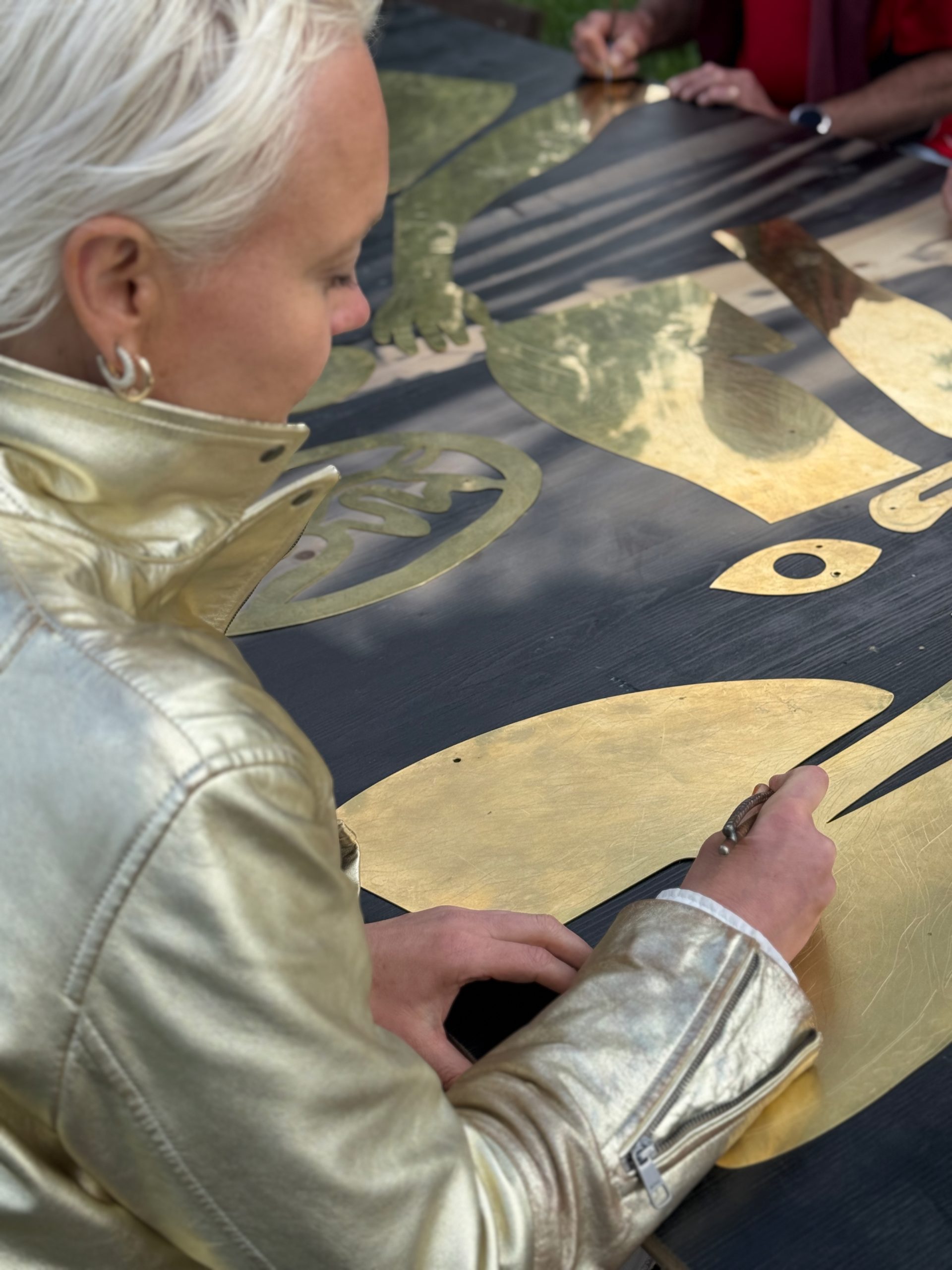
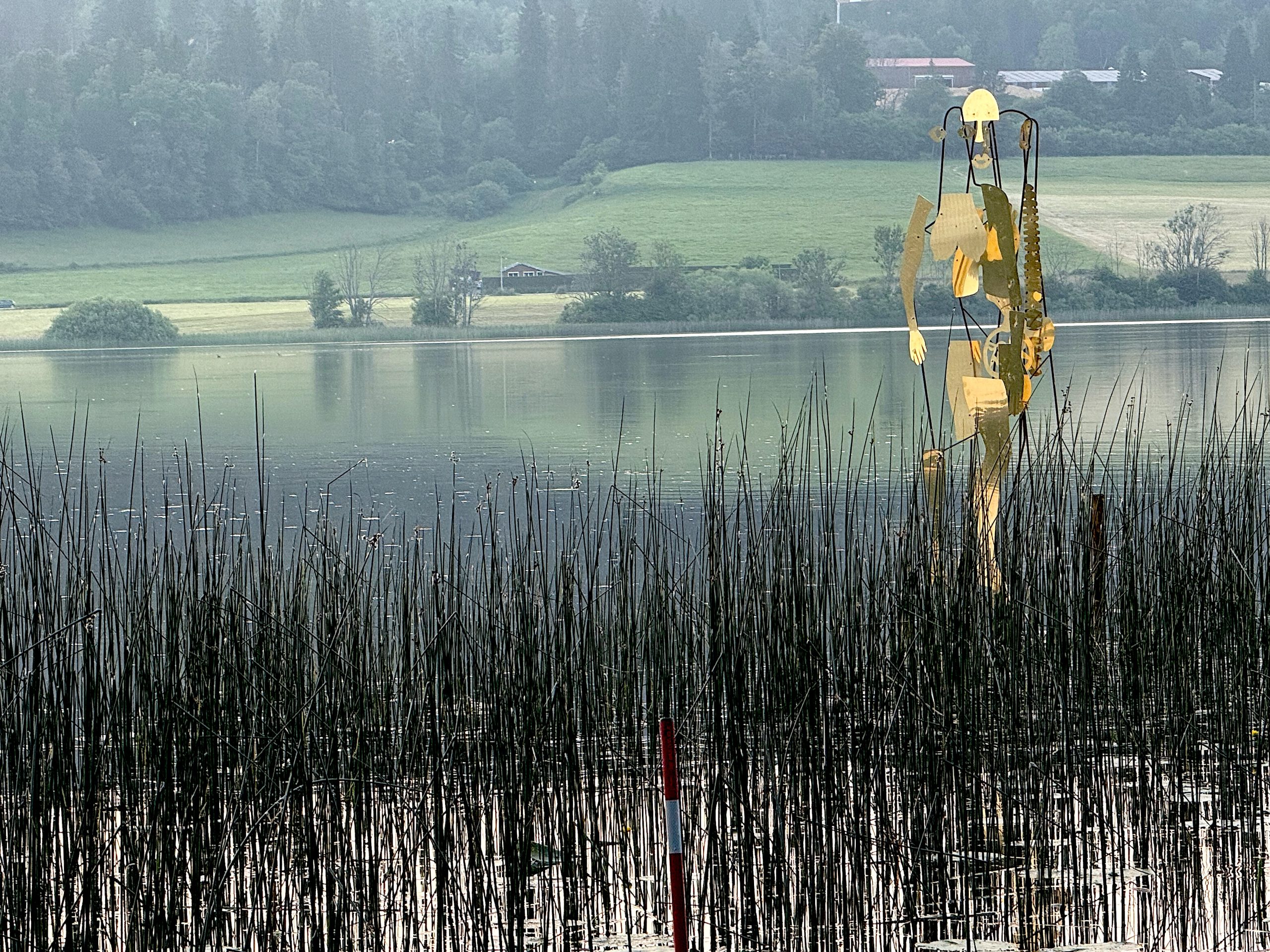
MARKING BREATH. LAC MALBUISSON. 15.06.2025


.
J.P.: Sophie, I would like to ask something more personal. Recently, both of us experienced the loss of our fathers. For me, both as a person and as an art historian, the theme of grief feels very present and important. How do you deal with grief, and how has this experience influenced your artistic life and practice today?
.
S.D.: For me, it is about allowing everything to be as it is. When you go through grief and all its difficulties, I always return to the breath. It’s a little like what Donna Haraway says about “staying with the trouble”—for me, it is about staying with the breath. Staying with life.
.
Life is not easy; it demands constant engagement—spiritually, intellectually, physically, emotionally. For me, breath has become the symbol that embodies all of this. As an artist, I cannot separate my work from my life. Art is the expression of life itself, and personal stories inevitably flow into it.
.
When I lost my mother, I realized in a very direct way that life can simply stop. That awareness never leaves you. So when I work with breath, I also work with death. Each breath is a reminder that life is fragile and temporary. I am always aware that it can end at any moment.
.
My father’s death, I experienced differently—perhaps more lightly, more calmly. The grief was still there, but it was not the same rupture that I felt with my mother. That difference also taught me something: grief takes many forms, just as breath does. Sometimes heavy, sometimes light, but always present.
.
And so, through each breath, I continue—to honor life, to honor loss, and to remain present in the fragile, fleeting gift of being.
.
J.P.: Thank you.
.
.
.
.
Learn more :
© photographers: Bar Mayer, Thierry Forien, Sofus Graae, Geric Cruz, Ken Cheong , Therese Maria Gram, Lorna Milburn, Sha Li
.

BREATHING RESTING BEING . 2024.